General articles are free for 24 hours after publish.
China Escalates Pressure on Philippine Civilian Vessels in South China Sea
A security analyst suggests China's increasing encounters with Philippine civilian vessels, including a recent collision, aim to hinder Manila's fishery and humanitarian missions in the South China Sea. This escalation is linked to China's perceived fortification plans around Palawan, heightening regional tensions.
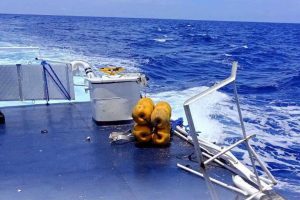
China's increasingly close encounters with Philippine civilian government vessels could make it harder for Manila to safely carry out fishery and humanitarian missions in the South China Sea, a security analyst said. "The provocation is a result of the continuing plan to fortify Palawan as a military base," Chester B. Cabalza, president of the International Development and Security Cooperation, said in a Facebook Messenger chat. His comments followed a Sept. 18 collision between a China Coast Guard (CCG) vessel and the Bureau of Fisheries and Aquatic Resources’ (BFAR) BRP Datu Magat Salamat while the Philippine ship was delivering fuel to Filipino fishermen. Mr. Cabalza said Palawan’s location facing the South China Sea and its exposure to encounters involving Chinese vessels have increased Beijing’s attention to Philippine government activities in the province. "We could sense that there is an intensified plan by Beijing to keep an eye on government activities in Palawan including BFAR’s humanitarian missions," he said. The incident occurred about 54 nautical miles (100 kilometers) off Palawan, within the Philippines’ exclusive economic zone, according to the National Task Force for the West Philippine Sea. The task force said CCG-21585 first cut across the stern of the BRP Datu Magat Salamat at a distance of about 10 meters. Nine minutes later, the Chinese vessel repeated the maneuver and made contact with the Philippine ship while it was maintaining its course. The collision damaged railings, support structures and deck equipment on the starboard side of the Philippine ship. The task force said the Chinese vessel’s actions violated the 1972 Convention on the International Regulations for Preventing Collisions at Sea, the United Nations Convention on the Law of the Sea and the 2016 arbitral ruling on the South China Sea. The Department of Foreign Affairs separately condemned the incident, saying there was "no justification" for aggressive actions against a Philippine civilian law enforcement vessel conducting a mission to support Filipino fishermen. The Philippines called on China to respect its sovereign rights within its exclusive economic zone, exercise restraint and avoid actions that could further escalate tensions. China disputed the Philippine account. In a statement released by the Chinese Embassy in Manila, CCG spokesperson Jiang Lue said the Chinese vessel Sanzhou’ao was conducting "rights protection and law enforcement operations" near Xianbin Jiao, its name for Sabina Shoal, when the Philippine vessel ignored warnings, changed course and accelerated across the Chinese vessel’s bow. "The responsibility of the collision rests entirely with the Philippine side," Mr. Jiang said. Mr. Cabalza said the incident showed the risks facing civilian government vessels as tensions persist in disputed waters. "China is set to alter the rules-based maritime order into a power-based approach, showing off its muscle at sea even against civilian government assets," he said. He said Manila should continue filing diplomatic protests and publicizing encounters involving Chinese vessels. "Manila should continue filing diplomatic protests and pursuing an active transparency strategy to show the world China’s dangerous maneuvering and shadowing of our vessels, which violate maritime rules of conduct," Mr. Cabalza said. — Pexcel John Bacon
Original source
BusinessWorld Nation