General articles are free for 24 hours after publish.
Indonesia Aims to Attract Global EV Suppliers Through BYD Factory
Indonesia's Ministry of Industry aims to attract global component and supplier companies by leveraging the presence of BYD's electric vehicle (EV) production facility. The government plans to strengthen the domestic EV industry ecosystem and promote the increase of local content (TKDN) to maximize economic benefits.
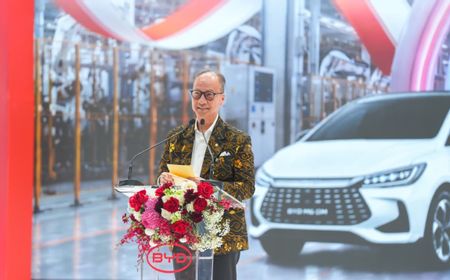
The Ministry of Industry (Kemenperin) is pushing for the presence of PT BYD Motor Indonesia's production facilities in Subang, West Java, not just for manufacturing electric vehicles (EVs), but as a catalyst to attract global component and supplier industries to establish production facilities in Indonesia. The government views BYD's investment as a momentum to deepen the structure of the national EV industry. Minister of Industry Agus Gumiwang Kartasasmita stated that the presence of the BYD factory is expected to drive the development of a comprehensive national EV industry ecosystem. The ministry aims to build an EV ecosystem encompassing the entire industrial chain, from raw material processing and battery manufacturing to component industries, EV manufacturing, domestic market development, and battery recycling. "The Ministry of Industry hopes that BYD's investment will not stop at vehicle production. The presence of this company is expected to be a driver for the development of a comprehensive national electric vehicle industry ecosystem," Agus said. The government is actively encouraging domestic component industries and suppliers to become more involved in the EV production chain. This is intended to maximize the multiplier effect of the investment on the national economy, including increasing added value, creating jobs, enhancing technological mastery, developing industrial human capital, and strengthening export opportunities. Strengthening the domestic supply chain is crucial for increasing the value added generated within Indonesia. Agus emphasized that this will also lead to job creation, technology acquisition, industrial human resource development, and increased export opportunities. This initiative is closely linked to the policy of increasing the Domestic Component Level (TKDN) for EVs. The roadmap for Battery-Based Electric Motor Vehicles (KBLBB) mandates a gradual increase in TKDN, targeting a minimum of 40 percent until 2026, rising to 60 percent between 2027-2029, and reaching a minimum of 80 percent from 2030 onwards. The Ministry of Industry is also considering incentive schemes tied to TKDN achievements. The higher the local content used, the greater the government's policy support will be. This scheme is expected to encourage EV manufacturers to increase their use of local components and attract global suppliers to build their production facilities in Indonesia. The Indonesian EV market is experiencing significant growth. As of April 2026, the EV population reached approximately 486,000 units, comprising around 242,000 two-wheeled and 223,000 four-wheeled vehicles. In the first half of 2026, sales of Battery Electric Vehicles (BEVs) for four-wheeled vehicles reached about 70,000 units, capturing a market share of around 16 percent. The government aims for this market growth to translate into increased domestic production capacity, a strengthened component industry, and the creation of added value within the country. The operation of the BYD production facility in Subang is seen as an opportunity to integrate Indonesia more deeply into the global EV supply chain, triggering the entry of more supporting industries from both domestic and international sources. Information Source: VOI English
Original source
VOI English