General articles are free for 24 hours after publish.
Iran's Growing Influence on Sudan's Coastline: A New Threat to Asian Markets
As Sudan's ports, particularly Port Sudan, deepen ties with Iran, new concerns arise for the security of maritime trade routes connecting Asia and Europe. Reports suggest Sudan may be offering port access in exchange for Iranian arms supplies, potentially impacting Red Sea logistics.
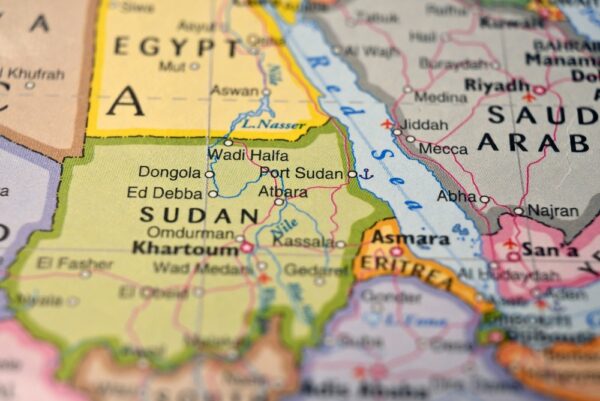
The Red Sea corridor, a vital artery for trade between Asia and Europe, faces a new risk factor along its western shore: the situation in Sudan. The Sudanese government, embroiled in a four-year civil war, relies on foreign arms suppliers, and reports suggest it may be offering access to its ports in exchange, particularly to Iran. Port Sudan has become the de facto seat of government since Khartoum fell out of government hands in 2023. Geographically, it sits north of the Bab al-Mandab strait, along the stretch of water vessels enter after clearing the Yemeni threat envelope. The restoration of diplomatic relations between Iran and Sudan in October 2023 is not merely symbolic. In April 2026, the U.S. Department of Justice charged an Iranian national in Los Angeles, detailing a contract worth over seventy million dollars for Mohajer-6 drones from Iran's defense ministry to Sudan's military, and a letter of intent for bomb fuses to the Islamic Revolutionary Guard Corps. This traffic is not one-way. The UN Panel of Experts on Yemen has documented a smuggling network operating between Yemeni and Sudanese territory since 2023. Its October 2025 report identifies the Houthis as key regional smugglers, and analysts from the Italian Institute for International Political Studies have identified a route between Port Sudan and Al Salif in Yemen's Hodeidah governorate for weapons and personnel. Yemeni coast guard interceptions of shipments out of Sudan during 2025 further underscore this connection. What Tehran seeks in return remains contested. While reports of Iran seeking a permanent naval facility have been denied, the pattern of a besieged government spending coastal access as currency for weapons is evident. The December 2025 report of Port Sudan offering Russia a twenty-five-year arrangement for personnel and warships highlights this dynamic. This evolving situation poses a threat to the maritime container trade between Asia and Europe, which accounted for about 22% of global seaborne container trade in 2023. The addition of a contested Sudanese shore, alongside Yemen, could deter insurers from reopening the Red Sea route, forcing costly diversions around the Cape of Good Hope. Existing UN monitoring mechanisms are inadequate. The Sudan arms embargo under Security Council resolution 1591 applies only to Darfur, excluding the coastline where consequential transfers arrive. Furthermore, two UN Panels of Experts monitor opposite shores of the same waterway under separate mandates with no reconciliation of findings, leaving gaps like the Port Sudan-Al Salif route. The UN Security Council's inability to agree on the composition of the Sudan Panel in 2025 further hampered monitoring capacity. Remedies include leveraging satellite radar and AIS, port state control inspections, and manifest scrutiny. Expanding the UN's mandate to cover Sudan's coastline and enhancing coordination between existing panels are crucial. Asian nations, with the most to lose economically, should actively support strengthening these monitoring efforts. Source: The Diplomat Indonesia
Original source
The Diplomat Indonesia