General articles are free for 24 hours after publish.
Vietnamese scientists develop pollution-eating microbe housing for wastewater
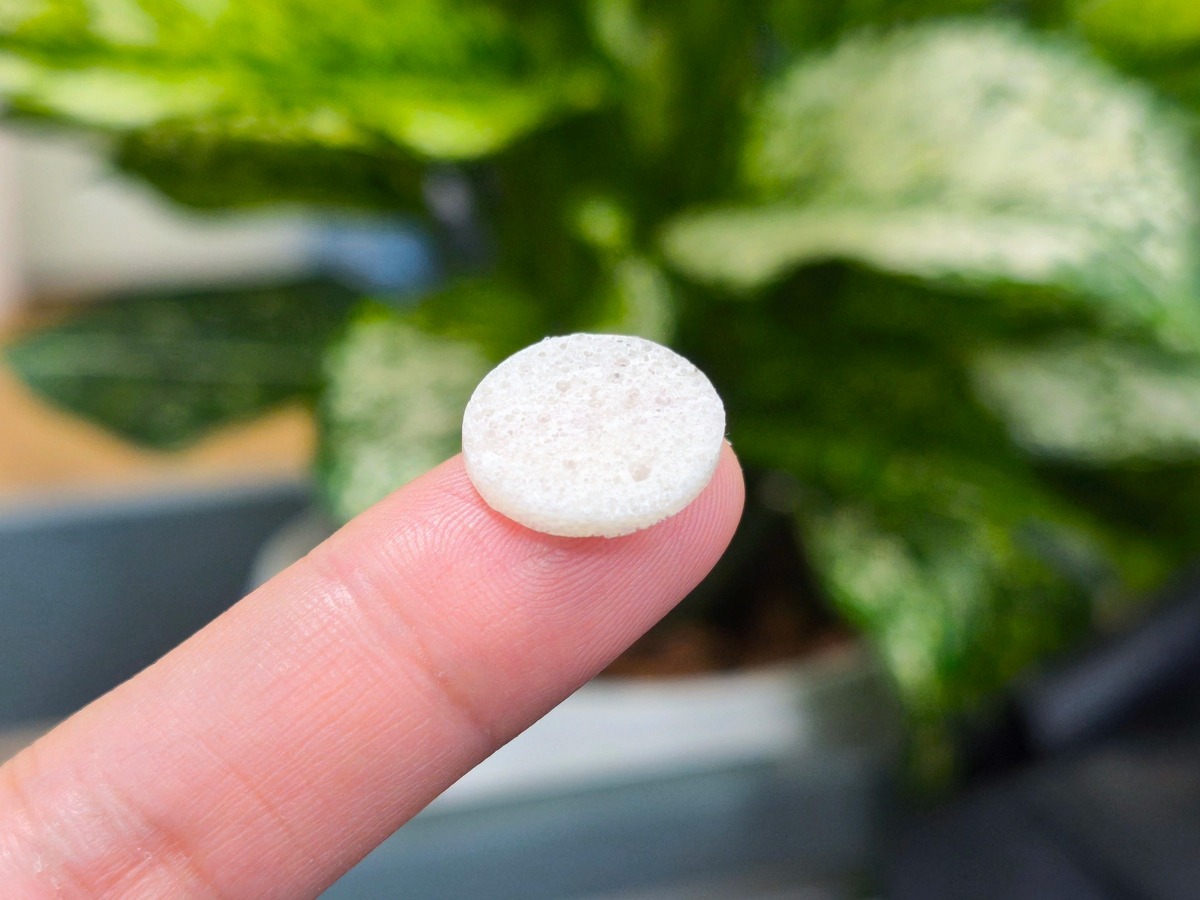
Vietnamese scientists have developed a porous biocarrier, dubbed "biochips," designed to house microbes that efficiently break down pollutants in wastewater. This domestically produced material is expected to significantly reduce costs compared to imported alternatives and enhance wastewater treatment capabilities in Vietnam.
Vietnamese scientists have developed a porous foam material that acts as an "apartment block" for microorganisms, enabling them to efficiently consume pollutants in wastewater. Developed by researchers at the Institute of Materials Science under the Vietnam Academy of Science and Technology, the material, dubbed "biochips," is a thin, disc-shaped biocarrier with uniform pores. A single cubic meter of this material offers a surface area of approximately 2,500 square meters, equivalent to two Olympic-sized swimming pools. This porous biocarrier is central to the moving bed biofilm reactor (MBBR) technology, where millions of these discs are submerged in wastewater tanks. Microorganisms colonize the large surface area and consume pollutants. Dr. Mai Duc Huynh, leading the research, along with Professor Thai Hoang and Associate Professor Nguyen Vu Giang, has patented the innovation. While various wastewater treatment technologies exist, MBBR is a common solution for domestic wastewater. Traditional carriers, such as spheres and cylinders, are cheaper and easier to produce but offer significantly less surface area per cubic meter compared to the biochips. Currently, biochips are imported and cost VND40-60 million ($1,530-2,290) per cubic meter. The research team has designed a manufacturing process that leverages existing plastic production lines in Vietnam, requiring only modifications to molds and operating settings. This approach is expected to reduce equipment spending once production scales up. The material, primarily polyethylene, incorporates proprietary additives that alter its surface chemistry and create additional small pores, allowing microbes to adhere effectively. The foam is designed to be lightweight, durable, and possess interconnected pores. Tests conducted at Hung Yen Eye Hospital and several treatment plants in Hanoi have shown the biochips effectively remove 90% of organic matter and nitrogen, meeting Vietnamese discharge standards. The team is refining the material for technology transfer and mass production, aiming to outperform imported products. They are also developing additives to accelerate microbial colonization, potentially speeding up treatment by 20%. The global MBBR market was valued at $2.8 billion in 2025 and is projected to reach $5.2 billion by 2034, with a compound annual growth rate of 7.8%, according to Dataintelo. The Asia-Pacific region accounts for approximately 38.5% of this revenue, driven by demand for biological systems that can be quickly installed in areas with limited treatment infrastructure. MBBR is increasingly used in food processing plants, textile mills, and municipal treatment stations across Vietnam, Thailand, and Indonesia. The domestically developed biochips are anticipated to be produced by Vietnamese plastic factories within one to two years, catering to manufacturing sites, farms, restaurants, clinics, and any treatment system requiring a compact footprint.
Original source
VnExpress International