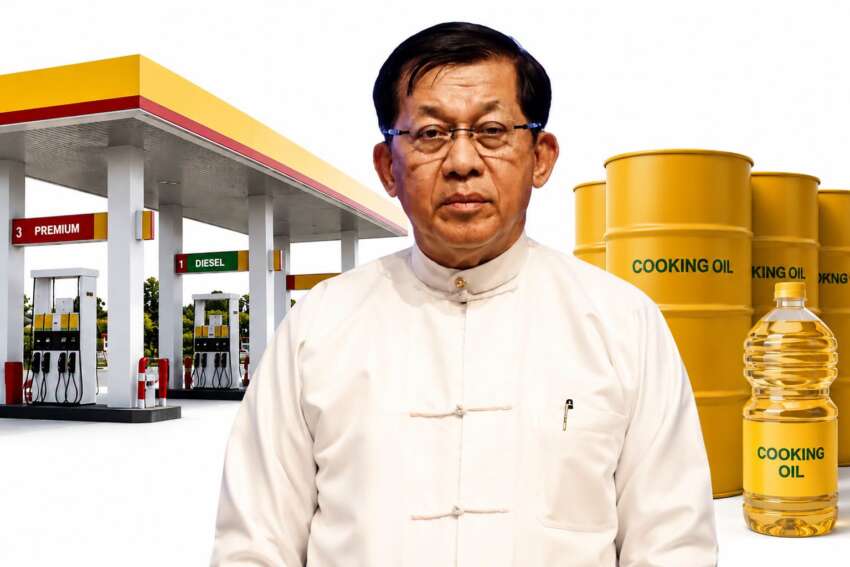
Foreign currency heavily spent, fuel oil and edible oil imports to be further reduced, Min Aung Hlaing says again
Yangon, July 8 Foreign currency is being heavily spent, so imports of fuel oil and edible oil will be further reduced, Min Aung Hlaing said again. This was stated by Min Aung Hlaing at a meeting held in Naypyidaw yesterd
Yangon, July 8 Foreign currency is being heavily spent, so imports of fuel oil and edible oil will be further reduced, Min Aung Hlaing said again. This was stated by Min Aung Hlaing at a meeting held in Naypyidaw yesterday, July 7. Min Aung Hlaing said that it is necessary to find and implement ways to reduce the import and consumption of fuel oil and edible oil. Myanmar imports fuel oil and edible oil from abroad every year, consuming a large amount of foreign currency. Therefore, it is necessary for the relevant ministries to find and implement ways to reduce the import volume of these commodities, Min Aung Hlaing said. In the electricity sector, he said that it is possible to build power plants that use coal, which does not require import from abroad, to reduce fuel oil consumption, as well as to expand solar power generation projects. Furthermore, Min Aung Hlaing instructed the relevant ministries and regions/states to implement these projects. In the transportation sector, to reduce fuel oil consumption, train services for public transportation and freight transportation are being expanded, and railway tracks and trains are being upgraded. He also said that battery-powered locomotives are being manufactured and used, and this technology will continue to be developed. He continued that by doing so, fuel oil imports from abroad can be reduced to a certain extent and it will also contribute to the national economy. It is known that the military has recently reduced imports of fuel oil and palm oil, and is controlling the sale of fuel oil in the fuel oil sector with pair and QR systems. Palm oil imports have also been reduced since last month, June, and the military is selling only one viss (approximately 1.6 kg) of palm oil per household per month at the price set by the military. At the meeting, Min Aung Hlaing also mentioned illegal trade, stating that neighboring countries have high demand for meat, fish, and kitchen crops, and although Myanmar can export and sell through border trade routes, full export is not yet possible in some areas due to security conditions. Min Aung Hlaing continued that illegal trade not only causes loss of tax revenue for the state, but also leads to the entry of substandard products into the market and corruption. He said that trade through illegal channels with illegally obtained funds will not be tolerated. He also said that those who are acting with avarice in the market must be controlled through the legal trade system. Min Aung Hlaing said that to develop the national economy, it is necessary to increase exports. For this, it is necessary to encourage production growth in the relevant ministries and regions/states, as well as to regularly open border trade gates and systematically supervise and manage trade activities.
多角的分析
ヤンゴン、7月8日 外貨を大量に消費しているため、燃料油と食用油の輸入をさらに削減する方針だと、ミン・アウン・フライン氏が再び発言した。 これは、昨日7月7日にネピドーで行われた会議で、ミン・アウン・フライン氏が述べたものである。この動きは直接の経済指標ではなくても、行政運営、地域の信頼、公共サービスの質を通じて企業活動や生活コストに波及する可能性があります。
投資家にとっては、個別ニュースの背後にある制度の安定性、情報公開、地域社会の反応が判断材料になります。短期の見出しだけでなく、継続的な変化を見る必要があります。
このニュースの重みは、治安を感じている人々が「次に何をすればよいか」を理解できるかにあります。各地域・州の現場で説明、支援、監視の回路が生まれるかを追いたいところです。
市民にとっては、このニュースが安全、雇用、教育、行政サービスなど身近な領域にどうつながるかが焦点です。生活者目線で具体的な影響を追う価値があります。
背景・歴史的文脈
Khit Thit Mediaが伝えたこのニュースは、ミャンマーの行政運営や地域社会の変化を読むための小さなシグナルです。個別の発表や事件でも、制度、生活、対外関係のどこに影響するかを分けて見ることで、ニュースの意味が見えやすくなります。
原文ソース
Khit Thit Media