Vietnam Achieves 8.18% Growth in First Half, Focuses on Economic Stability and Infrastructure
Economy
2026年7月5日
5
Bao Chinh Phu
Relations
🇻🇳Vietnam🇨🇳China

Vietnam Achieves 8.18% Growth in First Half, Focuses on Economic Stability and Infrastructure

AI サマリー

Vietnam recorded an impressive 8.18% economic growth in the first half of the year, with notable achievements in inflation control and infrastructure development. However, global economic uncertainties and geopolitical risks remain significant challenges.

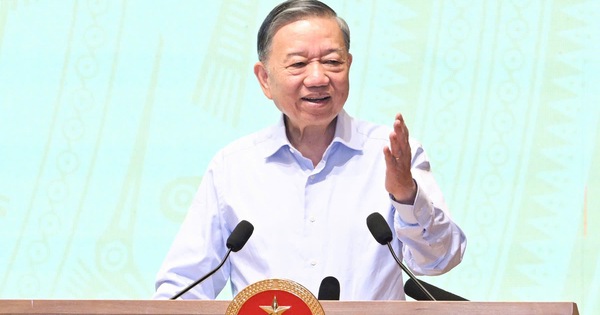
SOCIALIST REPUBLIC OF VIET NAM Government News Distinguished Leaders of the Party, the State, the Viet Nam Fatherland Front, the Government, and Central Party Commissions, Ministries, and Sectors, Leaders of provinces and centrally-run cities joining via video teleconference, Representatives of domestic and foreign business associations and enterprises, and delegates Today, I am highly pleased to attend the national virtual conference between the Government and localities to review the achievements and limitations of the first six months of the year, and to deploy tasks and solutions for the remaining six months and the period ahead. On behalf of the leadership of the Party and the State, I extend my warmest greetings and best wishes to all comrades. Comrades, The year 2026 marks the inaugural year for implementing the Resolution of the 14th National Party Congress and serves as the launchpad for the country's new phase of development. This requires the entire political system to act with the utmost drastic urgency to generate distinctive breakthroughs in national development, while enhancing the resilience of the economy and elevating the actual living standards of our people. We deployed our tasks for the first half of the year against a backdrop of a global economy fraught with difficulties, alongside rising geopolitical, energy, and trade risks. These factors have directly impacted highly open economies like Viet Nam. Conflicts in the Middle East and U.S. tariff policies have driven up oil prices, freight rates, and production costs, exerting immense inflationary pressure. The outlook for global trade remains challenging and highly uncertain, while global investment flows are shifting according to new criteria. Nevertheless, the achievements recorded in the first six months of the year are highly commendable. This is the fruit of the joint efforts of the entire political system, the business community, and people nationwide. I particularly acknowledge the efforts of the Prime Minister, the Government Leadership, and the Ministers of the 16th tenure. Despite having assumed office for less than three months, they have introduced innovative perspectives in leadership, guidance, and governance, employing creative, scientific, decisive, and timely approaches that have yielded practical results. I would like to summarize six prominent achievements: First, the macroeconomy remained fundamentally stable, and inflation was kept under control amid rising global inflation and substantial pressure, with the average consumer price index (CPI) for the first six months estimated to rise by 4.5 percent. Economic growth maintained its positive momentum. The manufacturing, processing, construction, services, tourism, and export sectors all witnessed positive shifts. Second-quarter GDP growth was estimated to increase by 8.39 percent, bringing the six-month growth rate to 8.18 percent. Nine localities—accounting for approximately 18.6 percent of the country's GDP—recorded double-digit growth, namely Ha Tinh, Ninh Binh, Hai Phong, Bac Ninh, Hung Yen, Phu Tho, Quang Ninh, Thai Nguyen, and Tay Ninh. State budget revenue in the first half of the year reached approximately 62 percent of the estimate, representing a 17.2 percent year-on-year increase, even after implementing tax exemptions and reductions totaling VND89 trillion. Total import-export turnover surged by 27.1 percent, exceeding US$550 billion. Foreign direct investment (FDI) remained a bright spot, and the number of newly established and returning enterprises outpaced those exiting the market, reflecting the confidence of businesses and investors in the country's development prospects. Second, breakthroughs in infrastructure development. Strategic infrastructure projects were launched concurrently. Housing policies introduced new, well-aligned orientations, including the development of rental housing, affordable housing, and social welfare housing. Long-standing, backlogged cases and projects were resolutely addressed; specifically, a comprehensive review and classification were conducted to propose jurisdictions and handling options to 3,438 out of 4,606 troubled projects. Third, institutional refinement, administrative reform, and the removal of bottlenecks were driven with greater resolve. Efforts to reduce compliance time and costs, resolve project bottlenecks, and optimize the decentralization mechanism alongside the operation of the two-tier local government system have become increasingly seamless and effective. These efforts have progressively unlocked development resources, yielding an estimated 53 percent reduction in compliance time and a 55 percent reduction in compliance costs. Fourth, science, technology, innovation, and digital transformation made continuous strides, particularly in the development of data infrastructure, digital infrastructure, strategic technologies, and digital economic sectors. The National Data Center has officially commenced operations. Project 06 was innovatively and vigorously implemented, creating a spillover effect across almost all sectors, fields, and aspects of social life. Both the quantity and quality of online public services were enhanced. Fifth, socio-cultural fields received continued attention, particularly regarding care for meritorious individuals, poor households, vulnerable groups, education, healthcare, and public livelihoods (nearly VND90 trillion in policy credit supported over 1.2 million households and beneficiaries, and funding was secured to ensure the statutory base salary increase starting July 1). The construction of 229 inter-level boarding schools in border communes was initiated. Efforts in new human resource training, healthcare, environmental protection, and the search and gathering of martyrs' remains were actively deployed, particularly the 500-day-and-night Campaign to locate, gather, and identify the remains of fallen soldiers. Sixth, national defense and security were firmly maintained; foreign affairs and international integration continued to expand, contributing to elevating the country's standing and opening up new development spaces (in the first six months, Viet Nam upgraded and elevated relations with six countries, bringing the total number of partners at the comprehensive level or higher to 45 countries). On behalf of the Party and State leadership, I commend the Government, ministries, sectors, localities, the business community, and people nationwide for their dedicated efforts to overcome adversity—simultaneously responding to external volatility while executing new, difficult, and unprecedented tasks. This forms a vital foundation as we strive to maximize the achievement of our 2026 targets and prepare more effectively for the subsequent phase. Alongside these achievements, we must frankly acknowledge existing limitations and difficulties, which can be synthesized into six major challenges: First, economic growth reach

多角的分析

経済的影響

ベトナム経済は、世界経済の減速と地政学的リスクという逆風の中で、上半期に8.18%という顕著な成長を達成した。これは、製造業、建設業、サービス業、輸出部門の堅調なパフォーマンスに支えられている。特に、9つの省・市が二桁成長を記録したことは、地方経済の活性化と国内経済の底堅さを示唆している。インフレ率を4.5%に抑えられたことは、グローバルなインフレ圧力の高まりを考慮すると特筆すべき成果であり、中央銀行の的確な金融政策運営と政府による物価安定策の効果を示している。しかし、世界的なインフレ圧力、エネルギー価格の高騰、サプライチェーンの混乱は、依然としてベトナム経済の生産コストを押し上げ、インフレ再燃のリスクを内包している。また、輸出依存度の高いベトナム経済にとって、世界貿易の不確実性は今後の成長の足かせとなりうる。政府は、これらのリスクを管理しつつ、持続的な成長軌道を維持するために、構造改革と経済の多角化をさらに推進する必要がある。

投資家心理

ベトナムの堅調な経済成長と、インフラ開発、行政改革、デジタル変革への注力は、投資家にとって魅力的なシグナルとなっている。上半期のFDI(外国直接投資)の増加と、新規設立・再開企業数の増加は、ベトナムの成長見通しに対する投資家の信頼の高まりを示している。特に、インフラ開発への重点投資は、物流コストの削減や産業誘致に繋がり、長期的な投資リターンを高める可能性がある。また、行政改革によるコンプライアンス時間・コストの削減は、事業運営の効率化に貢献し、投資環境の改善を実感させるだろう。しかし、地政学的リスクや世界貿易の不確実性は、依然として投資判断におけるリスク要因となる。投資家は、マクロ経済の安定性を維持しつつ、これらの外部要因による影響を注視する必要がある。特に、米国の関税政策などがサプライチェーンに与える影響は、製造業への投資判断において重要な要素となるだろう。

社会的影響

ベトナム政府は、経済成長と並行して、国民生活の向上にも力を入れている。上半期には、恩恵を受ける人々、貧困世帯、脆弱層への支援、教育、医療、国民生活への配慮が継続された。特に、政策融資による120万世帯以上の支援や、7月1日からの法定基本給引き上げの実施は、国民の生活を直接的に支えるものだ。また、国境地域のコミューンにおける229校の寄宿学校建設の着工は、地方や辺境地域の教育格差是正に向けた取り組みとして評価できる。さらに、戦没者遺骨の収集・身元特定キャンペーンは、国民の愛国心や歴史への敬意を育む社会的な意義を持つ。一方で、グローバルなインフレ圧力は、国民の購買力を低下させ、特に低所得者層の生活を圧迫する可能性がある。政府は、経済成長の恩恵が国民全体に行き渡るよう、所得格差の是正や社会保障制度の拡充に引き続き注力する必要がある。

市民の声

ベトナム市民は、経済成長の恩恵を実感する一方で、物価上昇への懸念も抱いている。上半期のGDP成長率8.18%という数字は、多くの市民にとって雇用機会の増加や所得向上に繋がる明るい兆しだ。特に、インフラ整備が進む都市部では、生活環境の改善や新たなビジネスチャンスへの期待が高まるだろう。しかし、国際的なインフレ圧力や紛争の影響による物価上昇は、日々の生活費を圧迫する現実的な問題として市民の不安を掻き立てる。政府によるインフレ抑制策や社会福祉の拡充は、市民生活の安定に不可欠である。また、デジタル変革の進展は、行政サービスの利便性向上に繋がる一方で、デジタルデバイドへの懸念も生じさせる。市民は、経済発展の恩恵を享受すると同時に、その持続可能性と公平性についても、政府の政策運営に期待を寄せている。

背景・歴史的文脈

ベトナムは1986年のドイモイ(刷新)政策以降、市場経済化を進め、目覚ましい経済成長を遂げてきた。特に、中国との地理的な近接性や、低賃金労働力を活かした製造業の発展は、世界経済におけるベトナムの地位を向上させた。近年、米中貿易摩擦の激化や、COVID-19パンデミックによるサプライチェーンの再編は、多くの企業が生産拠点を中国からベトナムへ移転する「チャイナ・プラスワン」戦略を加速させた。これにより、ベトナムへの外国直接投資(FDI)が急増し、経済成長を牽引している。しかし、この成長は、インフラ整備の遅れ、人材不足、環境問題、所得格差の拡大といった課題も顕在化させている。政府は、これらの課題に対応するため、インフラ投資の拡大、教育・職業訓練の強化、行政改革、そして持続可能な開発への取り組みを加速させている。今回の報告は、こうした背景を踏まえ、ベトナムが直面する機会と課題、そして今後の発展戦略を浮き彫りにしている。

原文ソース

Bao Chinh Phu

原文を読む