Mayon Volcano's Rumbling Intensifies, Alarming Residents in Albay
Intensified Strombolian activity at the Mayon Volcano in Albay, Philippines, is causing fear among residents due to loud rumbling sounds. Some have been evacuated, and authorities are heightening vigilance.
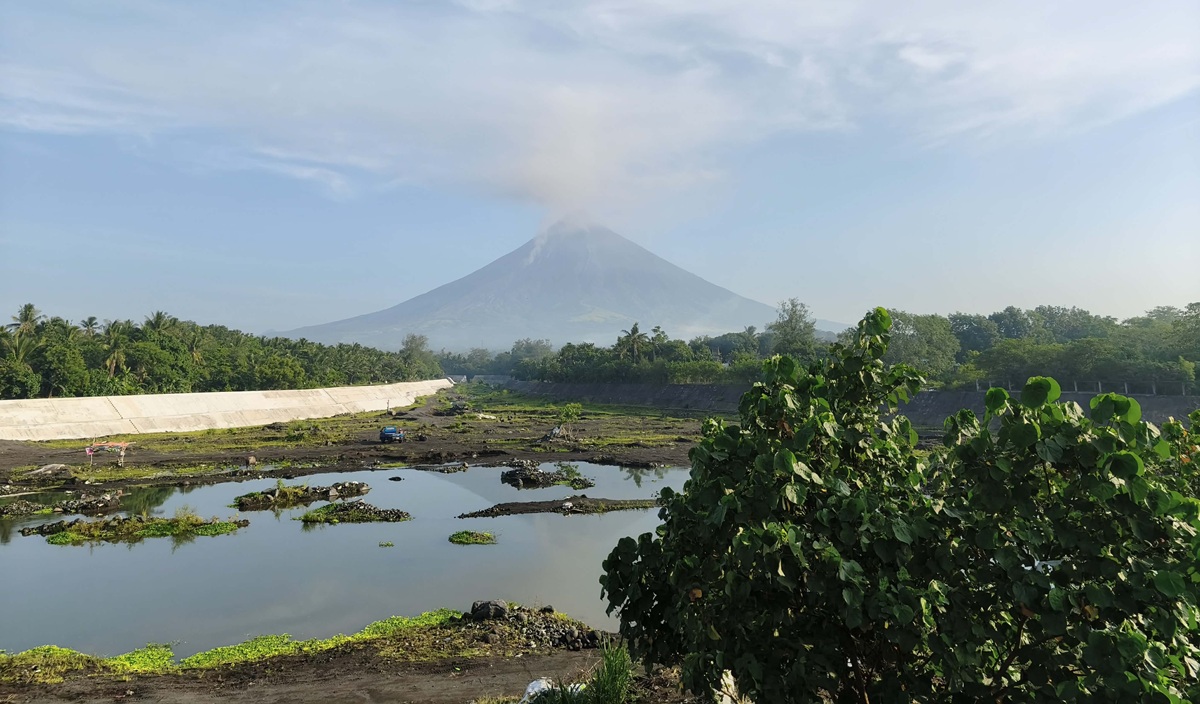
VOLCANO WATCH The Philippine Institute of Volcanology and Seismology records “more energetic” Strombolian activity, producing grayish plume at the summit of the Mayon Volcano, as seen in this photo taken early Thursday at Barangay Cullat in Daraga, Albay. —John Michael Manjares/Contributor LEGAZPI CITY, ALBAY, Philippines — Loud rumbling sounds caused by frequent Strombolian eruptions (moderate bursts of gases that eject clots of incandescent lava) from Mayon Volcano have alarmed residents living near the volcano, with some saying it has been disrupting their sleep. Nilda Lomibao-Enriquez, 48, of Barangay Anoling in Camalig town, said they usually hear sounds from the rocks rolling down the slopes, but since July 13, each activity has been accompanied by loud rumbling sounds. “The volcano seems to be taking deep breaths before each rumbling sound. And when it rumbles, you can see rocks falling down the slopes,” she said in a phone interview on Thursday. READ: Mayon Volcano’s effusive eruption continues for 192nd day Lomibao-Enriquez said they had already packed emergency bags in their car in case the eruptions become more explosive. Some of the residents inside the 6-kilometer permanent danger zone (PDZ) were evacuated in January when alert level 3 (high level of volcanic unrest) was raised by the Philippine Institute of Volcanology and Seismology (Phivolcs). Florie Lyn Albaredo, 48, said they always hear thunderstorm-like sounds from their house at Barangay Sta. Misericordia in Sto. Domingo town, some 8 km away from the volcano. READ: Phivolcs: Mayon Volcano spews fresh lava, ash on 192nd day of unrest “At night, we can hear it very loudly. Some of our cousins who live closer to the volcano have trouble sleeping because they get scared every time they hear the rumbling,” she said. She said it was only glowing before, but now it produces strong fire, and they can also hear rocks grinding against each other. According to Doreen Abelinde, officer in charge of Phivolcs Mayon Observatory, the rumbling sounds show that the magmatic activity of the volcano is elevated. “[It] may indicate that there are shallow magma movements at or near the surface of the volcano, such as weak explosions or Strombolian activity, vigorous degassing and lava effusion, lava fountaining events or rockfalls and pyroclastic density currents (PDC or fast-moving mixture of hot gas, ash and rock fragments cascading down from the volcano’s slope),” Abelinde told the Inquirer in a text message. On July 13, Phivolcs reported that Mayon had entered its peak phase, with Strombolian activity becoming intense. In its Thursday bulletin, Phivolcs recorded 168 volcanic earthquakes, including 13 volcanic tremors that lasted from a minute to 11 minutes. Around 293 rockfall events and 15 PDCs were also recorded, with lava reaching an approximate distance of 3.8 km in Basud gully, 3.2 km in Bonga gully and 2.1 km in Mi-isi gully. Camalig Mayor Carlos Irwin Baldo Jr. said they have requested augmentation from the Philippine National Police to strengthen security and prevent residents from entering the 6-km PDZ. Baldo said residents will not be allowed to return to their homes or tend to their farms along Mayon’s slopes while the restrictions remain in place. Lt. Col. Maria Luisa Calubaquib, spokesperson for the Police Regional Office 5, said additional personnel from the regional headquarters are on standby to reinforce security operations if volcanic activity further intensifies. /cb
多角的分析
マヨン山の噴火活動は、観光業や農業に直接的な影響を与える可能性がある。特に、観光客の減少や農作物の被害は、地域経済に打撃を与えうる。また、避難住民への支援やインフラ復旧には、政府および地方自治体からの財政的支援が不可欠となる。過去の噴火災害では、経済活動の停滞が長期化するケースもあり、その影響は無視できない。
マヨン山の噴火活動の活発化は、アルバイ州および周辺地域の不動産投資や観光関連産業への投資リスクを高める要因となる。短期的な市場の不確実性は増大するが、長期的な視点では、災害復旧やインフラ再建に関連する産業への投資機会も生まれる可能性がある。投資家は、リスク評価を慎重に行い、政府の対応や復興計画を注視する必要がある。
マヨン山の噴火活動は、アルバイ州の住民、特に火山周辺に住む人々にとって、生活の安全と安心を脅かす深刻な問題である。避難生活を余儀なくされる住民の精神的・物理的負担は大きく、教育や生計維持にも影響が出ている。また、噴火活動の長期化は、地域社会の分断や、住民間の不安の連鎖を引き起こす可能性も否定できない。
マヨン山の活動活発化は、アルバイ州の住民、特に火山から近い地域に住む人々の日常生活に直接的な影響を与えています。噴火の音や振動で眠れない、いつ避難しなければならないかという不安を抱えながら生活しています。6キロメートル定 permanent danger zone(PDZ)内に住む人々は、自宅や農地に戻ることができず、生計を立てる手段も失う可能性があります。政府や自治体からの十分な支援が、彼らの生活再建のために不可欠です。
背景・歴史的文脈
マヨン火山は、フィリピンで最も活発な火山の1つであり、その美しい円錐形は象徴的である一方、過去数世紀にわたり、度重なる噴火で多くの犠牲者を出してきた。特に1993年の噴火では、火砕流により多数の死傷者が出た。2014年の噴火では、警戒レベルが引き上げられ、数万人が避難した。今回の活動は、過去の噴火のパターンを踏まえ、Phivolcsが継続的に監視しているものである。住民は、火山の恩恵(肥沃な土壌など)と、その危険性の両方と共存する歴史を持っている。
原文ソース
Inquirer NewsInfo