Interim President Min Aung Hlaing Boasts of Expanding Livestock Zones, But Import Restrictions Lead to Shortages of Feed and Medicine, Causing Chicken and Egg Prices to Soar
To boost production from livestock businesses for food security and expand livestock zones, Interim President Min Aung Hlaing has been frequently making boastful statements. However, due to the central bank's dollar cont
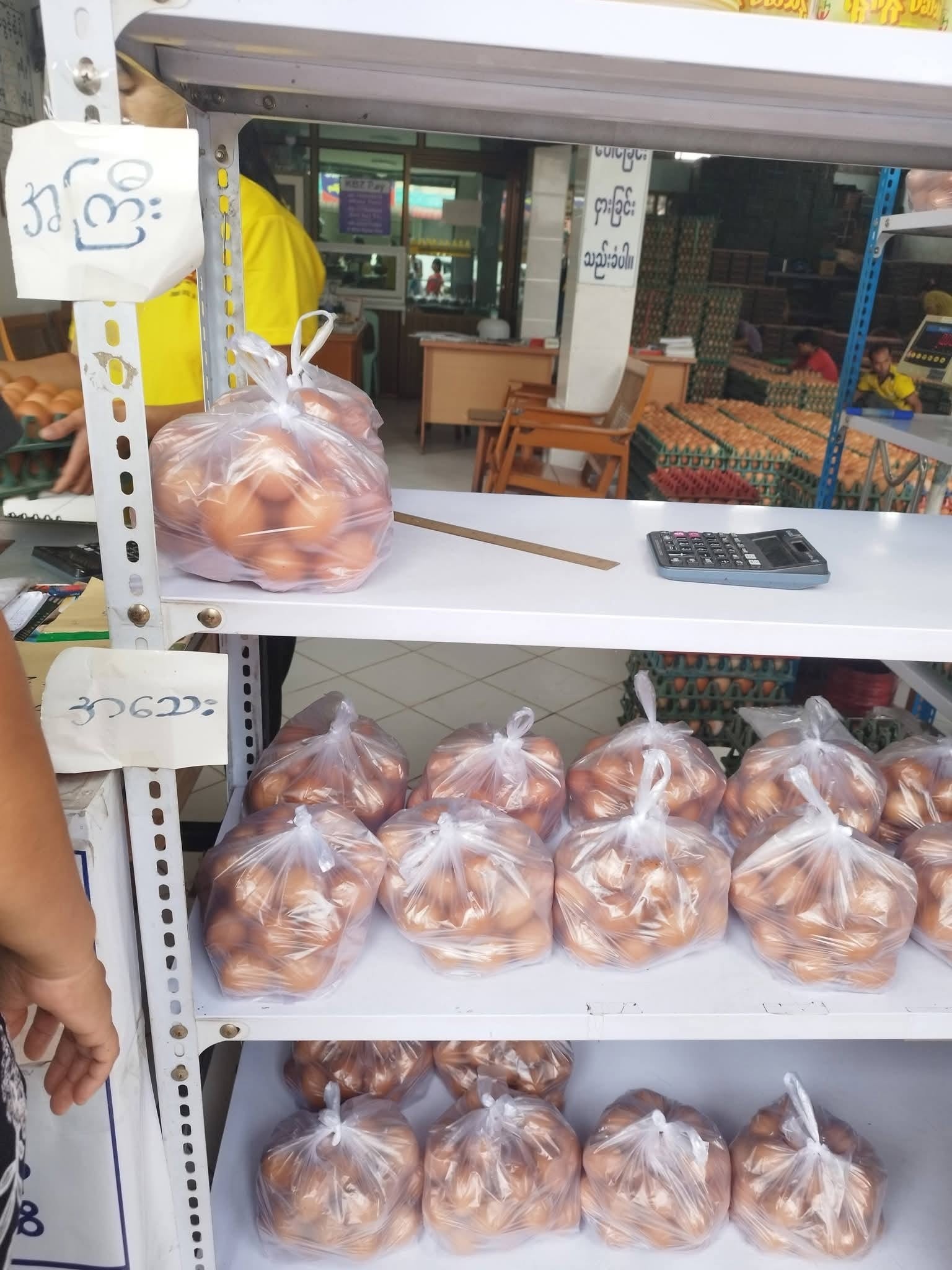
To boost production from livestock businesses for food security and expand livestock zones, Interim President Min Aung Hlaing has been frequently making boastful statements. However, due to the central bank's dollar control and flawed import restriction policies, animal medicine and feed raw materials are scarce on the ground, and chicken and egg prices have risen exorbitantly in recent days, it is learned. In the local markets of Yangon city, starting from Monday this week, the price of CP chicken meat for consumption has increased from the previous 2,300 kyats per 10 ticals (approximately 15 kg) to 3,000 kyats (30,000 kyats per 15 kg). Furthermore, the price of chicken eggs has risen to a record high, from around 360 kyats per egg to 600-700 kyats. Although the interim government claims to sell at affordable prices through municipal vehicles and some shopping centers, it has been learned from Yangon residents that people have no means to purchase and consume them on the ground. "To ensure adequate nutrition for breakfast, I normally eat about 20 eggs a week for my family of three. I don't see the municipal cars selling in the market anymore. When I go to the centers, the eggs are already sold out by the time I arrive. I have to buy them from outside shops, and now I have to pay up to 700 kyats per egg," a housewife from San Chaung Township told the Ayeyarwaddy Times. Interim President Min Aung Hlaing frequently states the need to increase livestock production to stabilize meat, fish, and egg prices, and to promote national prosperity and food security. He has instructed the expansion of livestock businesses, citing an example that if 3.5 million out of Yangon's 7 million population consume one egg per day, approximately 4 million chickens need to be raised. However, on the ground, due to the interim government's import restriction policies and licensing limitations, livestock farmers are unable to obtain feed and medicine, and their businesses are collapsing. According to the 2020 statistics from the Myanmar Livestock Federation, foreign investment companies produce 76% of the current broiler and layer chicken production, while Myanmar nationals produce 24%. Foreign-owned companies produce more broiler meat and eggs. According to the 2020 statistics from the Myanmar Livestock Federation, chicken breeds are imported from the United States, Malaysia, Indonesia, Belgium, and France. There are 10 companies owned by Myanmar nationals and seven companies owned by foreigners, with a total of 144 breeding farms and 18 hatcheries. According to statements from the Myanmar Livestock Federation (MLF), while foreign companies previously produced 76% and domestic entrepreneurs 24%, currently, most small and medium-sized domestic livestock farmers have had to suspend or close their businesses due to lack of capital and inability to bear expenses. Therefore, it is learned that over 85% of the chicken meat and eggs currently consumed domestically rely on the contract system of foreign companies, including Thailand-based CP, and major foreign companies based in China, South Korea, and Indonesia. "Although livestock development is instructed verbally, breeding eggs, chicks, chicken feed, and medicines must be imported from abroad. Since imports are restricted, nothing can be done. Raw material shortages lead to price increases. This is the actual economic situation on the ground caused by Min Aung Hlaing's policy errors," said a domestic livestock entrepreneur. Photo – Ayeyarwaddy Times, Social Media The post Interim President Min Aung Hlaing Boasts of Expanding Livestock Zones, But Import Restrictions Lead to Shortages of Feed and Medicine, Causing Chicken and Egg Prices to Soar appeared first on Ayeyarwaddy Times.
多角的分析
銀行部門の協議は、決済、信用供与、企業活動に波及します。金融制度への信頼が弱い環境では、小さな制度変更でも企業の資金繰りや貿易実務に影響します。
投資家は金融規制の透明性と国際決済の安定性を重視します。協力関係の拡大は前向きですが、制裁・通貨・流動性リスクを同時に見なければなりません。
食料の安定供給のため、畜産事業による生産向上と畜産ゾーンの拡大を、暫定大統領ミン・アウン・フラインは頻繁に声高に訴えている。 しかし、中央銀行…という動きは、銀行や制度だけでなく、市民が現金を抱え込むか、取引を続けられるかに影響します。信頼が弱い環境では、説明の遅れそのものが不安を増幅します。
市民にとっては、預金、送金、給与受け取り、商売の決済が滞らないことが最も切実です。公式協議が利用者保護に結びつくかを見たいところです。
背景・歴史的文脈
このニュースは、ミャンマーの金融制度や銀行部門が対外関係・制度運用の中で調整を迫られている流れにあります。金融は市民の預金、企業決済、貿易の実務に直結するため、公式会談の中身が制度安定にどうつながるかが焦点です。
原文ソース
Ayeyarwaddy Times