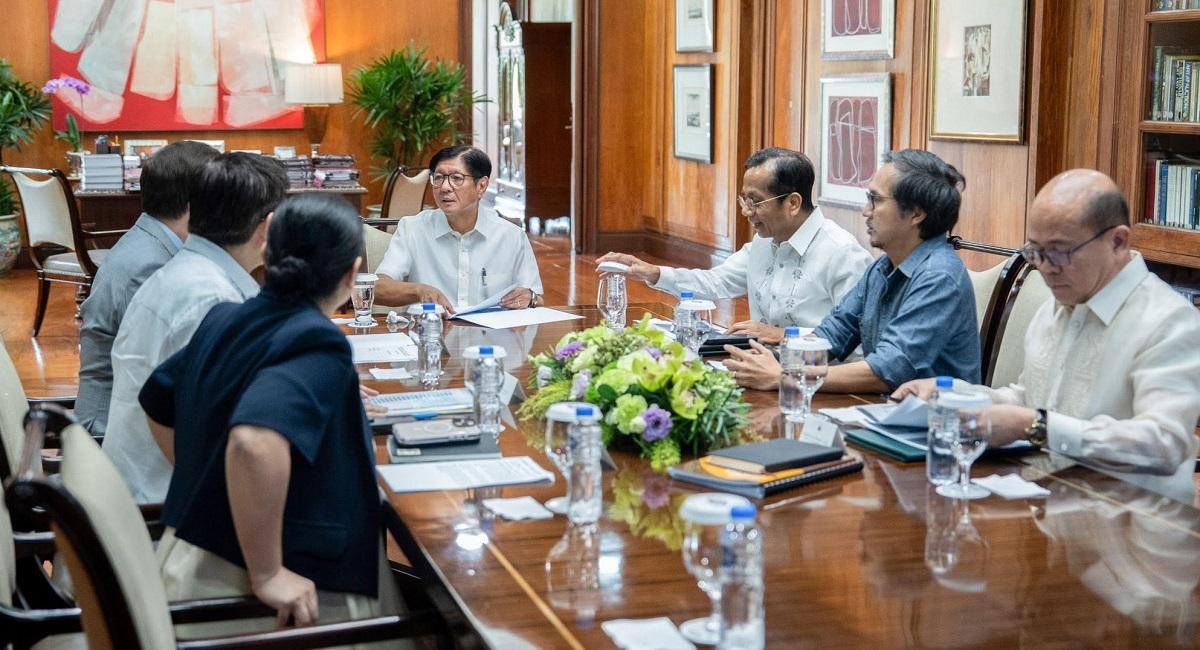
Marcos Economic Outlook Meets Mixed Reality a Year After SONA
Economy
2026年7月24日
7
GMA Money Philippines

General articles are free for 24 hours after publish.

Marcos Economic Outlook Meets Mixed Reality a Year After SONA

Share
AI Summary

A year after President Marcos Jr. projected economic confidence, the Philippines faces a mixed reality. Inflation has resurged, GDP growth has slowed significantly, and foreign investment has hit a decade low, hampered by global conflicts and domestic corruption scandals.

In 2025, President Ferdinand “Bongbong” Marcos Jr. projected confidence in the Philippine economy, citing easing inflation, improving employment, and growing business optimism in his State of the Nation Address (SONA). A year later, however, the country faces both internal and external headwinds. “If we look only at the data, our economy is doing well. Business confidence has increased. Inflation has eased, and employment has grown. But all of these are merely ornaments, meaningless, if our people continue to struggle and carry heavy burdens in their daily lives,” the President stated last year. The Philippines has achieved its long-standing goal of being classified as an upper-middle-income economy, reflecting an increase in gross national income (GNI) per capita. However, other economic indicators present a mixed picture. Inflation, the rate at which consumer prices grow, stood at 1.4% in June 2025. This year, June's inflation is 6.4%, slower than May's 6.8% but still above the Bangko Sentral ng Pilipinas’ (BSP) target range of 2% to 4%. The central bank expects the average inflation for the year to be 6.4%. The primary driver of inflation has been higher global oil prices due to the conflict between the United States and Iran. The Philippines, a net fuel importer, declared a state of national energy emergency in March as the war threatened global oil supply chains. Gross Domestic Product (GDP) grew by 5.5% in the second quarter of 2025. In the same quarter this year, the Philippine economy grew by a mere 2.8%, a significant drop from 3% in the previous quarter and 5.4% from a year ago. This marks the weakest growth since the 3.8% contraction during the COVID-19 lockdowns in the first quarter of 2021. Economic managers have downgraded their GDP growth target range to 3.5% to 4.5% from the previous 5% to 6%. Economic Planning Secretary Arsenio Balisacan attributed the weaker performance in the first half of the year to the impact of a flood control corruption scandal on spending and the Middle East crisis that has driven up global fuel prices. He anticipates an improved situation in the second half concerning infrastructure and government spending. Latest data from the Department of Budget and Management (DBM) show that infrastructure and other capital outlays stood at P41.5 billion in April 2026, a 52% drop from P85.8 billion in the same month a year ago. This marks the 10th consecutive month of decline following the flood control corruption scandal. Business sentiment has also soured. The overall business confidence index (CI) was 28.2% in the second quarter of 2025, indicating optimism. However, the latest available data from the BSP shows the overall business CI at -25.2% in May 2026, meaning more business leaders are pessimistic than optimistic. This is an improvement from -35.8% in April. For the next three months, the CI was at 0.6% (from -7.5% in May). This improved further for the next 12 months at 27.8% (from 19.5% in May). “Philippine business sentiment improved in May on expectations that consumer spending will pick up to support corporate earnings,” the BSP said. Foreign Direct Investments (FDIs) have also seen a downturn. Net inflows of FDIs fell to $250 million in April, down from $611 million in March and $607 million a year ago. This is the lowest figure in nearly 10 years, since June 2016's $244 million, and compares with $350 million in June 2025. Source: GMA Money Philippines

0

Original source

GMA Money Philippines

原文を読む