Filipinos Turn to Social Media as Trust in News Declines
Technology
2026年7月14日
7
BusinessWorld Nation

Filipinos Turn to Social Media as Trust in News Declines

AI サマリー

Trust in news is declining in the Philippines, with Filipinos increasingly shifting their information consumption from traditional media to social media and video platforms. This trend mirrors a global decline and is accompanied by growing concerns about misinformation.

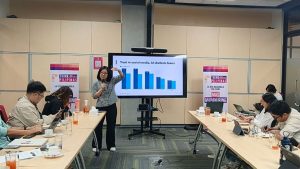
Filipinos are increasingly getting their news from social media, video platforms and algorithm-driven feeds instead of traditional news outlets, a shift that has contributed to declining trust in news, according to VERA Files co-founder and University of the Philippines professorial lecturer Yvonne T. Chua. Speaking at the community discussion “Why Don’t Filipinos Trust the News Anymore?” in Mandaluyong City on Monday, Ms. Chua cited findings from the Reuters Institute Digital News Report 2026 showing that only 28% of Filipino respondents trust most news most of the time, down 10 percentage points from a year earlier. She is the author of the Philippine section in the report. The decline mirrors a broader global trend. The Reuters Institute reported that trust in news across 48 markets fell to 37% this year, the lowest level since it began measuring trust in 2015. Trust declined in 29 of the 48 markets surveyed, with drops of at least five percentage points recorded in 19 countries. “What we’re seeing now is what we call platform-led news consumption. Or, if you want, the technical term, the platformization of news,” Ms. Chua said. For the first time since the Reuters Institute began tracking digital news habits, social media and video networks overtook both television and news websites as sources of news globally. The report found that 77% of respondents across 48 markets consume online news videos weekly, while 27% now watch on-demand news through applications such as YouTube on smart televisions. Ms. Chua said Filipinos adopted these consumption patterns earlier than many countries, noting that audiences now primarily discover news through social media and video networks rather than through news websites, apps and other platforms controlled by news organizations. “People are now looking for news outside of spaces that we control. They’re getting out of news websites and apps as well,” she said. The Reuters Institute attributed part of the global decline in trust to changing consumption habits, noting that social media, video networks and artificial intelligence tools have historically been trusted less than traditional news outlets. As audiences spend more time on these platforms, overall trust in news tends to decline. Ms. Chua echoed this finding, pointing to the Philippines’ growing reliance on platform-based news consumption and the decline of television news use. Citing a longitudinal study covering 46 markets, she said researchers found that “the sharp drop in trust in news was due to the reduction in the use of television.” “TV is really important. It’s a very crucial one,” she added. The shift has become more pronounced as Filipinos increasingly use smart televisions and streaming services. Ms. Chua said smart TV adoption has grown rapidly in recent years, creating new opportunities and challenges for news organizations seeking to reach audiences. Globally, the Reuters Institute found that the growth in online news consumption is occurring almost entirely on third-party platforms. Video-led networks such as YouTube, Instagram and TikTok continue to expand their reach, while mainstream news organizations reported a five-percentage-point decline in video consumption on their own websites and apps. Although respondents generally viewed established news organizations as more reliable than social media platforms and artificial intelligence chatbots, convenience continues to draw audiences toward alternative sources of information. Globally, trust in information from AI chatbots stood at 20%, while weekly use rose to 10% overall and 16% among people younger than 35. “News is more reliable than AI chatbots. However, it is convenient. They don’t need to look for it,” Ms. Chua said. The report also showed that concern over online misinformation remained high among Filipinos, with 66% of respondents expressing concern about false or misleading content online. According to Ms. Chua, Filipinos now “navigate a very confused information environment where there’s lots of information circulating both vetted and unvetted,” contributing to growing skepticism toward information sources. At the same time, interest in news continues to weaken. In the Philippines, interest in news dropped to 43% from 69%, while news avoidance increased. Globally, the Reuters Institute found that the proportion of people who are highly interested in news has fallen by an average of 13 percentage points since 2021, while the share of casual or passive news users rose to 25% from 16%. Ms. Chua said the trend was particularly concerning among audiences who have become both less interested in and less trusting of the news. “This is the largest, fastest-growing group,” she said. “Those who have lost trust and have lost interest in news.” She also flagged the number of respondents who said news was difficult to follow or understand. “When they tell us that news is very hard to follow or understand, that’s 13%, not 5% or 2%. It means, what are we doing wrong in terms of telling the story?” Ms. Chua said. Despite the decline in overall trust, the Reuters Institute noted that trust in established news brands has remained more resilient than trust in news generally. Ms. Chua said this suggests that media organizations can still build on the credibility of their brands, provided they remain relevant and accessible to audiences. “Trust building cannot be designed only for audiences who are already easy to reach,” she said. “A national trust strategy has to ask why poorer and less-educated audiences are less likely to trust them, and whether or not journalism is useful, accessible, and responsive.” — Kaizzer Angela Marie V. Manuba

多角的分析

経済的影響

フィリピン経済において、ニュース消費パターンの変化は、広告収入モデルに依存する伝統的なメディアの収益性に直接影響を与える。SNSプラットフォームへの広告費のシフトは、ローカルメディアの持続可能性を脅かし、結果として質の高いジャーナリズムの提供能力を低下させる可能性がある。これは、情報へのアクセス格差を拡大させ、経済的機会の不均衡を助長するリスクも孕んでいる。

投資家心理

投資家にとって、このニュースはフィリピンのメディアセクターにおけるリスク要因を示唆している。伝統的なメディア企業への投資は、視聴者数の減少と広告収入の不安定化により、リターンが低下する可能性がある。一方で、デジタルプラットフォームや、これらのプラットフォームを活用した新しいメディアビジネスモデルへの投資機会は拡大するかもしれない。しかし、誤情報のリスク管理や規制の不確実性は、依然として考慮すべき点である。

社会的影響

フィリピン社会では、ニュースへの信頼低下とSNSへの依存は、社会的な分断を深める可能性がある。アルゴリズムによって生成されるフィルターバブルは、異なる意見や情報への接触を制限し、世論の偏りを助長する。特に、誤情報が拡散しやすい環境は、公衆衛生キャンペーンや選挙プロセスなど、社会全体に影響を及ぼす重要な問題に対する国民の理解や信頼を損なう恐れがある。これにより、社会的な結束や民主的なプロセスが弱体化する懸念がある。

市民の声

フィリピン市民、特に地方や低所得層の市民は、情報へのアクセスにおいて不利な立場に置かれる可能性がある。スマートテレビや高速インターネットへのアクセスが限られている人々は、SNS中心の情報環境から疎外され、誤情報の影響を受けやすくなる。また、ニュースが理解しにくいと感じる層は、社会的な意思決定プロセスからさらに遠ざかる可能性がある。これは、市民のエンパワメントと社会参加の機会を狭める。

背景・歴史的文脈

フィリピンにおけるニュースへの信頼低下とSNSへの移行は、長年の課題である政治的二極化、誤情報キャンペーンの増加、そして伝統的メディアの経済的困難が複合的に作用した結果である。特に、2016年以降、ソーシャルメディアが政治的言説において強力な影響力を持つようになり、一部の政治家やグループがこれを効果的に利用してきた。ロイター研究所の報告書は、この傾向が世界的に加速していることを示しており、フィリピンはその顕著な例の一つとなっている。

原文ソース

BusinessWorld Nation

原文を読む