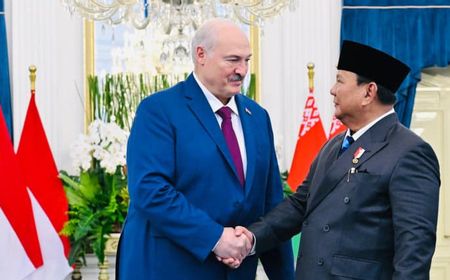
Indonesia and Belarus Agree to Expand Cooperation in Southeast Asia
Belarusian President Lukashenko identified Indonesia as a key partner in Southeast Asia, expressing a desire to expand cooperation in trade, investment, industry, and technology transfer. Both nations have established a roadmap for cooperation until 2030 and aim to strengthen their relationship.
Belarusian President Aleksandr Lukashenko emphasized that Indonesia is one of his country's main partners in Southeast Asia, expressing a desire to expand cooperation with Indonesia not only in trade but also in investment, industry, and technology transfer. Lukashenko made the statement in a joint statement with President Prabowo Subianto at the Merdeka Palace, Jakarta, on Thursday, July 2. According to Lukashenko, relations between Indonesia and Belarus have developed long before this state visit. The two countries have even drawn up a roadmap for cooperation until 2030 and have begun to realize it. He said the various agreements reached were the first step to expanding economic relations between the two countries. "Indonesia is one of Belarus' main partners in the Southeast Asian region. I often say that if Belarus has one friend like Indonesia, it means a lot to us," said Lukashenko. He added that the relationship between the two countries has been established for more than 30 years since the opening of diplomatic relations in 1993. In fact, according to Lukashenko, good relations have been established since the era of the Belarusian Soviet Socialist Republic. Lukashenko also emphasized that Belarus from the beginning supported Indonesia's struggle against colonialism and until now the two countries continue to support each other in various international forums. According to Lukashenko, cooperation between Indonesia and Belarus has great prospects because both countries have complementary interests. Belarus, said Lukashenko, is ready to share technology, industrial experience, agricultural mechanization, and to prepare experts to support Indonesia's development. He emphasized that his country is also open to developing joint ventures with local content levels in Indonesia. In addition, Belarus hopes that relations between the two countries' peoples will be closer through discussions on visa-free facilities and increased flight connectivity in the future. Lukashenko emphasized that there was no area that was closed to Indonesian-Belarusian cooperation, ranging from food security, industry, to high technology. "We are a nation that knows how to appreciate friendship, and we will always remember it," he concluded.
多角的分析
ベラルーシは、西側諸国からの経済制裁の影響を受ける中、新たな市場とパートナーシップを求めている。インドネシアとの協力拡大は、ベラルーシにとって経済的孤立を打破し、輸出市場を多様化する機会となる。特に、農業機械や工業製品の輸出、そして技術移転は、ベラルーシ経済の活性化に寄与する可能性がある。インドネシア側にとっては、ベラルーシの持つ特定の産業技術(例えば、肥料生産や農業機械)の導入は、国内産業の高度化や食料安全保障の強化に繋がる可能性がある。しかし、両国間の貿易額は現時点では限定的であり、具体的な投資や技術移転の規模が今後の経済的影響を左右するだろう。
インドネシアとベラルーシ間の協力拡大は、現時点では直接的な大規模投資を誘発するほどのインパクトはないと考えられる。ルカシェンコ大統領の表明は、ベラルーシ側のパートナーシップ強化への意欲を示すものであるが、インドネシア側の具体的な受け入れ体制や、両国間のビジネス環境の整備が投資を左右する。特に、ベラルーシが提供する技術や製品がインドネシアの産業ニーズに合致するか、また、両国間の政治的リスク(ベラルーシの国際情勢)が投資家にとって許容範囲内かどうかが、投資判断の重要な要素となるだろう。日本企業にとっては、ベラルーシからの輸入代替や、インドネシアでの合弁事業における新たなパートナーシップの可能性を探る機会となりうるが、慎重なリスク評価が必要である。
両国間の協力拡大は、ビザなし渡航や航空便の接続性向上といった具体的な形で、両国民間の交流を促進する可能性がある。これにより、文化交流や人的往来が増加し、相互理解の深化に繋がることが期待される。特に、ベラルーシが持つ農業機械化技術や産業経験の共有は、インドネシアの地方部における農業従事者や中小企業の技術力向上に貢献する可能性がある。また、ルカシェンコ大統領が強調した「友情」という言葉は、両国間の良好な関係構築の基盤となりうるが、実際の協力が国民生活に具体的にどのような恩恵をもたらすかが、社会的な受容度を決定する鍵となるだろう。
今回の両国首脳会談でルカシェンコ大統領が表明したインドネシアとの協力拡大は、ジャカルタ市民を含むインドネシア国民の日常生活に直接的な影響を与える可能性は現時点では限定的である。しかし、長期的に見れば、ベラルーシからの技術導入による産業の高度化が進めば、雇用機会の創出や物価の安定に繋がる可能性も考えられる。また、将来的なビザなし渡航や航空便の増加は、旅行やビジネスでの渡航を容易にし、人々の移動の自由度を高めるだろう。ただし、これらの恩恵が具体的にいつ、どのように国民に実感できる形になるかは、今後の両国間の具体的な協力内容と実行力にかかっている。
背景・歴史的文脈
インドネシアとベラルーシは、1993年に国交を樹立した。ベラルーシは旧ソ連邦構成国であり、独立後もロシアとの関係が深い。一方、インドネシアは非同盟運動の提唱国として、多様な国々との関係構築を重視してきた。ルカシェンコ大統領は、長年にわたりベラルーシを率いており、近年は欧米諸国からの経済制裁に直面している。そのため、新たな経済的パートナーや市場を求めており、東南アジアの経済大国であるインドネシアに注目していると考えられる。両国は、2030年までの協力ロードマップを策定しており、これは両国関係の戦略的な発展を目指す意思表示である。
原文ソース
VOI English