China Outlines Global Governance Vision Through Four International Initiatives
Politics
2026年7月14日
5
KPL Laos News
Relations
🇱🇦Laos🇻🇳Vietnam🇨🇳China

China Outlines Global Governance Vision Through Four International Initiatives

AI サマリー

China has unveiled four international initiatives focusing on development, security, civilization, and governance to address global challenges. Laos may deepen its alignment with these initiatives and the expanding Belt and Road Initiative (BRI). However, concerns exist regarding increased reliance on China and impacts on the domestic economy.

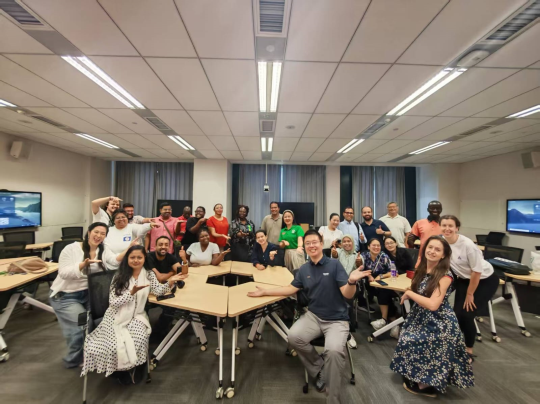
Speaking at an international media program, Zhao Yunfei of China Global Television Network (CGTN) said the initiatives reflect China's response to growing global challenges, including geopolitical tensions, economic uncertainty and what Beijing describes as a widening deficit in global governance. Zhao said the framework is built around four initiatives introduced in recent years. The Global Development Initiative (GDI), launched in 2021, promotes poverty reduction, food security and people-centered development. Zhao cited China's targeted poverty alleviation campaign, which lifted nearly 100 million people out of extreme poverty, as an example of the approach. The Global Security Initiative (GSI), introduced in 2022, advocates common, comprehensive, cooperative and sustainable security, while emphasizing peaceful dispute resolution through dialogue, respect for sovereignty and adherence to the purposes and principles of the United Nations Charter. The Global Civilization Initiative (GCI), announced in 2023, seeks to strengthen exchanges among civilizations, encourage mutual learning between cultures and promote respect for the diversity of human civilizations. The Global Governance Initiative (GGI), unveiled in 2025, calls for strengthening multilateralism, upholding international law and promoting a more equitable and inclusive global governance system. Zhao also highlighted the continued evolution of the Belt and Road Initiative (BRI), describing it as a comprehensive platform for international cooperation that has expanded beyond infrastructure development to include policy coordination, trade, investment, financial cooperation and people-to-people exchanges. According to figures presented during the briefing, China has signed Belt and Road cooperation documents with more than 150 countries and over 30 international organizations, while two-way investment with Belt and Road partners exceeded US$240 billion between 2021 and mid-2025. He said China will continue to support multilateral cooperation through the United Nations and other international mechanisms, including BRICS, the Shanghai Cooperation Organization (SCO), the Group of Twenty (G20) and the Asia-Pacific Economic Cooperation (APEC) forum, describing dialogue, practical cooperation and adherence to the UN Charter as essential to addressing global challenges. Laos, situated between China and Vietnam, has a high degree of economic dependence on both. In particular, China-led infrastructure development projects may contribute to Laos' economic growth, but concerns have also been raised about increasing debt burdens and economic structural imbalances. Participation in China's global governance initiatives could offer Laos an opportunity to redefine its position in the international community, while simultaneously, there is caution regarding the expansion of Chinese influence. The Lao government is likely to aim to secure development funds, technology transfer, and expanded trade opportunities through cooperation with these international initiatives. However, managing domestic economic challenges and social impacts while maintaining and managing relations with China and Vietnam under a one-party system will be a significant challenge for Laos going forward.

多角的分析

経済的影響

中国が提示した4つのグローバル構想は、ラオス経済にとって開発資金や投資機会の拡大という恩恵をもたらす可能性がある。特に一帯一路構想(BRI)の継続的な進化は、インフラ開発だけでなく、貿易や投資の促進にもつながりうる。しかし、ラオスの経済は中国への依存度が高く、これらの構想への参画は、債務負担の増加や経済構造の偏りをさらに悪化させるリスクを伴う。対中依存の深化は、ラオス経済の脆弱性を高める要因となりうる。

投資家心理

中国のグローバル構想は、ラオスにおける投資環境に変化をもたらす可能性がある。特にBRIの拡大は、インフラ関連分野への投資機会を増やすかもしれない。しかし、ラオスの一党体制や、中国への経済的依存度の高さは、投資家にとってリスク要因となりうる。透明性の欠如や、債務問題の潜在的な拡大は、慎重なリスク評価を必要とする。長期的な視点では、中国主導の経済圏への組み込みが進むことで、特定の産業への投資が集中する可能性が考えられる。

社会的影響

中国のグローバル構想、特にGDIやGCIは、ラオス国内の貧困削減や文化交流の促進に貢献する可能性がある。しかし、これらの構想がラオスの社会構造や文化に与える長期的な影響については、注意深い観察が必要である。中国の影響力の拡大は、ラオスの社会規範や価値観に subtle な変化をもたらす可能性があり、特に若年層の価値観形成に影響を与えることも考えられる。また、インフラ開発に伴う土地利用や環境への影響は、地域社会との摩擦を生む可能性も否定できない。

市民の声

中国のグローバル構想は、ラオス市民の生活に直接的・間接的な影響を与える。GDIによる貧困削減は、一部の国民の生活水準向上に寄与する可能性がある。しかし、経済成長の恩恵が均等に行き渡らない場合、格差の拡大を招く恐れもある。また、中国への経済的依存度の高まりは、将来的な雇用機会や生活必需品の価格変動といった形で、市民の生活に影響を及ぼす可能性がある。特に、インフラプロジェクトに関わる地域住民にとっては、生活環境の変化が懸念される。

背景・歴史的文脈

ラオスは、冷戦期からベトナムと緊密な関係を築き、独立後の経済発展においても両国、特に中国からの支援を大きく受けてきた。一帯一路構想(BRI)は、ラオスにおける鉄道建設などの大規模インフラプロジェクトを推進し、経済成長の起爆剤として期待される一方、債務問題の懸念も高まっている。中国が提示するグローバル・ガバナンス構想は、こうした経済的結びつきをさらに強化し、ラオスの国際社会における立ち位置や、中国への依存度をさらに深める可能性を秘めている。

原文ソース

KPL Laos News

原文を読む