Supreme Court Clarifies Admissibility of Photocopies as Evidence
Technology
2026年7月8日
4
Philstar Nation

Supreme Court Clarifies Admissibility of Photocopies as Evidence

AI サマリー

The Philippine Supreme Court has clarified the conditions under which photocopies (duplicates) are admissible as evidence. Admissibility is limited to instances where the authenticity of the original is not questioned and the copy accurately reproduces the original. This clarification arose during a debate over the presentation of digital evidence in a Senate impeachment trial.

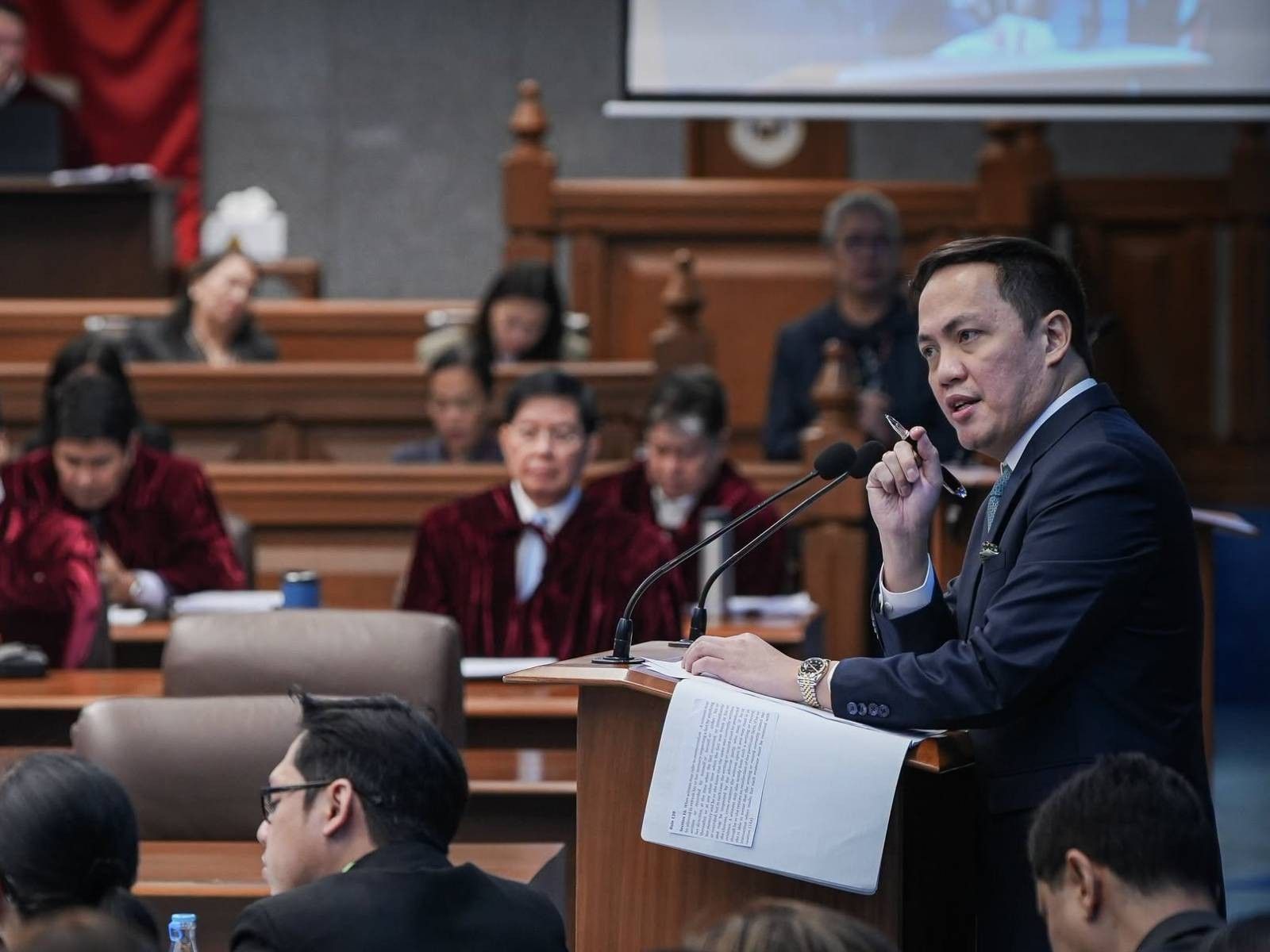
A debate over the admissibility of photocopies as evidence has emerged during the ongoing impeachment trial at the Philippine Senate, following an objection raised by the defense regarding the presentation of digital evidence. The objection centered on printouts used to authenticate an online video related to Vice President Sara Duterte, with the defense arguing they were mere photocopies and not the original digital data. During the impeachment trial on July 7, National Bureau of Investigation Senior Agent John Mark Calilung detailed the process he used to preserve and verify the video of Vice President Duterte's November 2024 Zoom press conference, where she allegedly said she had hired an assassin to kill President Ferdinand Marcos Jr. and his family. Calilung explained that his digital forensic process involved filing a preservation request with Meta, capturing a screen recording and creating a unique hash value to ensure the file remained untampered with before it was presented in court. To prove the video's authenticity, House prosecution lawyer Amando Virgil Ligutan introduced a certified copy of Calilung's affidavit alongside printed screenshots of the Meta request. However, defense lawyer Carlo Narvasa objected to the submission, arguing that the prosecution was using mere photocopies instead of the original electronic data, while also pointing out that the physical USB drive or CD mentioned in the annexes was missing. The impeachment court overruled the objection and allowed the preliminary marking of the documents, clarifying that accurate printouts of digital files are legally admissible as originals. With that said, are photocopies of documents admissible as evidence in court? The Supreme Court, in the case of People v. Lastimosa, promulgated in February 2025, said they are admissible. According to the high court, a photocopy or a "duplicate," defined as a counterpart produced by photography or other equivalent techniques that accurately reproduce the original, is admissible to the same extent as the original. However, there are conditions for its admissibility. According to the Supreme Court, a photocopied document is admissible unless: (1) A genuine question is raised as to the authenticity of the original. (2) Under the circumstances, it would be unjust or inequitable to admit the duplicate in lieu of the original. The 2019 Revised Rules on Evidence provide that under the original document rule, when the contents of a writing, recording or photograph are at issue, the original document must generally be presented to prove those contents. However, there are exceptions: (a) When the original is lost or destroyed, or cannot be produced in court, without bad faith on the part of the offeror. (b) When the original is in the custody or under the control of the party against whom the evidence is offered, and the latter fails to produce it after reasonable notice, or the original cannot be obtained through local judicial processes or procedures. (c) When the original consists of numerous accounts or other documents that cannot be examined in court without great loss of time, and the fact sought to be established is only the general result of the whole. (d) When the original is a public record in the custody of a public officer or is recorded in a public office. (e) When the original is not closely related to a controlling issue. In the case, the high court, citing the 2019 Revised Rules on Evidence, defined what constitutes an original and a duplicate document. An original document is defined under the rules as follows: (a) An "original" of a document is the document itself or any counterpart intended to have the same effect by the person executing or issuing it. An "original" of a photograph includes the negative or any print made from it. If data is stored in a computer or similar device, any printout or other output readable by sight or other means, shown to accurately reflect the data, is considered an "original." Meanwhile, a duplicate document is defined as follows: (b) A "duplicate" is a counterpart produced by the same impression as the original, or from the same matrix, or by means of photography, including enlargements and miniatures, or by mechanical or electronic rerecording, or by chemical reproduction, or by other equivalent techniques that accurately reproduce the original.

多角的分析

経済的影響

今回の最高裁の判断は、デジタル証拠の提出における手続きの透明性と信頼性に関わる。経済活動においては、契約書や取引記録など、デジタル化された証拠の重要性が増している。写しの証拠能力に関する明確な基準は、ビジネス取引における紛争解決を円滑にし、電子商取引の信頼性を高める上で不可欠である。特に、国際的な取引においては、証拠の有効性が法域によって異なる場合があり、このような国内基準の明確化は、フィリピン国内の経済活動における法的安定性を向上させる。

投資家心理

投資家にとって、法制度の予測可能性と安定性は極めて重要である。今回の最高裁の判断は、フィリピンにおける法的手続き、特に証拠の取り扱いに関する明確な指針を提供するものと言える。これにより、訴訟リスクの評価がしやすくなり、特にデジタル資産や電子記録が関わる取引において、投資家はより安心して事業を進めることができるようになる。ただし、写しの証拠能力には依然として条件が付くため、契約締結時や証拠保全の段階で、原本の確保や真正性の証明に関する十分な注意が必要となる。

社会的影響

今回の最高裁の判断は、一般市民が法的手続きにおいて証拠を提出する際の理解を助ける。例えば、借金返済の督促や、不動産取引における契約不履行の訴訟などで、スマートフォンで撮影した写真や、ダウンロードしたメールのプリントアウトなどが証拠として提出されるケースは多い。最高裁が示した基準は、これらの証拠が裁判でどのように扱われるかの指針となり、市民が自身の権利を主張する上で、より確実な法的支援を得られる可能性を高める。一方で、デジタル証拠の真正性を証明する技術的な知識がない場合、証拠能力が認められないリスクも依然として存在する。

市民の声

今回の最高裁の判断は、市民が法的手続きにおいて証拠を提出する際の理解を深める上で重要である。例えば、日々の生活の中で発生する様々なトラブル、例えば近隣との騒音問題や、消費者契約における不当な請求などにおいて、写真や録音、メールなどのデジタルデータが証拠として用いられる機会が増えている。最高裁が示した「写し」の証拠能力に関する明確な基準は、市民が自身の権利を主張する際に、どのような形式で証拠を提出すれば有効となるかの指針となる。これにより、市民はより自信を持って法的手続きに臨むことができるようになる。しかし、デジタル証拠の真正性を証明するための技術的なハードルは依然として存在し、専門的な知識がない市民にとっては、証拠の有効性を確保することが課題となる可能性もある。

背景・歴史的文脈

フィリピンにおける証拠能力の議論は、長らく「原本主義」が原則とされてきた。しかし、デジタル技術の普及に伴い、原本の定義や、複製物の証拠能力に関する法解釈が重要視されるようになった。2019年の証拠に関する改正規則では、原本が提示できない場合の例外規定が詳細に定められ、写し(複製)の証拠能力についても、一定の条件下で認められることが明記された。今回の弾劾裁判における議論は、この改正規則の具体的な適用事例として、デジタル証拠の真正性証明という現代的な課題を浮き彫りにした。最高裁の今回の説明は、過去の判例と現行法に基づき、デジタル時代における証拠能力のあり方を示すものと言える。

原文ソース

Philstar Nation

原文を読む