General articles are free for 24 hours after publish.
Laos Eyes EV Shift Amidst Global Automotive Trends
South Korean automaker Kia surpassed 100,000 EV sales domestically. This development raises questions about Laos' potential EV adoption, infrastructure needs, and economic implications.
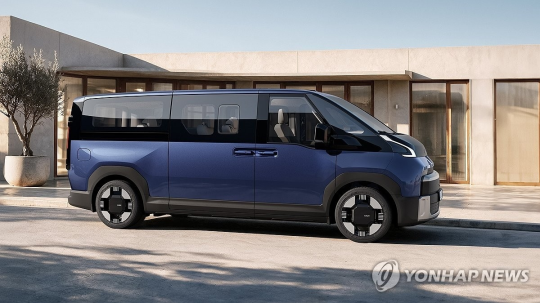
Kia Corp., Republic of Korea's second-largest automaker, said Sunday its cumulative electric vehicle (EV) sales in the domestic market have surpassed 100,000 units so far this year. It is the first time an automaker operating in Republic of Korea has reached the milestone in EV sales, the company said. From January through Sept. 17, Kia's cumulative EV sales reached 100,118 units, more than doubling from 45,518 units during the same period last year, according to Kia sales data. EVs accounted for 23.8 percent of Kia's total sales of 420,426 vehicles during the period, meaning nearly one in four vehicles sold was an EV. Kia's EV lineup includes the EV3, EV4 and EV5 sedans, the EV6 and EV9 SUVs, and the purpose-built vehicle (PBV) model PV5. The maker of the K5 sedan and Sorento SUV unveiled the PV7, its second PBV model, in Germany last month. Kia plans to initially launch the PV7 Cargo Long and PV7 Passenger Long, both about 5.3 meters long, in Republic of Korea and Europe in the second half of 2027. "The company will strengthen its leadership in the domestic EV market by expanding its PBV lineup with the PV7," a Kia official said. This development in South Korea's automotive sector, particularly the rapid growth in EV sales, carries implications for Laos. As a nation under a one-party system, Laos is focused on economic development, with strong ties to China and Vietnam, both of which are increasingly interested in EV adoption. Laos may eventually consider similar transitions. However, the path to widespread EV adoption in Laos would present significant challenges. The development of charging infrastructure is a primary concern, requiring substantial investment given the current state of the national power grid. Furthermore, the higher purchase price of EVs could be a major barrier for Lao citizens, considering the country's relatively lower average income. Economically, the shift to EVs could foster new industries and opportunities. Simultaneously, it necessitates careful consideration of the impact on existing automotive sectors and their supply chains. The Lao government will face the task of formulating policies to manage this transition and engaging in public awareness campaigns. Laos' approach to this global EV trend will be a crucial indicator of its future economic growth and societal transformation.
Original source
KPL Laos News