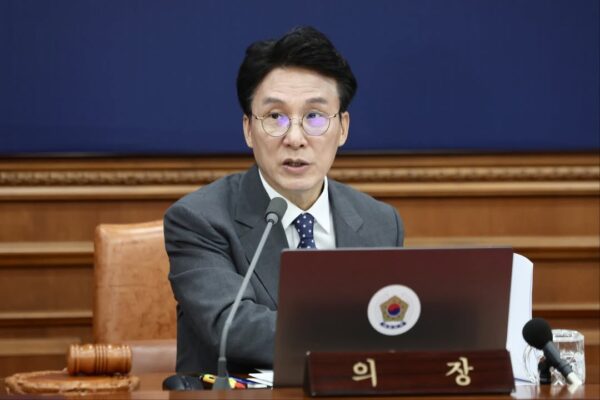
4-Way Race for Democratic Party Leadership Tests Lee Jae-myung’s Influence
Politics
2026年7月8日
5
The Diplomat Indonesia

4-Way Race for Democratic Party Leadership Tests Lee Jae-myung’s Influence

AI サマリー

A fierce contest is shaping up for the leadership of South Korea's Democratic Party, with former Prime Minister Kim Min-seok entering the race. The election tests President Lee Jae-myung's influence amid factional tensions and criticism over legislative progress.

The race for the next chair of South Korea's ruling Democratic Party (DP) is shaping up to be a fierce contest that will test President Lee Jae-myung's influence. On July 7, former Prime Minister Kim Min-seok formally declared his candidacy, escalating moves surrounding the party leadership election. Kim accused Jung Chung-rae, a former DP leader, of self-serving politics that prevented the party from translating President Lee Jae-myung’s approval ratings into legislative wins. The race is likely to be intense, given the tensions between the pro-Lee and pro-Jung factions within the party. Jung is expected to formally announce his candidacy in the coming days; he resigned his post last month to run for the election. Son Yong-gil, a six-term lawmaker who returned to the National Assembly after winning a June 3 by-election, and Ko Min-jung, a National Assembly member and former TV and radio host, also joined the race on July 8. According to a local pollster, Kim leads Jung by 21 percentage points among DP supporters, with 45 percent support compared to Jung’s 24 percent. However, it is still unclear who will win the race since the DP, for the first time, will weigh votes from ordinary dues-paying members equally with those of convention delegates. Jung pushed the change through as his signature reform earlier this year, arguing it would strengthen party sovereignty. President Lee is a DP member, and the party also controls 161 of the National Assembly’s 300 seats, along with the speakership and the chairmanship of the Legislation and Judiciary Committee, which vets every bill before a final vote. There is no excuse for gridlock, yet complaints have persisted inside and outside the presidential Blue House that the DP is not moving fast enough. Lee himself has voiced frustration at Cabinet meetings over the pace of legislation and the party’s failure to translate its legislative majority into passed bills. That backdrop puts Jung in an awkward position. His year as party leader coincided with the complaints about the DP’s strategy, which has made many pro-Lee members of the party hold Jung personally responsible for the sluggish pace of legislation. His campaign thus reads less as a bid to serve Lee’s agenda than as an effort to protect his own bloc’s standing within the party. Stepping aside would likely cost Jung’s faction control over DP nominations for the next general elections in 2028. Meanwhile, Kim and Song are functioning as something close to a single ticket. Both have targeted Jung directly, and Song has said he would drop out if his campaign risks splitting the anti-Jung vote. Ko’s entry complicates that calculus. A former spokesperson for previous President Moon Jae-in, Ko is campaigning on generational change and the retirement of the party’s senior cohort. She draws from a pro-Moon base close to Jung’s own, and it remains unclear whether her candidacy will pull votes from Jung or simply give younger members somewhere else to go. Given her reputation as “anti-Lee” – a label she denies – and the baggage that entails in today’s DP, many expect Ko to drop out of the race in the coming weeks. While the DP’s chair race is shaping up to be a fierce competition, the opposition People Power Party offers a striking contrast in how it has handled its own leadership crisis. Even after the PPP’s devastating defeat in the June 3 local elections, party leader Jang Dong-hyuk has refused to resign. Instead, he has threatened disciplinary action against members who criticized his leadership. Where the DP has turned accountability for a mixed result in the June elections into the entire premise of its leadership race, the PPP has shown little internal appetite to force out a leader who presided over defeat.

多角的分析

経済的影響

民主党代表選における派閥間の対立は、党の政策決定プロセスに影響を与え、経済政策の安定性に懸念を生じさせる可能性がある。特に、立法の遅延は経済成長や投資環境に悪影響を及ぼすリスクがある。李大統領の掲げる経済政策が、党内対立によって推進力を失うことも懸念される。

投資家心理

韓国の政治的不確実性は、投資家にとってリスク要因となる。民主党内の権力闘争は、政策の予測可能性を低下させ、資本の流入を抑制する可能性がある。特に、主要な経済政策や規制の変更に関する不確実性は、外国直接投資(FDI)に影響を与えるだろう。

社会的影響

民主党代表選は、党内の世代間対立や、李大統領の指導力に対する党員の評価といった社会的な側面も浮き彫りにしている。特に、一般党員の投票権が強化されたことで、若手党員や一般市民の声が党運営に反映されやすくなる可能性がある。しかし、これが党内の分断をさらに深める可能性も否定できない。

市民の声

一般市民への直接的な影響としては、党内対立が立法プロセスを停滞させ、国民生活に直結する政策(例:社会福祉、住宅政策、雇用対策)の実現を遅らせる可能性がある。また、政治的な混乱は、政治への信頼感を低下させ、市民の政治参加意欲を削ぐことも考えられる。

背景・歴史的文脈

韓国の政党における代表選は、党内の権力構造を決定し、大統領の政治的影響力に直接関わる重要なイベントである。特に、与党である民主党の代表選は、李在明大統領の政権運営の行方を左右する。過去の代表選では、党内派閥間の激しい駆け引きが繰り返されてきた。今回の選挙で、一般党員の投票権が強化されたことは、党の意思決定プロセスにおける民主化を促進する一方、派閥間の対立をより顕在化させる可能性もある。

原文ソース

The Diplomat Indonesia

原文を読む