General articles are free for 24 hours after publish.
Vietnam's 'Most Scenic Forest Expressway' Sees New Developments, Slashing HCMC-Da Lat Travel to 3 Hours
The Tan Phu – Bao Loc Expressway project in southern Vietnam has seen new developments. Scheduled for completion this year, the highway is expected to halve travel time between Ho Chi Minh City and Da Lat, boosting regional economic activity.
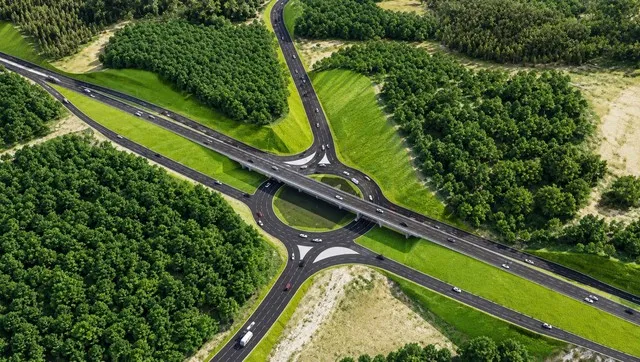
On September 14, leaders of the Lam Dong Provincial People’s Committee convened an appraisal council meeting to review proposed revisions to the investment policy report for the Tan Phu – Bao Loc Expressway Project. This project is set to significantly reduce travel time between Ho Chi Minh City and the highland resort city of Da Lat from over six hours to approximately three hours, earning it the moniker of Vietnam’s “most scenic forest expressway.” The expressway, spanning approximately 65.88 kilometers, will traverse about 11.91 kilometers in Dong Nai Province and 53.97 kilometers in Lam Dong Province. It will directly link the Dau Giay – Tan Phu Expressway to the Bao Loc area, substantially enhancing transport connectivity between Lam Dong and Vietnam’s Southeast economic region. Classified as a Group A, Grade I transport infrastructure initiative, the route is engineered for a design speed of 80 km/h. Under the original phased-investment plan, the highway would open with four lanes and a 17-meter roadbed, eventually expanding to 22 meters with two continuous emergency stopping lanes. The project requires roughly 500.64 hectares of land, including 86.34 hectares in Dong Nai and 414.3 hectares in Lam Dong. Developed under a Build-Operate-Transfer (BOT) model, the expressway is scheduled for completion and commercial launch in the fourth quarter of 2027. During the meeting, the appraisal council reviewed proposed adjustments to the project’s scope, scale, geographical footprint, implementation timeline, and preliminary total capital outlays. Notably, the recommended approach calls for completing the expressway to its final full scale right from the start, bypassing the phased-build-then-widen model. Assessments show that executing the project in phases would require multiple disruptive construction rounds, along with altering or dismantling previously built elements such as drainage culverts, underpasses, slope reinforcements, road signs, and lane markings. Such repeated interventions risk interrupting traffic operations, driving up aggregate expenses, and creating potential road safety hazards. Preliminary calculations indicate that building the full-scale highway from day one could save roughly 422 billion VND (approximately $16.8 million) compared to the phased-expansion model. Ground broke on the Tan Phu – Bao Loc Expressway on December 19, 2025. Once open, the corridor is expected to cut travel times between Ho Chi Minh City and Da Lat from more than six hours down to about three hours, while relieving chronic bottlenecks along National Highway 20. Carving through lush forest canopy and Lam Dong’s signature highlands terrain, the route has been dubbed Vietnam’s “most scenic forest expressway.” Once completed, it will open fresh economic corridors for tourism, manufacturing, and logistics across southern Lam Dong. This expressway construction is part of Vietnam's broader infrastructure investment drive, aligning with national strategies to accelerate economic growth and reduce regional disparities. The impetus behind such large-scale infrastructure projects in Vietnam's one-party system, coupled with expectations for economic impact, is noteworthy. Amidst evolving relations with China, strengthening the domestic economy and regional economic integration remains a key priority for Vietnam.
Original source
Vietnam Insider