Vietnam Tourism Aims for 'Smartization' with Data-Driven Ecosystem
Vietnam's National Administration of Tourism is promoting the establishment of a unified, synchronized data infrastructure to achieve 'smartization' in the tourism industry. By consolidating dispersed data and utilizing it for tourist behavior analysis and service improvement, the goal is to foster tourism as a key national economic sector.
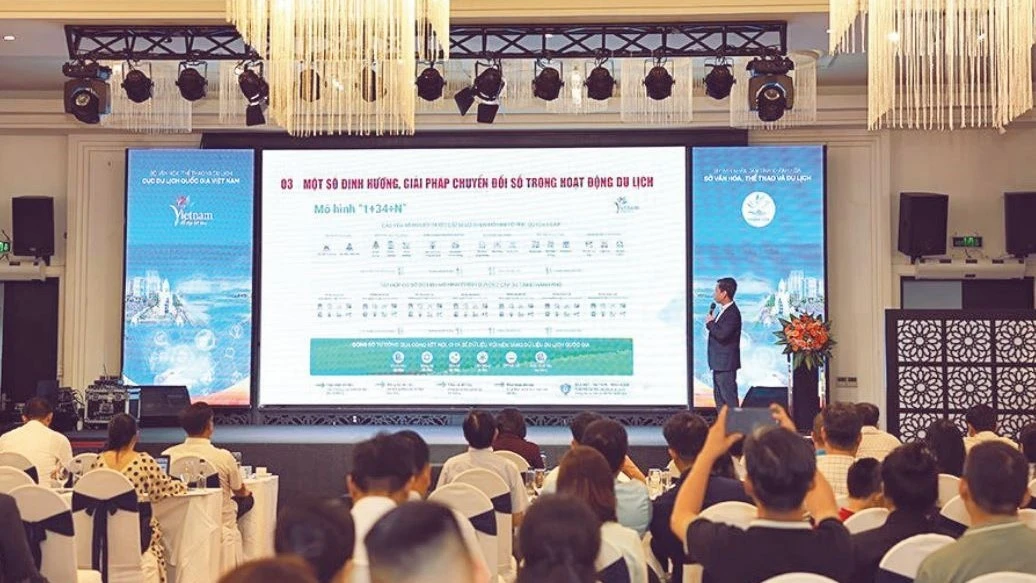
Vietnam's National Administration of Tourism is urgently promoting the establishment of a unified and synchronized data infrastructure to achieve smartization in the tourism industry. This is considered an essential element for realizing the goal of developing tourism into a key national economic sector. According to data from the National Administration of Tourism, in the first six months of 2026, Vietnam welcomed over 12.2 million international visitors, a 14.8% increase compared to the same period in 2025, reaching 48.8% of the plan. Approximately 81 million domestic tourists were served, equivalent to 54% of the set target, with total tourism revenue reaching VND 569 trillion (approximately USD 22 billion), or 50.5% of the plan. These figures indicate significant progress in the scale of the market and the number of tourists for Vietnam's tourism. However, challenges remain when considering indicators such as length of stay, average spending per visitor, and the rate of international tourist return, where Vietnam still lags behind many countries globally. To address this situation, the National Administration of Tourism has proposed building a national tourism data ecosystem based on the "1+34+N" model. '1' represents the national tourism data platform coordinated by the Administration, '34' refers to the data from 34 provinces and centrally-governed cities, and 'N' includes relevant ministries, sectors, businesses, and organizations. Under this model, the data platform, spearheaded by the Ministry of Culture, Sports and Tourism, will connect with data from localities nationwide and expand its linkage with ministries, sectors, and the business community to form a continuous and updated data network. Pham Van Thuy, Deputy Director General of the National Administration of Tourism, emphasized that in the digital era, tourism's digital transformation is not merely about applying technology but a comprehensive process of restructuring management, business operations, and customer experiences. The national tourism data system is identified as the core digital infrastructure and the "backbone" of the entire smart tourism ecosystem. The "1+34+N" model aims to create digital tourist profiles, thereby enhancing predictive capabilities, operational management, and real-time service personalization. This approach seeks to build data-driven management capabilities rather than relying on subjective, experience-based decision-making. The plan for 2026-2027 focuses on connecting dispersed data sources from ministries, localities, and businesses to form a core data system. From 2027 onwards, the Ministry of Culture, Sports and Tourism will continue to refine the shared model and issue data standards, sharing mechanisms, and data utilization policies. In recent times, Vietnam's tourism sector has gradually developed and built shared digital platforms to connect state management agencies, businesses, tour guides, and tourists. These include the tourism database system, tourism statistical reporting system, the "Tourism Management and Business Platform," the tourism operational information Dashboard, the national tourism application "Vietnam Travel," the national tourism card, and a multi-modal electronic ticketing system. Hoang Quoc Hoa, Director of the Tourism Information Center, stated that the implementation of these shared digital platforms developed by the National Administration of Tourism will help localities and businesses save investment and training costs. It will also connect data, overcome fragmentation, create consistency, facilitate management and business, and improve tourist experiences. Deputy Director General Pham Van Thuy stressed the importance of uniformity and sharing, expressing concern that if each locality develops its own isolated system, it would lead to wasted resources and a lack of collective strength. Therefore, the principle of the National Administration of Tourism is: "The central government builds the platform, localities implement it, businesses utilize it, and tourists benefit." To effectively promote digital transformation in tourism, key solutions include innovating promotion and advertising activities towards digitalization, leveraging AI for personalized promotional messages tailored to target markets, and strengthening digital transformation training for localities and businesses. Support for connecting central and local tourism information management systems is also crucial. Digital transformation can only succeed with a foundation of high-quality human resources capable of converting data and technology into value for tourists, businesses, and the sustainable development of the tourism industry.
多角的分析
ベトナム経済において観光産業は重要な柱であり、その成長は外貨獲得や雇用創出に直結する。今回のデータ基盤構築は、観光客の行動分析を通じて、より効果的なプロモーションやサービス改善を可能にし、消費単価の向上や滞在期間の延長に繋がる可能性がある。これにより、観光収入の増加だけでなく、関連産業への波及効果も期待できる。特に、コロナ禍からの回復期にある現在、デジタル化による効率化と競争力強化は、持続的な経済成長のための喫緊の課題である。
投資家にとって、ベトナムの観光産業におけるデジタルトランスフォーメーションは、新たな投資機会を示唆する。スマート観光エコシステムの構築は、データ分析に基づいたサービスを提供するIT企業や、データ活用を支援するコンサルティングファームへの投資を促進する可能性がある。また、データに基づいた効果的なマーケティングは、観光関連企業の収益性向上に繋がり、株式市場における魅力度を高めるだろう。ただし、データプライバシーやセキュリティに関する規制の動向も注視する必要がある。
観光客のデジタルプロファイル作成は、個々のニーズに合わせたサービス提供を可能にする一方で、個人情報保護への懸念も生じさせる。また、データ基盤の整備は、観光地の過密化を防ぎ、持続可能な観光開発に貢献する可能性がある。しかし、地方の小規模事業者や伝統的な観光形態が、このデジタル化の波に乗り遅れるリスクも存在する。観光客の増加とデータ化による恩恵が、地域住民や小規模事業者に公平に分配される仕組み作りが重要となる。
データ基盤の構築は、観光客にとってよりパーソナライズされた旅行体験を可能にする。例えば、個人の興味に合わせた観光ルートの提案や、混雑状況に基づいたリアルタイムな情報提供などが期待できる。しかし、個人情報の収集と利用に関する透明性の確保が、市民の信頼を得る上で不可欠である。また、地方の観光従事者や小規模事業者が、デジタル化による恩恵を受けられるような支援策も求められる。
背景・歴史的文脈
ベトナムは、ドイモイ政策以降、経済成長の原動力として観光産業の振興に力を入れてきた。特に近年は、デジタル技術の活用による観光の高度化を目指しており、政府は「国家デジタル変革プログラム」などを通じて、各産業分野でのDXを推進している。今回の観光データエコシステム構築は、こうした国家的なデジタル化戦略の一環であり、観光を経済の「主力産業」に位置づけるという長期的な目標に基づいている。分散したデータを集約し、統一的なプラットフォームで管理する試みは、ベトナムの行政システムにおける情報共有の課題克服にも繋がるものと考えられる。
原文ソース
Nhan Dan