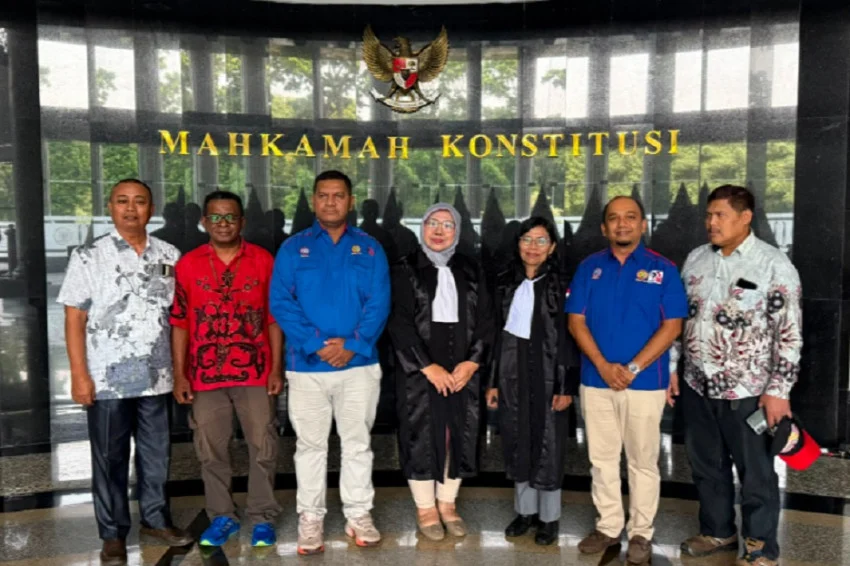
Indonesian Constitutional Court Approves Lump-Sum or Periodic Voluntary Pension Payments
The Indonesian Constitutional Court has issued a landmark decision expanding options for voluntary pension payments, allowing workers to choose between lump-sum or periodic installments, offering flexibility based on individual financial circumstances.
This article requires PRO
This article is outside the free access window or is a special report. PRO unlocks it and the full archive.
Related articles
- Taiwan Crisis: Europe's Stance Hinges on Indonesian Position?
In a potential Taiwan crisis, the stance of European nations towards China could be significantly influenced by the actions of key Southeast Asian players like Indonesia. As Europe struggles to agree on how to frame Beijing's actions, Indonesia's position may shape international decision-making.
- Ciguatoxin in Indonesian Coral Fish: Hidden Threat or Misinformation?
A podcast discussing 'superbugs and poisonous animals' sparked concern in Indonesia, claiming coral fish, especially red snapper over 2kg, contain ciguatoxin. Experts clarify that Indonesian fish on the market are safe, though acknowledge the need for better risk mapping and detection methods for ciguatoxin, which is more prevalent in Pacific regions.
- Indonesia to Mandate Halal Certification, Offering Grace Period
Indonesia is moving towards mandatory halal certification to protect its citizens. The government plans to offer a grace period for businesses not yet ready, sparking attention on the details and implications.
- Indonesia Recovers Over Rp13.2 Trillion in Assets, AG Declares 'Proof of State Presence'
Indonesia's Special Task Force (Satgas PKH) has recovered assets worth over Rp13.2 trillion (approximately USD 860 million) and 259,230 hectares of land. Attorney General praises this as 'proof of the state's presence,' highlighting the government's commitment to combating corruption and illicit wealth.