General articles are free for 24 hours after publish.
SC voids vessel tracking rule, questions means to fight IUUF
The Philippine Supreme Court has declared a government regulation mandating electronic tracking of commercial fishing vessels unconstitutional, deeming it overly broad and violating constitutional protections. The ruling, aimed at combating illegal, unreported, and unregulated (IUUU) fishing, raises questions about the balance between fisheries management and individual rights.
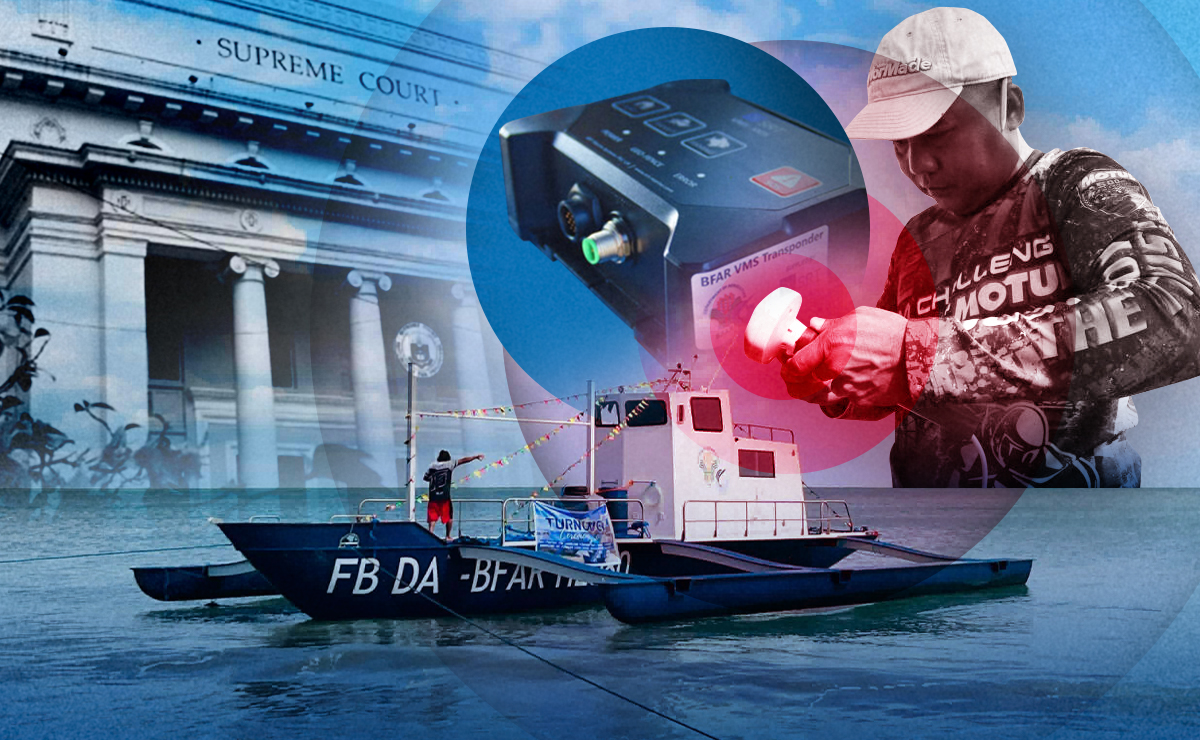
MANILA, Philippines — The Supreme Court has upheld a 2021 ruling that struck down a government regulation requiring commercial fishing vessels to be monitored electronically, saying the measure went beyond what was reasonably necessary to fight illegal fishing and violated constitutional protections. The ruling involved Fisheries Administrative Order (FAO) No. 266, issued by the Department of Agriculture (DA) through the Bureau of Fisheries and Aquatic Resources (BFAR) in 2020. The order required Philippine-flagged commercial fishing vessels to install a Vessel Monitoring System (VMS) and use an Electronic Reporting System (ERS). In an 82-page decision promulgated Jan. 21, 2026, the high court, voting 13-2, affirmed the June 1, 2021, decision of the Malabon City Regional Trial Court declaring FAO No. 266 unconstitutional. The Supreme Court also directed the DA, through BFAR, to take “immediate steps to rectify deficiencies in Fisheries Administrative Order No. 266” and report the action taken to the court. The decision was made public July 30. But what exactly did the court find wrong with vessel monitoring? What does FAO No. 266 require? What does the Fisheries Code actually say about monitoring fishing vessels? And does the ruling mean commercial fishing vessels can now enter municipal waters without consequence? Here’s what you need to know. Vessel Monitoring Measures (VMM) refer to systems used by fisheries authorities to monitor fishing vessels. The Supreme Court decision describes the VMS as a system that “tracks, monitors, and manages fishing vessels,” while the ERS is used to record, report, process, store and transmit fisheries data. Under FAO No. 266, commercial Philippine-flagged fishing vessels were required to use these systems. The ERS was designed to electronically record information, including the species and volume of fish caught, the vessel’s position, and the date and time of fishing activity. The order also provided for the continuous transmission of vessel information while fishing. The regulation had several stated purposes, including improving the monitoring of fishing operations, strengthening law enforcement, supporting fisheries research and data collection, ensuring seafood traceability and catch documentation, assisting in the investigation of fisheries violations, and helping locate vessels during accidents and disasters. In other words, VMM was not simply a GPS tracker. It was intended to give fisheries authorities electronic information about where vessels were, when they were fishing and what they were catching. The roots of the regulation go back to the Philippine Fisheries Code of 1998, or Republic Act No. 8550. The law was amended in 2015 by Republic Act No. 10654, which specifically sought to strengthen the prevention, deterrence and elimination of illegal, unreported and unregulated fishing, or IUUF. The amended law also strengthened the state’s mandate to manage Philippine fisheries sustainably. The amended Fisheries Code says the state is to ensure the “rational and sustainable development, management and conservation” of fishery and aquatic resources while maintaining ecological balance and protecting the environment. It also expressly requires a government monitoring, control and surveillance system. Section 14 of the amended Fisheries Code states: “A monitoring, control and surveillance system shall be established by the Department in coordination with LGUs, FARMCs, the private sector and other agencies concerned to ensure that the fisheries and aquatic resources in Philippine waters are judiciously and wisely utilized and managed on a sustainable basis and conserved for the benefit and enjoyment exclusively of Filipino citizens.” The same provision says: “The [Monitoring, Control and Surveillance] system shall encompass all Philippine flagged fishing vessels regardless of fishing area and final destination of catch.” There is another provision that is particularly relevant to the case. Section 119 of the amended Fisheries Code says: “No municipal, commercial or distant water fishing vessel shall engage in fishing activity without complying with the vessel monitoring measures promulgated by the Department in coordination with the LGUs.” It also makes it unlawful to “intentionally tamper with, switch off or disable the vessel monitoring system.” This wording is important because the Supreme Court did not strike down Sections 14 and 119 themselves. The case was about whether the DA and BFAR had validly implemented those provisions through FAO No. 266. Before FAO No. 266, the DA had issued FAO No. 260 in 2018. FAO No. 260 applied VMM and ERS rules to commercial Philippine-flagged fishing vessels targeting “straddling and highly migratory fish stocks.” FAO No. 266, issued Oct. 12, 2020, amended that order by removing that limitation. “Thus, the rules and regulations henceforth were to apply to all commercial Philippine-flagged fishing vessels,” the Supreme Court ruling stated. The expansion became the subject of a constitutional challenge by Royale Fishing Corporation, Bonanza Fishing and Market Resources Inc. and RBL Fishing Corporation. The companies argued that information gathered through VMS — including vessel locations and information about fishing grounds — could reveal commercially valuable information. They argued that compulsory monitoring also amounted to an unreasonable search and violated their rights to due process and equal protection. They also argued that the regulation had been issued without the scientific study and stakeholder consultations required under the rules governing the implementation of the Fisheries Code. The government disagreed. Among other arguments, the Republic said abundant fishing grounds could already be located through modern technology and that the real-time location of fishing vessels could be tracked even without VMS using publicly available technologies, including satellite-based systems. It also pointed out that fishing vessels were already required to report their “fish catch and spoilage, landing points, and quantity and value of fish caught, and off-loaded for transshipment, sale, and/or other disposal.” The Supreme Court did not say that fighting IUUF was an illegitimate government objective. Instead, it examined whether the particular means used in FAO No. 266 were reasonably connected to that objective and whether the regulation stayed within the authority granted by law. The court applied the rational basis test, which examines whether a government measure is reasonably related to a legitimate state interest. The court also recognized the government’s interest in conserving marine resources and preventing illegal fishing. However, it found the 24/7 monitoring requirement unnecessarily restrictive. One reason the cour
Original source
Inquirer NewsInfo