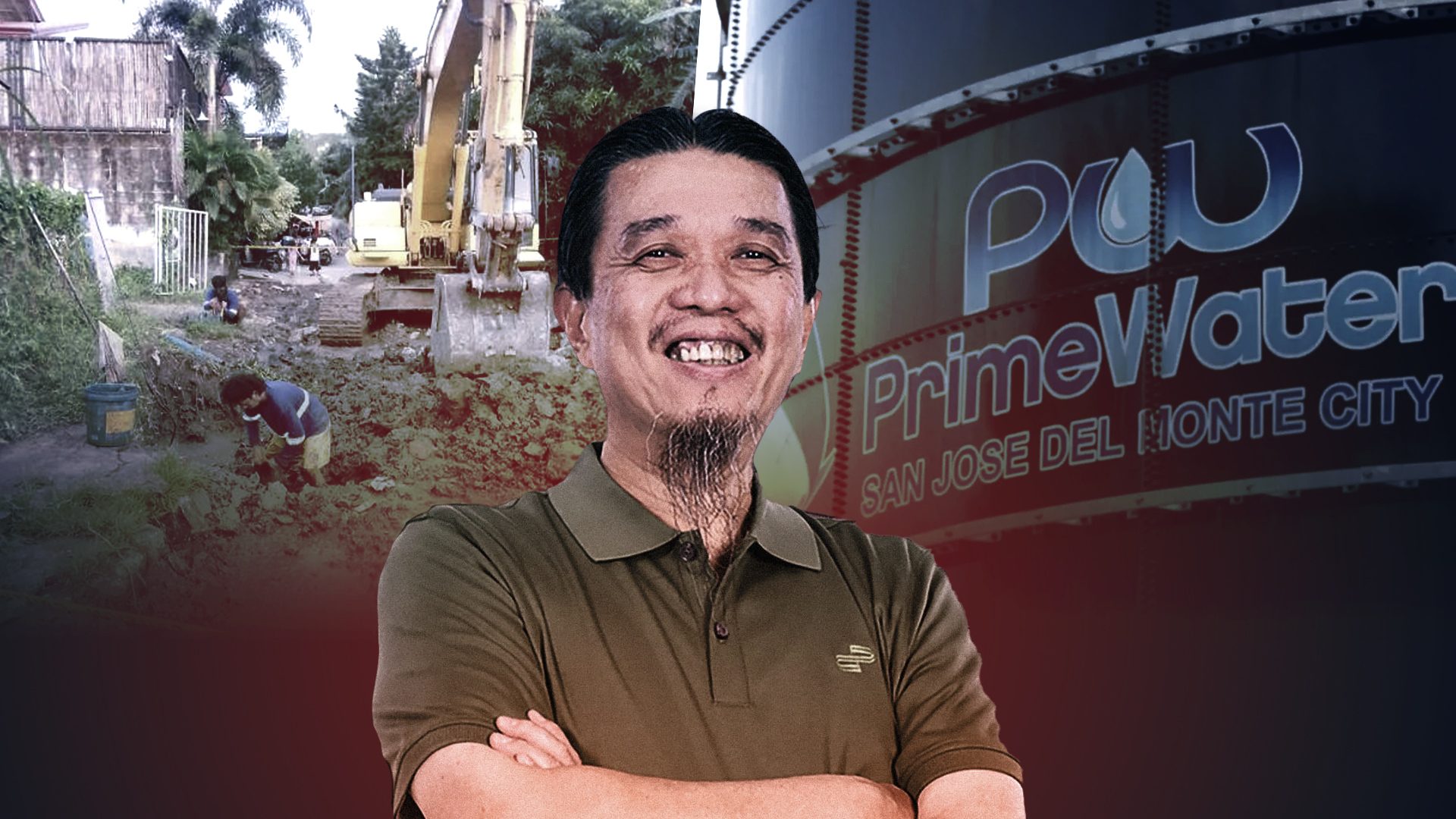
San Jose del Monte Water Crisis: Legal Battles Strain Residents' Lives
Society
2026年7月11日
5
Rappler Business

San Jose del Monte Water Crisis: Legal Battles Strain Residents' Lives

AI サマリー

A legal battle between water provider PrimeWater and city officials in San Jose del Monte, Philippines, continues to leave residents struggling with severe water shortages. A court injunction allowing PrimeWater to continue operations has blocked city intervention, escalating resident dissatisfaction.

The law exists to protect the public, not to starve them. Yet, as PrimeWater secures its victories in court, the people of San Jose del Monte are left with dry taps and empty promises, forcing out a damning question: Who does our legal system truly prioritize —corporate balance sheets or human lives? We are taught in school that contracts are the sacrosanct lifeblood of commerce — that investors demand certainty, and governments must honor their word to maintain economic credibility. That principle is fair, but water is not a mere commodity; it is life. A public utility concession does not exist simply to guarantee corporate returns; it exists to fulfill a sacred public obligation. When contract law clashes with public survival, the law must give meaningful weight to both. In San Jose del Monte, Bulacan, however, the scales of justice are dangerously warped. My inbox has overflowed with furious letters from residents who feel they have been taken hostage by the Regional Trial Court (RTC) of Las Piñas. By granting their water provider PrimeWater a preliminary injunction, the court has nullified the local government’s takeover of PrimeWater — an intervention the city deemed necessary to arrest San Jose del Monte’s worsening water crisis. I share my readers’ anguish. With this ruling, the court effectively decided that a corporation’s potential “irreparable financial harm” matters more than the agonizing reality of a parched community. This legal battle began when the city government assumed interim control to protect thousands of households after the local water district terminated its joint venture with PrimeWater. PrimeWater immediately swung its legal machinery into motion, demanding a temporary restraining order to block the takeover and safeguard its revenues. Its early efforts failed. The RTC of Bulacan flatly rejected PrimeWater’s initial bid, ruling that the public injury of a worsening water crisis far outweighed contractual claims. Yet, by shopping for relief in the RTC of Las Piñas — a known bailiwick of the Villar family — PrimeWater finally secured the victory it wanted. Legally, an injunction is meant to preserve the status quo while litigation runs its course. But to me, preserving the status quo in issues concerning public utilities is an active choice to prolong human suffering. PrimeWater’s claimed injury is purely financial: it can be measured, calculated, and compensated in pesos and cents. The public’s injury is immeasurable: tracked instead by citizens waking up before dawn to hoard water in drums, by suspended school classes, crippled hospitals, and shuttered businesses. These hardships do not register on a financial spreadsheet, but they inflict a crushing economic and social toll on the public every single day. The facts shared to me by desperate residents paint a pejorative picture of corporate negligence, where roughly 250,000 residents — one-third of the city’s population — are trapped in a perpetual water crisis. Although PrimeWater reportedly committed P6.8 billion in capital investments when its joint venture began in 2018, it has allegedly invested only about P748 million. While the local water district’s net income collapsed, PrimeWater’s profits soared (see table below) even as nearly half of the treated water is lost to leaks and broken infrastructure, and facilities sit abandoned and decaying. To prevent total catastrophe, I was told that the local government is forced to spend hundreds of millions of taxpayers’ pesos deploying water tankers, effectively subsidizing the failure of a private monopoly that still has the audacity to send their customers a monthly bill. Lucio Co’s acquisition of PrimeWater through Crystal Bridges Holding Corp. from the Villar Group in December 2025 should have been a turning point. Sadly, it has become a masterclass in corporate evasion.(READ: [Vantage Point] Lucio Co’s PrimeWater bet: The price of trust) Must Read [Vantage Point] Lucio Co’s takeover of PrimeWater changes nothing New ownership promised fresh capital and stronger governance. Yet, city officials still have not received any concrete rehabilitation roadmap, firm investment commitments, and timelines for relief. An ownership change without an accompanying recovery plan is not a rescue mission. It is a corporate shell game designed to transfer contractual rights while abandoning public responsibility. Corporate governance cannot be divorced from operational reality. If a water and wastewater company cannot deliver clean, reliable, and affordable water, it has no business operating. This is not a call for courts to succumb to public demonstrations or ignore the law, as PrimeWater has every right to defend its position. But regulators, judges, and policymakers must be able to satisfactorily answer one fundamental question: When a public utility contract receives immediate judicial protection despite years of providing rotten service, what purpose is the law actually serving? If a contract survives but the people suffer, the system has failed. A concession agreement is not an end in itself, but a legal instrument intended to achieve a positive public outcome. The citizens of San Jose del Monte are not asking the courts to abandon the rule of law; they are demanding that the law protect more than just ink on paper. The true measure of justice here is not whether a water concessionaire survives legal scrutiny, but whether its customers can get potable, round-the-clock water straight from their taps. – Rappler.com Here are recent Vantage Point pieces on consumer issues you may want to read: Click here for other Vantage Point articles.

多角的分析

経済的影響

PrimeWaterの事業継続を認める仮処分は、サンホセ・デル・モンテ市の経済活動に直接的な悪影響を与えている。水不足は、農業、製造業、サービス業など、水に依存する産業の生産性を低下させる。また、住民の生活必需品へのアクセスを制限し、消費支出を圧迫する。企業側は「財務的損害」を主張するが、住民の生活や地域経済への損害は計り知れない。市当局が水タンカーの配備に公的資金を投入していることは、PrimeWaterの事業失敗を税金で補填している状況であり、経済的非効率性が露呈している。過去の同様のケースでは、公的資金の投入が民間企業の経営責任を曖昧にし、問題の長期化を招く傾向がある。

投資家心理

この事例は、フィリピンにおける公共事業への投資リスクを示す典型例である。PrimeWaterへの投資家は、契約上の権利保護を期待する一方で、公共の福祉との間で生じる倫理的・法的なジレンマに直面している。裁判所が企業の財務的損害よりも住民の苦境を優先すべきという世論の高まりは、将来的な公共事業契約における法的安定性への懸念を生じさせる可能性がある。特に、VillarグループからLucio Co氏への所有権移転後も具体的な改善計画が示されていない点は、新規投資家にとって不透明感を与え、資本の流入を抑制する要因となり得る。

社会的影響

サンホセ・デル・モンテ市の住民約25万人が水不足に苦しむ状況は、基本的な人権である「安全な水へのアクセス」が侵害されていることを示している。住民は、日々の生活用水を確保するために早朝から並び、学校や病院の運営にも支障が出ている。これは、単なる不便を超え、公衆衛生、教育、医療へのアクセスといった社会福祉の根幹を揺るがす問題である。裁判所が企業の「回復不能な財務的損害」を優先したと住民が感じていることは、司法への信頼を損ない、社会的な不満と分断を深める可能性がある。過去の同様のインフラ関連の紛争では、住民の生活への影響が軽視された結果、社会不安が増大した事例がある。

市民の声

サンホセ・デル・モンテ市の住民は、水供給の途絶という日々の生活に直結する深刻な問題に直面しています。市当局が介入しようとしたにもかかわらず、裁判所の仮処分によってその試みが阻止されたことは、住民に無力感と怒りを与えています。彼らは、単に「契約」という言葉の裏で、自分たちの生活が犠牲にされていると感じています。特に、企業が約束した投資額に見合うサービスを提供せず、それにもかかわらず利益を上げているという事実は、住民の怒りをさらに募らせています。彼らは、法が自分たちの基本的な生活用水を確保することよりも、企業の利益を優先しているのではないかと疑念を抱いています。これは、生活実感と司法判断との乖離が、市民の不満を直接的に増幅させている状況と言えます。

背景・歴史的文脈

フィリピンでは、公共サービス(特に水、電力、交通)の民営化や民間委託が進められてきた。これは、政府の財政負担軽減やサービス効率化を目的とするが、しばしば契約内容の不透明さ、民間企業の利益優先、そして公共の福祉との衝突といった問題を引き起こしてきた。サンホセ・デル・モンテ市のPrimeWaterを巡る問題は、2018年の共同事業開始以来、水供給の不備やインフラの老朽化が指摘され続けてきた背景がある。2025年の所有権移転後も状況が改善しないことは、契約履行と公共サービス提供における構造的な課題を示唆している。

原文ソース

Rappler Business

原文を読む