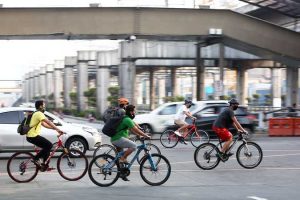
Advocates Push for P1-Billion Active Transport Budget in Philippines for 2027
Infrastructure
2026年7月7日
5
BusinessWorld Nation

Advocates Push for P1-Billion Active Transport Budget in Philippines for 2027

AI サマリー

Philippine transport advocates are urging the government to allocate P1 billion for active transportation projects in 2027, citing the need to prioritize the safety and financial well-being of the carless majority.

Transport advocates on Tuesday urged the Philippine government to increase budget allocation for active transportation projects in 2027, amid calls for safer bike lanes and walkways nationwide. “For the majority of our workforce, walking and cycling are not lifestyle choices—they are financial lifelines,” Mobility Awards National Coordinator Amber Garma said in a statement. “Active transport keeps money in workers’ pockets and drives daily productivity. Yet we are stuck in a paradox where funding and infrastructure are designed to protect only the 6% who own cars.” Active transport is defined as using one’s own power to travel, such as walking, biking, or skateboarding. The national budget for active transport infrastructure has seen a 94% drop over the past years, declining from P2 billion in 2022 to P105 million in 2026. “Congress must reverse years of fiscal neglect and lock in a minimum P1 billion budget for active transport for 2027,” Ms. Garma said. “Lastly, local governments must deploy their own funds to build interconnected networks for active transport.” Data from a Pulse Asia poll conducted in May showed that 94% of respondents agreed with proposals to construct safer, wider bicycle lanes and walkways. 93% also supported expanded public transport lanes, and 82% demanded transit subsidies. In contrast, maintaining the policy of prioritizing private vehicles had the lowest level of public agreement at 72%. “The 94% carless majority has spoken, and our leaders must step up to protect them,” Ms. Garma said. “The President must declare active transport an economic and labor priority in his upcoming State of the Nation Address (SONA).” Earlier this year, the Department of Transportation (DoTr) said it would expand its Active Transport program by creating more cycling and pedestrian routes. The department aims to establish 2,400 kilometers of protected and dedicated cycling lanes by 2028. Under the Philippine Development Plan 2023-2028, safe and well-connected active mobility networks include, among others, widening of sidewalks, adding segregated micro-mobility corridors, developing greenways, redesigning and reconstructing existing intersections, and re-evaluating interchanges and grade separators.

多角的分析

経済的影響

フィリピン経済において、アクティブ輸送への投資は、短期的なインフラ整備コストを上回る長期的な経済効果をもたらすと考えられます。歩行や自転車利用の促進は、公共交通機関への依存度を減らし、個人の移動コストを削減することで、特に低所得者層の可処分所得を増加させます。これは消費の活性化に繋がり、国内経済の底上げに寄与する可能性があります。また、交通渋滞の緩和は、物流コストの削減や生産性の向上にも貢献すると考えられます。過去の事例では、都市部における自転車インフラ整備が、地域経済の活性化や観光客誘致に繋がったケースも報告されています。

投資家心理

アクティブ輸送インフラへの大規模投資は、建設業や関連資材産業にとって新たなビジネスチャンスを生み出す可能性があります。しかし、投資家にとっては、短期的な収益性よりも、政府の財政的コミットメントの持続性や、計画の実行能力が重要な判断材料となります。過去の予算削減の経緯を見ると、政府の優先順位の変動リスクも考慮する必要があります。長期的な視点では、都市部の不動産開発や、アクティブ輸送に関連するサービス(シェアサイクル、メンテナンスなど)への投資機会も考えられますが、市場の成熟度を見極める必要があります。

社会的影響

フィリピンでは、都市部を中心に自動車中心のインフラ整備が進み、自動車を所有しない大多数の国民(歩行者や自転車利用者)が、危険で不十分な移動環境に置かれています。今回の予算要求は、この格差是正を求める社会的な声の表れです。特に、通勤・通学に依存する労働者や学生にとって、安全で快適な移動手段の確保は、生活の質と機会均等に直結します。公共の安全と健康増進という観点からも、歩行者や自転車利用者の権利と安全を保障するインフラ整備は、喫緊の課題と言えます。過去の世論調査結果も、国民の圧倒的な支持があることを示しています。

市民の声

マニラ首都圏のような大都市では、自動車の渋滞が深刻で、公共交通機関も混雑しています。歩道は狭く、自転車レーンも十分ではありません。多くの市民、特に毎日の通勤で歩いたり自転車を使ったりする人々は、危険を感じながら移動しています。今回の予算要求は、まさにこうした市民の声が形になったものです。安全な道があれば、移動にかかる時間や費用が節約でき、健康にも良い影響があるでしょう。家族や友人と過ごす時間が増えたり、より多くの仕事の機会を得られる可能性も出てきます。

背景・歴史的文脈

フィリピンにおけるアクティブ輸送インフラの整備は、長らく自動車中心の交通政策の陰に隠れてきました。都市化の進展と自動車保有率の上昇に伴い、交通渋滞、大気汚染、交通事故といった問題が深刻化する一方、歩行者や自転車利用者の安全確保は後回しにされてきました。過去数年間の予算削減は、この傾向をさらに悪化させています。しかし、近年の市民社会からの強い要請や、健康・環境意識の高まりを受け、政府もアクティブ輸送プログラムの拡充を掲げ始めています。今回の予算要求は、こうした背景を踏まえ、具体的な財政的裏付けを求める動きとして注目されます。

原文ソース

BusinessWorld Nation

原文を読む