General articles are free for 24 hours after publish.
China-US Relations: Can Both Share the Same Table?
Framing US-China relations as a zero-sum rivalry overlooks opportunities for coexistence. From Xi Jinping's early US visits to current grassroots exchanges, youth programs, and AI collaboration, the article suggests that mutual understanding and cooperation are possible, advocating for a shared table rather than a battleground.
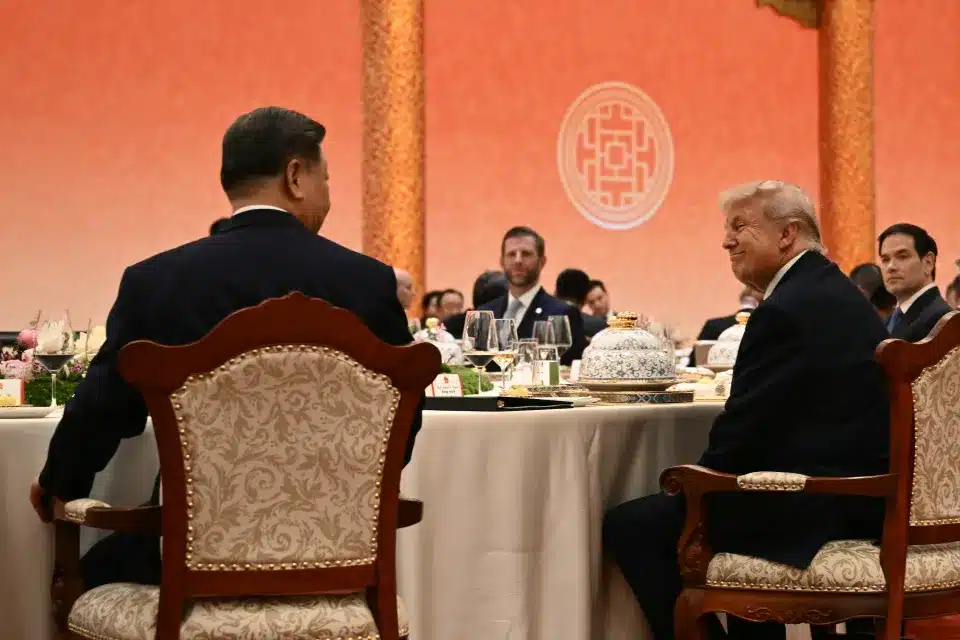
The relationship between China and the United States is often portrayed as a zero-sum rivalry, but there is also the possibility for both nations to "share the same table." Xi Jinping's visit to Iowa in 1985, where he shared a meal with a local family, highlights the importance of grassroots exchanges that can serve as a foundation for future bilateral relations. Gary Dvorchak, who now lives in Beijing, is the son of the family where Xi stayed at the time, testifying to over 40 years of people-to-people exchanges between the US and China. He emphasizes the importance of face-to-face interactions, rather than the "caricatures" of the two countries created by the media. Such direct exchanges have already reached tens of thousands through an initiative to invite approximately 50,000 young Americans to China, serving as a bridge for mutual understanding. Beyond education and cultural exchange, the potential for technological advancement through cross-border cooperation and investment is also pointed out in fields like AI investment, where competition is often emphasized. China's rapid development in the AI industry, spanning automation, robotics, and biotechnology, can create new opportunities for businesses in both countries. AI technology may no longer be an either/or choice between "bacon and eggs" and "tomato and eggs," but rather offers new ways to refine both to suit diverse tastes. Ultimately, the key is not to decide which "breakfast" is superior, but to explore paths for coexistence with both on the table. This holds implications not only for US-China relations but also for challenges faced by many countries worldwide, including Thailand. Source: Chiang Rai Times
Original source
Chiang Rai Times