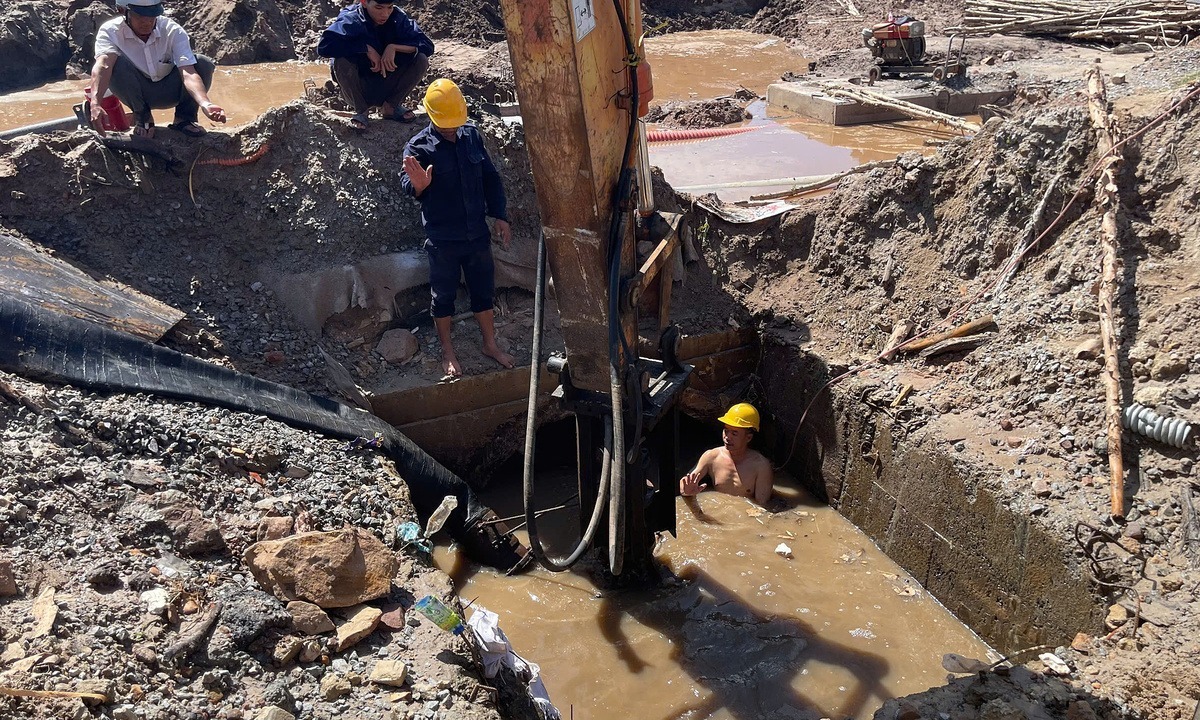
Phu Quoc Island Faces 2-Day Water Outage Amidst Infrastructure Project Coordination Issues
Approximately 3,000 households on Phu Quoc Island, Vietnam's largest, experienced a two-day water outage. The disruption stemmed from an excavator damaging a main water pipe during infrastructure construction. The incident highlights concerns about infrastructure management in the popular tourist destination.
This article requires PRO
This article is outside the free access window or is a special report. PRO unlocks it and the full archive.
Related articles
- Vietnam Moves 4-Story Villa Over 400m Using Giant 'Magic Lamp' Transporter
In Bac Ninh, Vietnam, an unprecedented feat saw a four-story villa moved over 400 meters using a specialized transporter designed to resemble a giant 'magic lamp.' This remarkable engineering operation is believed to be part of urban development relocation efforts.
- Ho Chi Minh City Residents Recount Moment Oil Rig Collapse Blocked Road
An oil rig under construction collapsed in Ho Chi Minh City, temporarily blocking a major road. Residents expressed shock at the sudden incident, and concerns about traffic disruption have been raised. Authorities are investigating the cause and working on restoration.
- Hanoi Explores 'Vertical Greening' for Urban Landscape Improvement, Learning from International Examples
Hanoi is considering the implementation of 'vertical greening' to cover structures like elevated railway pillars, overpasses, underpasses, and bus stops. Drawing inspiration from examples in Singapore, China, and Europe, the city aims to enhance its urban landscape and mitigate the urban heat island effect.
- Vietnam Accelerates Transition to Maritime Nation, Boosting Economic Growth with Port Infrastructure Enhancement
Vietnam's Communist Party Central Committee has outlined a strategy to transition from marine exploitation to marine management, aiming to boost the maritime economy through enhanced port infrastructure and logistics capabilities. This initiative seeks to elevate Vietnam's status as a maritime nation.