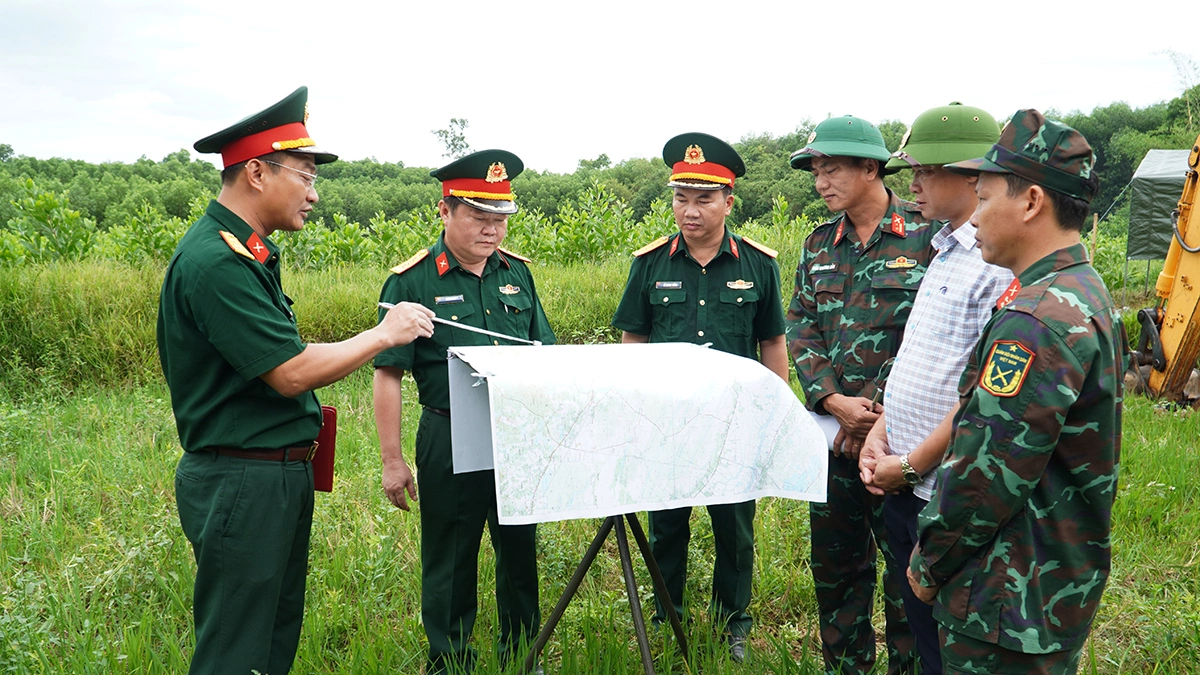
Quang Tri Surveys Potential Remains Site from 1972 Battle
Quang Tri Provincial Military Command has surveyed the Cau Nhi area, a fierce battleground in 1972, to prepare for the search and collection of unidentified remains of fallen soldiers. Based on witness testimonies and past surveys, nine suspected burial sites have been identified.
The Military Command of the central province of Quang Tri has surveyed the Cau Nhi area in Nam Hai Lang commune's Nam Chanh village, a site of intense fighting in 1972, to prepare for the search and collection of remains of fallen soldiers. Many soldiers are reported to have died in battles in this area in 1972. On July 6, Colonel Truong Nhu Y, Deputy Political Commissar of the Quang Tri Provincial Military Command and a member of the provincial Steering Committee for searching, collecting, and identifying the remains of martyrs, led a delegation on a field inspection. The survey aims to verify information provided by witnesses and serve as a basis for organizing workshops and developing plans for searching and collecting the remains of fallen soldiers. The delegation studied the terrain, demarcated areas that have been searched, areas yet to be searched, and those suspected of containing the remains of martyrs. Functional forces also surveyed the current state of land, crops, and people's assets that could be affected by the mission's implementation. They also worked with relevant organizations and individuals to agree on compensation plans if any arise. The delegation requested coordinating units to continue reviewing and verifying information with local authorities, witnesses, and related forces, complete records, and ensure sufficient personnel and equipment for safe and effective searches. According to the Quang Tri Provincial Military Command, from May 24 to June 25, 1972, Regiment 88 of Division 308 fought in the Ho Lay - Cau Nhi area. In the early morning of May 26, 1972, Battalion 6 of the regiment suffered heavy losses in a battle at Cau Nhi. The list provided by Division 308 recorded 83 deaths, while other documents estimate 93. Witnesses reported that about 4-5 days after the battle, as the soldiers' bodies began to decompose, the opposing force used bulldozers to bury them in this area. Since 1992, functional forces and local residents have collected 19 sets of martyrs' remains at Cau Nhi. Based on records from the interpretation of aerial photos from 1972 and results from ground-penetrating radar surveys, functional forces have identified nine areas suspected of containing martyrs' remains. Some locations show abnormal geological signals, which serve as a basis for continued search efforts. Source: VnExpress
多角的分析
遺骨捜索活動自体は直接的な経済効果をもたらさないが、関連するインフラ整備や地域経済への波及効果は限定的である。しかし、ベトナム戦争の遺産問題への継続的な取り組みは、国家の歴史認識と国民統合の強化に寄与し、長期的な社会安定に繋がる可能性がある。これは、外国からの直接投資(FDI)を誘致する上での間接的なプラス要因となり得る。
このニュースは、直接的な投資機会を示すものではない。しかし、ベトナム政府が過去の戦争の遺産問題に真摯に取り組む姿勢は、国内の安定と社会統合を重視する投資家にとって、ポジティブなシグナルと受け取られる可能性がある。特に、長期的視点を持つ投資家は、こうした社会的な取り組みを国の安定性評価の一環として考慮するだろう。
クアンチ省のコウ・ニー地域における遺骨捜索は、戦争で失われた兵士とその家族に安らぎをもたらす重要な取り組みである。1972年の激戦で多くの兵士が犠牲となり、その遺骨が未だに回収されていない現状は、遺族にとって長年の悲しみとなっている。今回、目撃者の証言や最新技術を駆使して遺骨の埋葬が疑われる地域を特定し、捜索活動を本格化させることは、失われた命への敬意を示すと同時に、戦争の傷跡を癒し、地域社会の和解と統合を促進する一歩となる。また、土地の利用や住民への影響についても配慮されており、地域住民の生活と遺骨捜索との両立が図られている点は注目に値する。
ベトナム国民、特に戦争経験者やその子孫にとって、失われた兵士の遺骨が発見され、適切に弔われることは、深い精神的な意味を持つ。クアンチ省での遺骨捜索は、過去の犠牲者への敬意を表し、国民の記憶を呼び覚ます機会となる。多くの兵士が未だに帰還できていない現状は、家族や地域社会に長年の悲しみをもたらしており、今回の捜索活動は、その悲しみを和らげ、故郷に眠る兵士に安息をもたらすことを期待されている。また、捜索活動に伴う土地利用や補償に関する地元住民との調整は、地域社会の協力を得る上で不可欠であり、円滑な実施が望まれる。
背景・歴史的文脈
ベトナム戦争(1955年~1975年)は、ベトナム全土に甚大な被害をもたらし、数百万人の死傷者を出した。特に、クアンチ省は南北ベトナムの境界線に近い激戦地であり、多くの戦闘が行われた。戦争終結後も、地雷や不発弾、そして未回収の戦没者遺骨が多数残されており、ベトナム政府は継続的にこれらの問題に取り組んでいる。1972年のコウ・ニーでの戦闘は、ベトナム人民軍(北ベトナム軍)にとって大きな犠牲を伴った戦いの一つとして記録されている。目撃者の証言や、地中レーダーなどの技術を用いた遺骨捜索は、過去数十年にわたり行われており、今回の調査もその一環である。
原文ソース
VnExpress