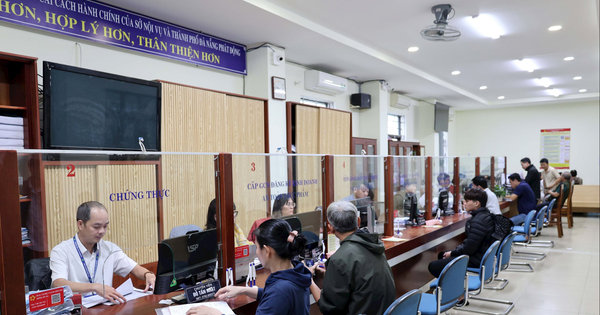
Vietnam Seeks New Growth Engines Through Administrative Reorganization
One year after implementing a two-tier local administration model, Vietnam is focusing on improving governance quality and utilizing resources to create new growth drivers. The reform emphasizes integrating economic spaces beyond geographical boundaries and enhancing official capacity through digital transformation.
One year after the implementation of the two-tier local administration model, Vietnamese localities are entering a phase focused on improving governance quality, utilising resources, and translating institutional changes into substantive development momentum. The implementation of the two-tier local administration model represents a governance reform rather than merely an organisational restructuring. Changes in administrative boundaries in the central and Central Highlands regions reflect a shift from an administrative territory-based management mindset to an approach focused on shaping economic development spaces. Da Nang is no longer confined to a coastal urban area, Gia Lai is no longer defined solely as a highland province, and Lam Dong is also no longer identified only with Da Lat and high-tech agriculture. These localities are now operating as unified economic entities. The transformation goes beyond geographical scale, extending to the very nature of local development. Urban centres, raw material zones, industrial parks, seaports, logistics hubs, and economic corridors are being integrated into a unified development space. Commenting on the merger of Da Nang and Quang Nam, Secretary of the Party Committee of the new Da Nang Le Ngoc Quang said the reform is not only about streamlining the administrative apparatus but also about better unlocking the locality’s potential, advantages, and resources in a new development phase. “ The formation of a larger development space requires new approaches to governance, management, and the implementation of tasks Secretary of the Da Nang Party Committee Le Ngoc Quang In practice, post-merger localities are now operating at significantly larger development scales than before. Da Nang is integrating urban space, industry, logistics, seaports, and the Chu Lai growth hub. Gia Lai has, for the first time, formed a direct linkage axis between the Central Highlands and the coastal areas. Lam Dong is bringing together strengths in high-tech agriculture, renewable energy, mining, tourism, and maritime economy. Meanwhile, Khanh Hoa continues to reinforce its role as a regional hub for maritime economy, logistics, and energy in the South Central Coast. An important shift under the new model is the transition from development thinking based on administrative boundaries to an approach centred on integrated economic space. In Gia Lai, Chairman of the provincial People’s Committee Pham Anh Tuan instructed that wards and communes formerly belonging to Quy Nhon should be viewed as a unified development entity, mutually supportive and complementary, rather than operating in a fragmented manner. He stressed that grassroots authorities are responsible for administrative management, harnessing local potential, and expanding the development space to create new growth drivers. These changes show that the success of the two-tier local administration model is measured not only by streamlined administrative structures, but also by the ability to reorganise development resources, create new growth poles, and enhance local competitiveness in the new context. Whereas the effectiveness of local administrations was previously measured largely by their ability to manage territories, process administrative procedures, and maintain apparatus operations, the focus is now shifting toward their capacity to implement development goals and deliver tangible results. The current requirement goes beyond merely restructuring administrative organisations. The priority now is to improve operational quality, strengthen public service performance, and enhance the capacity of local authorities to meet development demands in a rapidly changingenvironment. Permanent Deputy Secretary of the Dak Lak provincial Party Committee Cao Thi Hoa An As greater authority is delegated to grassroots levels, the competence of public officials, the effectiveness of coordination among different levels of government, and the ability to apply digital technologies are becoming decisive factors in governance. Against this backdrop, many localities have proposed the early development of a comprehensive set of criteria to assess the performance, effectiveness, and efficiency of administrations at all levels in line with the Government's requirements. Such evaluation criteria should not be limited to measuring the number of agencies streamlined or staffing structures reorganised. Instead, they should focus on more substantive indicators, including the quality of public services, citizen and business satisfaction, the effectiveness of administrative procedures, progress in achieving socio-economic development targets, and the capacity for digital transformation. More importantly, the true test after one year is not how administrative structures have been reorganised, but how localities operate the new system to optimise resources, restructure development space, and generate new growth drivers. This will ultimately serve as the most meaningful measure of the two-tier local administration model in the years ahead. Experience over the past year has shown that as greater authority is delegated to grassroots levels, the capacity of public officials becomes a decisive factor in determining the effectiveness of the administrative apparatus. Even a streamlined system will struggle to deliver results if officials are unable to keep pace with new demands in governance, digital transformation, and the implementation of development objectives. Da Nang continues to identify digital transformation as a key driver for enhancing urban governance and improving public services. Many other localities are also accelerating the development of digital government platforms, shared databases, and digital management systems to meet governance requirements in the new context. Drawing on practical experience from local administrations, many experts and policymakers have called for the early establishment of a comprehensive set of indicators to assess the performance of administrations. Such indicators could be measured through factors including processing times for administrative procedures, levels of citizen and business satisfaction, progress in achieving development targets, digital transformation outcomes and the quality of coordination among different levels of administration. Ultimately, the success of the two-tier local administration model will be measured by the pace of local development and the satisfaction of citizens. The past year has largely been a period of building the institutional framework. The next phase will require leaders at all levels to think big, act bold, and strive to tackle bottlenecks and emerging challenges in order to transform a streamlined administrative system into a genuine engine of growth for the country./. Bình luận của bạn đã được gửi và sẽ hiển thị sau khi được duyệt bởi ban biên tập. Ban biên tập giữ quyền biên tập nội dung bình luận để phù hợp với qui định nội
多角的分析
ベトナムの二層制地方行政モデルへの移行は、単なる行政区画の変更ではなく、経済発展空間の統合を目指す構造改革である。これにより、地域間の連携が強化され、物流、工業、農業、観光などの各セクターが有機的に結びつくことで、新たな生産性と競争力が生まれることが期待される。特に、地理的制約を超えた経済圏の形成は、国内市場の拡大とサプライチェーンの効率化に寄与し、持続的な経済成長の基盤を強化する可能性がある。過去の事例では、行政区画の統合が地域経済の活性化に繋がったケースが複数見られ、ベトナムも同様の効果を狙っていると考えられる。
今回の行政改革は、投資家にとって、より統合された経済圏における事業機会の拡大を意味する。地域間の障壁が低減し、インフラ整備や物流網の効率化が進むことで、投資リスクが軽減される可能性がある。また、地方政府のガバナンス強化とデジタル化推進は、行政手続きの迅速化や透明性の向上に繋がり、ビジネス環境の改善に寄与すると期待される。具体的には、新たな経済回廊や工業団地の開発が進む地域への投資が注目されるだろう。ただし、改革の進捗と実質的な成果には地域差が生じる可能性もあり、慎重な情報収集が求められる。
行政再編による地方の発展空間の拡大は、地域住民の生活や雇用機会に直接的な影響を与える。例えば、ダナン市とクアンナム省の統合のように、都市部と周辺地域の連携強化は、新たな産業の誘致やインフラ整備を通じて、住民の生活水準向上や雇用機会の創出に繋がる可能性がある。一方で、行政区画の変更に伴う地方公務員の配置転換や、新たな行政サービスへの適応といった課題も生じうる。また、デジタル化の推進は、行政サービスの利便性を高める一方で、デジタルデバイドの拡大や、情報へのアクセス格差といった問題を引き起こす可能性も考慮する必要がある。
行政区画の再編は、市民にとって、行政サービスへのアクセスや、地域経済の発展といった点で、直接的な影響がある。例えば、ダナン市とクアンナム省の統合により、住民はより広範な地域で行政サービスを受けられるようになり、経済活動の範囲も広がる可能性がある。また、地方政府が開発空間の統合に注力することで、新たな雇用機会の創出や、地域経済の活性化が期待される。しかし、行政手続きの変更や、デジタル化の進展への適応が、一部の市民にとって負担となる可能性も否定できない。地域住民の満足度向上と、行政サービスの質の向上が、改革の成否を測る重要な指標となるだろう。
背景・歴史的文脈
ベトナムは、社会主義共和国として、経済発展と国家統治の両立を目指す中で、行政機構の効率化と地方分権化を継続的に模索してきた。特に、1986年のドイモイ(刷新)政策以降、市場経済化を進める中で、地方政府の役割は増大したが、その一方で、行政区画の細分化による非効率性や、地域間の開発格差も課題となっていた。今回の二層制地方行政モデルへの移行は、こうした課題に対処し、より統合された経済空間を創出することで、新たな成長ドライバーを生み出そうとする、ベトナムの長期的な国家開発戦略の一環である。これは、中央政府の統制を維持しつつ、地方の経済的活力を引き出すという、ベトナム特有の統治モデルの進化と言える。
原文ソース
VietnamPlus English