General articles are free for 24 hours after publish.
Ho Chi Minh City Unveils $9.5 Billion Infrastructure Push for National Day
Vietnam's economic hub, Ho Chi Minh City, announced the commencement of 16 major infrastructure projects on September 2, National Day, with a total investment of $9.5 billion. The initiative aims to boost urban growth, improve living standards, and alleviate chronic traffic congestion.
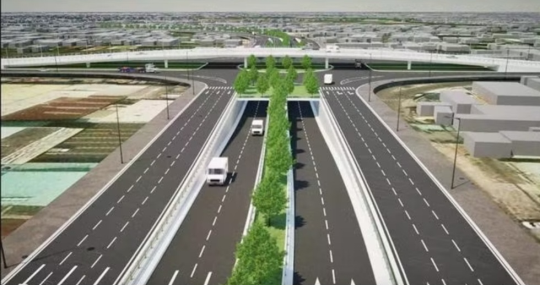
Ho Chi Minh City is set to kick off 16 major infrastructure projects on September 2, National Day, with a total investment of around 249 trillion VND (9.5 billion USD). This initiative aims to bolster growth in Vietnam’s economic hub, expand urban space, and improve living standards. The approved projects include a significant upgrade and expansion of National Highway 1, transforming a 20-25m wide corridor into a 60m, 10-12 lane highway with an investment exceeding 6.67 trillion VND (approx. $250 million). New flyovers and underpasses at key intersections are planned to combat chronic congestion at the city’s southwestern gateway. Two components of Ring Road No. 4 are also commencing construction. One section, from Toc Tien-Chau Pha intersection to Chau Duc bridge, will receive over 4.77 trillion VND (approx. $180 million). Another stretch, from the Saigon River to Thay Cai Canal, including Phu Thuan and Thay Cai bridges, will cost more than 7.05 trillion VND (approx. $270 million). These ring roads are designed to improve seamless links between the expressway network and inter-regional routes, forming a robust infrastructure backbone for cargo movement and economic growth throughout the Ho Chi Minh City metro area. The Thu Thiem-Long Thanh metro line stands out as the most anticipated railway project, with an investment of roughly 134 trillion VND (approx. $5.1 billion). This line will be the first metro artery directly connecting downtown Ho Chi Minh City with Long Thanh International Airport, scheduled to open in December. The 47.7km line will feature 18 stations and is expected to spur transit-oriented development, unlocking new growth across the southern key economic region. Beyond transport, numerous projects focus on housing needs and urban renewal. Five social housing projects, comprising approximately 10,000 apartments, are being accelerated to cater to workers, public employees, and low-income earners. These developments prioritize units for rental housing, supporting vulnerable groups and building a sustainable social welfare base. Environmental and cultural infrastructure projects are also underway, including the Binh Duong water environment improvement project (7.211 trillion VND, approx. $270 million) and the renovation of the Ho Chi Minh Museum’s city branch (nearly 69 billion VND, approx. $2.6 million). These substantial infrastructure investments are expected to further solidify Ho Chi Minh City's position as a regional economic hub and generate spillover effects into surrounding areas. For Laos, which maintains strong economic ties with Vietnam, monitoring such infrastructure development trends could have implications for regional development. Information Source: KPL Laos News
Original source
KPL Laos News