General articles are free for 24 hours after publish.
Cambodia Hosts Scientific Consultation to Boost Infectious Disease Research
Cambodia hosted an international scientific consultation on September 21, 2026, to promote infectious disease research. Experts from Asian and African countries gathered, emphasizing the importance of international scientific cooperation and collaboration among developing nations. Common challenges like tuberculosis and HIV were discussed.
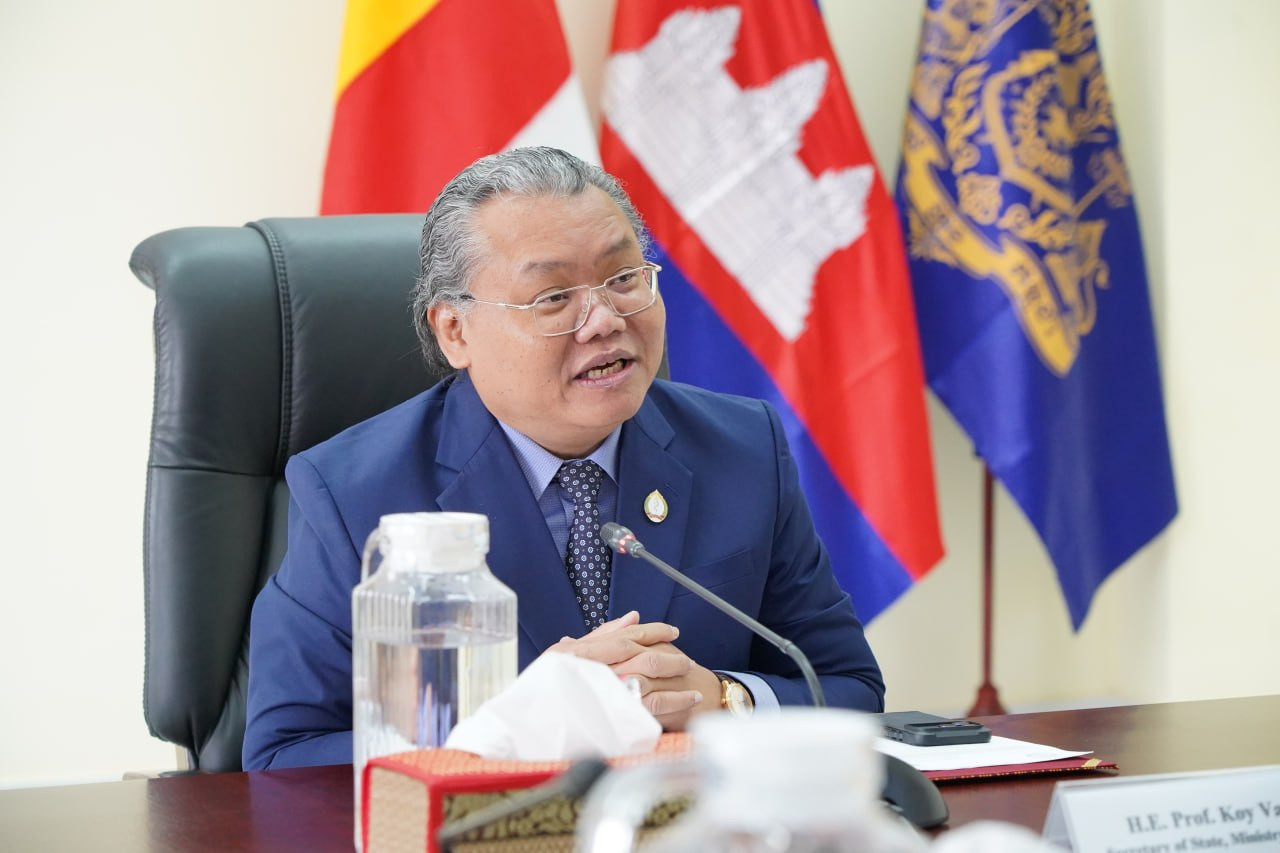
On September 21, 2026, the Health Sciences University and ANRS MIE jointly organized a scientific consultation meeting on "Promoting Research on Infectious Diseases in Southeast Asian and West African Countries." The meeting was chaired by His Excellency Professor Koy Vann, Secretary of State of the Ministry of Health, and attended by professors and researchers from France, Vietnam, Laos, Côte d'Ivoire, and Cambodia. Speaking at the event, Professor Saphan Vattana, Advisor to the Ministry of Health and Rector of the Health Sciences University, stated that "The invitation of experts from various countries demonstrates the importance we all place on strengthening international scientific cooperation and cooperation among developing countries." Professor Saphan Vattana further elaborated that infectious diseases do not recognize national borders. Many challenges faced regarding tuberculosis and HIV are common to all countries, even with differences in epidemic situations, healthcare systems, and available resources. He emphasized that no single institution or country can solve all these issues alone. He continued, "This cooperation allows us to pool diverse human resources, expertise, research capabilities, and healthcare system experiences. More importantly, when research is jointly developed by researchers from countries where the research results will be applied, there is a higher chance of responding to local needs and it can be transformed into policy and practical implementation." Professor Saphan Vattana expressed his belief that today's meeting is not just about creating research projects, but about building a community of researchers and institutions that can work together in the long term. Furthermore, for the Health Sciences University, hosting this meeting is a crucial opportunity to strengthen its role in health research at both regional and international levels. He pledged to work with partners to build research capacity, promote scientific leadership, and contribute evidence that addresses the health priorities of Cambodia and the entire region. At the occasion, His Excellency Professor Koy Vann, Secretary of State of the Ministry of Health, affirmed that today's meeting is not merely a conference but a working meeting and consultation to jointly set research priorities, address knowledge gaps, generate ideas for collaborative research, and lay the foundation for sustainable scientific cooperation. His Excellency further stated, "Through this process, we can foster research ideas that can be further developed for ANRS MIE's future calls for project proposals and opportunities to secure international funding." He added, "Although our countries have different contexts regarding epidemic situations and healthcare systems, we share many common challenges in managing tuberculosis and HIV, including resource shortages, decentralized service delivery, and the need to evaluate innovative intervention methods in the context of routine program implementation. These differences should not be seen as obstacles. Instead, they are valuable resources that can help broaden our collective understanding and strengthen the necessity and practicality of our research." His Excellency encouraged all participants to focus on research questions that are scientifically significant, aligned with our national and regional priorities, feasible in different contexts, and capable of generating positive and meaningful impacts. He concluded by stating that Cambodia's goal should not only be to increase knowledge but also to generate evidence that can guide policy, strengthen programs, and improve health outcomes. Source: CPP Cambodia
Original source
CPP Cambodia