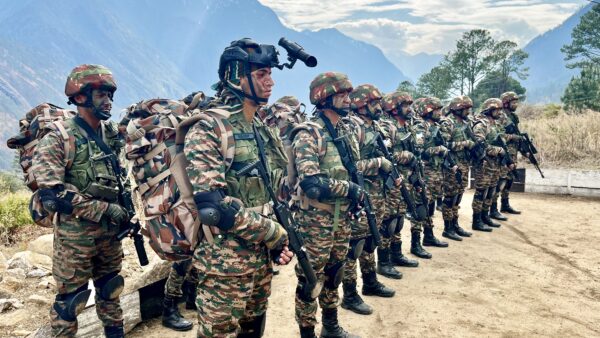
Indian Army Establishes Integrated Battle Groups to Enhance Rapid Response Capability
India's Army has formally established five new Integrated Battle Groups (IBGs), aiming to bolster rapid ground response capabilities, particularly against China. This initiative updates and concretizes the 'Cold Start' doctrine, creating self-sufficient, mobile units designed for deployment within 12-48 hours.
This article requires PRO
This article is outside the free access window or is a special report. PRO unlocks it and the full archive.
Related articles
- PT DSI Fraud Case Enters New Phase with Asset Seizures
The investigation into the PT Dana Syariah Indonesia (DSI) fraud case has entered a new phase, with authorities seizing assets. The alleged fraud involves losses of approximately Rp 2.4 trillion and affects over 14,000 victims. The police are actively tracing and confiscating assets to recover damages.
- Illegal Logging Task Force Recovers Over IDR 13 Trillion in Fines
Indonesia's Illegal Logging Task Force (Satgas PKH) has handed over over IDR 13 trillion (approximately USD 800 million) in administrative fines to the state. This brings the cumulative recovery to IDR 52 trillion, with over 250,000 hectares of forest secured. The task force vows to continue its mission despite facing resistance from those benefiting from illegal activities.
- Indonesia Appoints New Police Chiefs, Favoring Younger Graduates
Indonesia's National Police has appointed new Regional Police Chiefs (Kapolda) under the leadership of Chief General Suyudi. The appointments largely feature graduates from the 1994 and 1995 police academy classes, signaling a promotion trend for younger and mid-career officers.
- Indonesian Parliament Awaiting Official Notification on TNI Commander Change
The Indonesian Parliament (DPR) has yet to receive the Presidential Letter (Surpres) regarding the change of the Indonesian National Armed Forces (TNI) Commander. This leaves uncertainty surrounding the timing and the nomination of the new commander.