East Timor Envoy Expresses Confidence in UNCLOS Conciliation for Cambodia-Thailand Maritime Dispute
The East Timorese Ambassador expressed confidence that Cambodia and Thailand can achieve positive outcomes in their overlapping maritime dispute by utilizing the conciliation mechanism under UNCLOS, drawing parallels to East Timor's own experience.
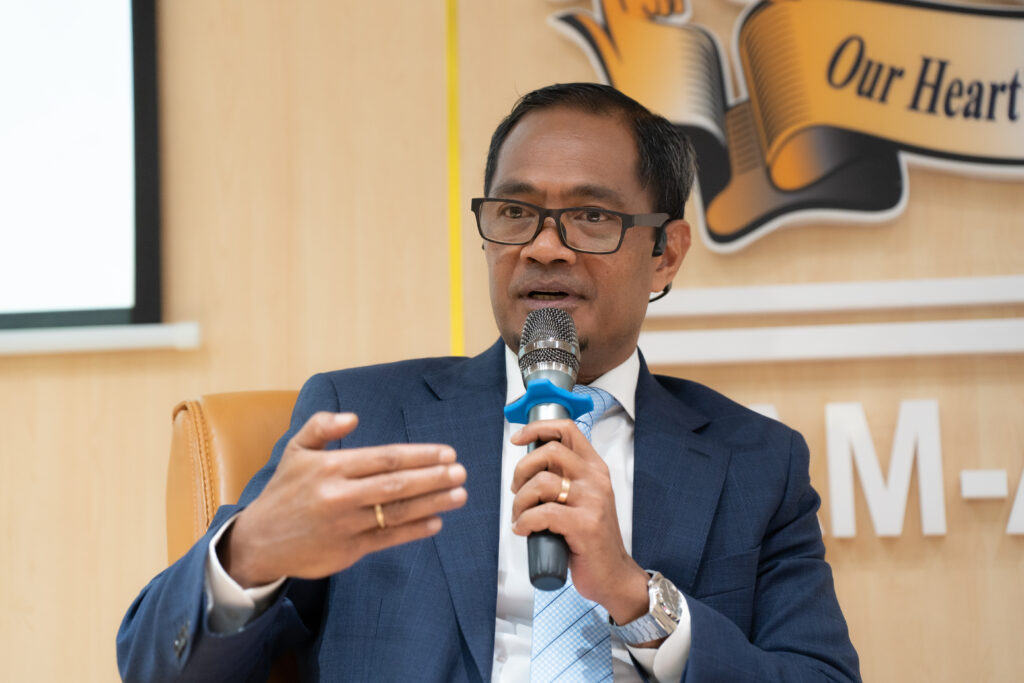
His Excellency Marcos dos Reis da Costa, Ambassador of the Democratic Republic of Timor-Leste to Cambodia, has expressed his belief that if Cambodia and Thailand continue to work together by utilizing the compulsory conciliation mechanism under the United Nations Convention on the Law of the Sea (UNCLOS), it will lead to positive outcomes regarding their overlapping maritime dispute. He views the agreement by both countries to initiate this mechanism as an initial sign of confidence-building between the parties, which will bring benefits to the people, especially the two nations involved in the dispute. In an exclusive interview with Kampuchea Thmey, Ambassador Marcos dos Reis da Costa stated that Timor-Leste has experience using the compulsory conciliation mechanism to resolve its maritime dispute with Australia, and he is confident that Cambodia and Thailand can also achieve good results through the same mechanism. Drawing from Timor-Leste's experience, he explained that during the conciliation process, a conciliation commission of five members works with the parties involved to find methods that lead to a peaceful resolution. He emphasized that only discussions marked by political will, good faith, and mutual trust can lead to results that benefit both disputing parties. He added that according to the procedures, the compulsory conciliation process typically lasts about 12 months. However, in the case of Timor-Leste and Australia, the entire process took over 18 months to reach an agreement. Despite knowing that it would take many months to resolve through this mechanism, Timor-Leste still chose to use it to gain a clear understanding of its rights under international law and to protect its national sovereignty. Furthermore, he mentioned that as a newly established country, Timor-Leste also faced challenges with human resources, including legal and diplomatic experts, in resolving international disputes. Based on his country's experience, he advised that now that Cambodia and Thailand have chosen the conciliation mechanism under UNCLOS, both parties should continue to commit to respecting the procedures, have confidence in the chosen process, and work together in good faith to achieve beneficial outcomes for both countries. It is worth noting that Cambodia has appointed two international legal experts: Mr. Peter Taksoe-Jensen, a senior official in the Ministry of Foreign Affairs and International Cooperation and a career diplomat from Denmark, and Mr. Jean-Marc Thouvenin, Secretary-General of the Permanent Court of Arbitration and a member of the Institut de Droit International, to the Commission of Conciliation under UNCLOS to resolve the overlapping maritime claims (OCA) with Thailand. The Thai side has also appointed two international legal experts: Mr. Rüdiger Wolfrum, a German jurist, and Mr. Albert Hoffman, a South African maritime law expert. Source: Kampuchea Thmey Local
多角的分析
海洋紛争の解決は、両国の経済水域における資源開発の安定化に不可欠である。特に、カンボジアは経済発展の初期段階にあり、新たな経済的機会の創出が求められている。UNCLOSに基づく調停プロセスが成功すれば、未開発の海底資源や漁業権に関する不確実性が解消され、外国からの投資を呼び込む可能性が高まる。逆に、紛争が長期化すれば、経済開発の遅延や、周辺海域での不測の事態のリスクを高める。
投資家にとって、海洋紛争の早期解決は、カンボジアおよびタイ周辺海域におけるエネルギー資源開発や漁業、海運といった分野への投資リスクを低減させる重要な要素である。UNCLOS調停の進展は、法的な安定性と予測可能性を高め、長期的な投資判断を後押しするだろう。特に、資源開発に関心を持つ企業は、紛争解決の進捗を注視していると考えられる。
海洋紛争の解決は、カンボジアとタイ両国の国民、特に沿岸地域に居住する漁民やコミュニティの生活に直接的な影響を与える。紛争が続けば、漁業活動の制限や、資源の枯渇といった問題が生じうる。UNCLOS調停による平和的解決は、これらのコミュニティの生計と安全保障の安定に繋がり、両国間の国民感情の改善にも寄与する可能性がある。
カンボジア国民は、領土・領海問題に対して強い関心を持っている。海洋紛争の解決は、国家主権の確立と、国民生活の安定に直結する問題として捉えられている。UNCLOS調停という国際法に基づく解決プロセスは、国民に一定の安心感を与える一方で、解決までの長期化や、最終的な合意内容に対する国民の理解と支持を得ることが、今後の課題となるだろう。
背景・歴史的文脈
カンボジアとタイの間には、タイ湾における海洋権益を巡る長年の領有権問題が存在する。特に、両国が共有する海域には、石油や天然ガスといった潜在的な資源が豊富に含まれているとされており、その開発を巡って対立が生じてきた。過去には、この問題を巡る緊張が高まった時期もあったが、近年は対話と国際法に基づく解決を目指す動きが強まっている。2001年に発効した国連海洋法条約(UNCLOS)は、海洋の境界画定や資源管理に関する国際的な法的枠組みを提供しており、両国はこの条約の調停メカニズムを活用することで、紛争の平和的解決を図ろうとしている。東ティモールがオーストラリアとの間で同様の調停プロセスを経て紛争を解決した経験は、カンボジアとタイにとって参考となっている。
原文ソース
Kampuchea Thmey Local