General articles are free for 24 hours after publish.
Cambodia Urged to Leverage 'Demographic Window' for 2050 High-Income Vision
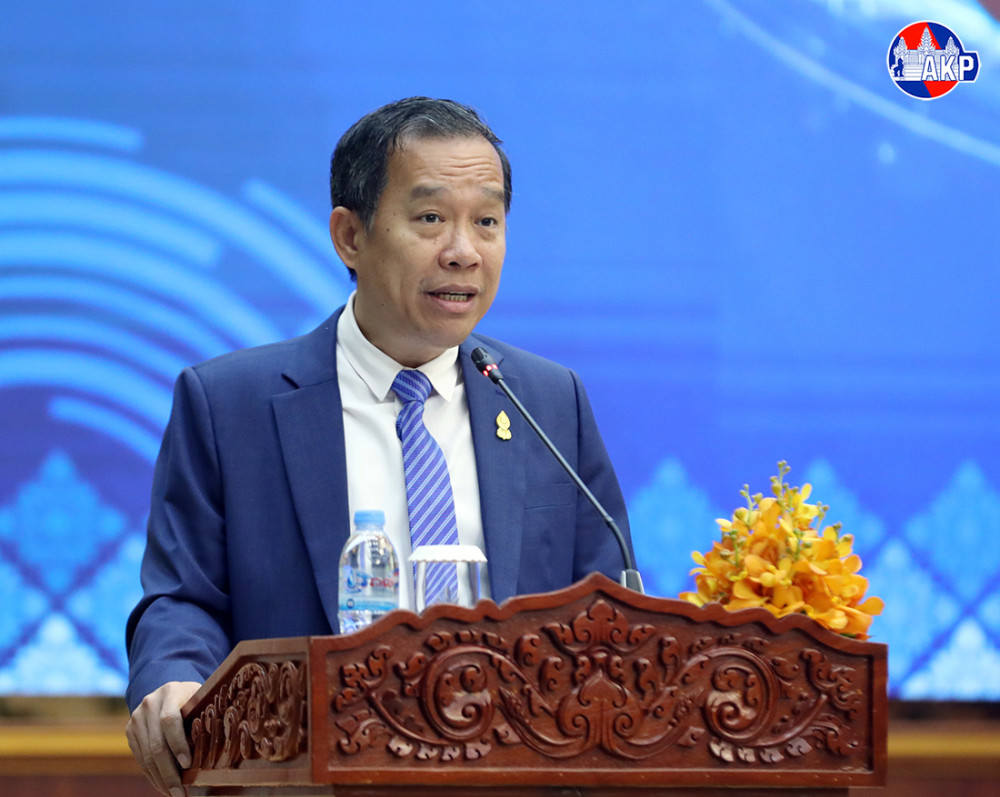
Cambodia's Senate Second Vice President, Dr. Thoun Vathana, has called on all parties to seize the 'golden opportunity' and utilize the 'demographic window' to ensure Cambodia achieves its vision of becoming a high-income country by 2050. The World Bank projects Cambodia's working-age population to peak around 2043.
Cambodia's Senate Second Vice President, Dr. Thoun Vathana, has urged all parties to seize the "golden opportunity" and utilize the "demographic window" to ensure Cambodia achieves its vision of becoming a high-income country by 2050. This call was made during a high-level workshop on "Cambodia's Economic Situation and the Path to 2050," organized by the Senate on August 3, 2026. The workshop focused on discussing economic opportunities and challenges, and gathering strategic inputs to help Cambodia avoid the "middle-income trap" and achieve its high-income vision. At the opening ceremony, Dr. Thoun Vathana referenced the national vision set by Senate President Samdech Techo Hun Sen, which aims for Cambodia to become an upper-middle-income country by 2030 and a high-income country by 2050. He emphasized that achieving this goal requires comprehensive preparation and the implementation of clear strategies to avoid the "middle-income trap" that many developing countries have faced. "This is a time-bound golden opportunity for Cambodia to increase productivity, improve the quality of work, strengthen human capital, and enhance the competitiveness of the national economy," he stated. According to the World Bank's latest Cambodia Economic Update, Cambodia's working-age population is projected to peak around 2043, presenting a significant opportunity, or "demographic window," to transform this labor force into a driver of economic growth and long-term prosperity. Dr. Thoun Vathana also noted Cambodia's remarkable economic and social progress over the past two decades, including poverty reduction, infrastructure development, and regional and global integration. The government has implemented numerous policy measures to strengthen the economic base, such as maintaining fiscal stability, supporting vulnerable households, developing the labor and skills market, enhancing education and health, social protection, and promoting investment. Approximately 800,000 jobs are expected to be created by 2025, with over 400,000 in the formal sector. The Ministry of Labour and Vocational Training is also implementing a Skills Development Roadmap for 2023-2035 to enhance the quality of the workforce. In terms of education and human capital, the Education Sector Strategic Plan 2024-2028 and the Teacher Policy Action Plan 2024-2030 are being implemented to improve learning quality and teacher capacity. For social protection and health, the National Social Protection Policy Framework 2024-2035 and the Health Strategy Plan 2025-2034 have been adopted to respond to demographic changes and future aging populations. However, Dr. Thoun Vathana acknowledged that Cambodia still has "remaining gaps" to fill, such as increasing the value chain for local Small and Medium-sized Enterprises (SMEs), strengthening STEM and digital skills, preparing for an aging society, and diversifying the economy. Foreign direct investment (FDI) in Cambodia remains robust, projected to reach approximately $5.1 billion in 2025, with investments expanding into new sectors like electronics, electrical appliances, renewable energy, and other manufacturing. He asserted that Cambodia must continue to strengthen the capacity of local SMEs and enhance linkages with foreign investing companies to increase domestic value-added and promote technology transfer. The workshop participants discussed key topics including maintaining fiscal discipline, increasing labor productivity, developing skills for the future labor market, strengthening social protection, and attracting private investment. The strategic inputs from speakers and participants are expected to form the basis for shaping Cambodia's economic path towards 2050 to be more resilient, sustainable, and inclusive. Source: AKP Khmer
Original source
AKP Khmer