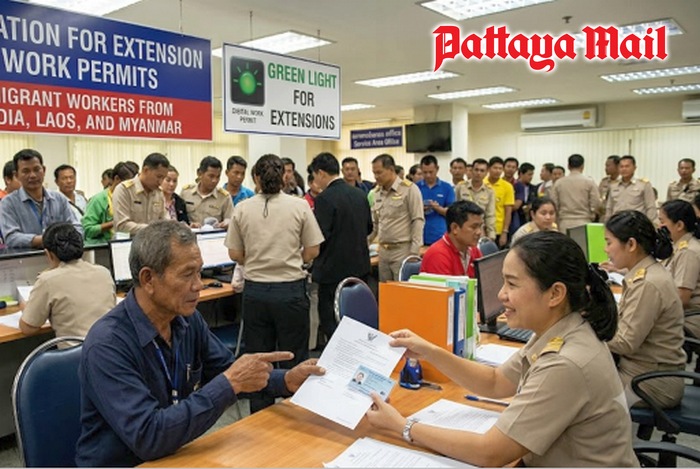
Thailand Extends Migrant Worker Permits to Shore Up Economy
Thailand's government approved an emergency measure on July 3 to extend the stay and work permits of migrant workers from Cambodia, Laos, and Myanmar. The move aims to support key sectors like manufacturing and tourism facing severe labor shortages and sustain economic recovery.
PATTAYA, Thailand – The deal was officially sealed on July 3, when the Ministry of Labour approved an emergency measure extending the stay and work permits of migrant workers from three neighbouring countries—Cambodia, Laos, and Myanmar. Amid sighs of relief from Thai entrepreneurs nationwide, the reality is clear: this move is not about diplomacy or charity. It is about bread and butter, protecting economic activity, and maintaining the cash flow that the government simply could not afford to let freeze under any circumstances. High-level sources within the Ministry of Labour revealed that Thailand’s manufacturing, tourism, and service sectors are battling a severe labour shortage that threatens to derail the country’s economic recovery. The economic engine, only just beginning to regain momentum, risked an immediate stall if migrant workers were forced out of the system because of expired permits. The minister’s swift intervention is a tactical move designed to keep hundreds of thousands of workers legally employed rather than allowing them to slip into the underground economy, a scenario that would create significant challenges for national security and law enforcement. (adsbygoogle = window.adsbygoogle || []).push({}); The ironclad conditions: what employers must do now While the government has given the green light, this is certainly no free ride. According to the official statement from the Department of Employment, employers must comply with a strict timetable and several non-negotiable requirements. First, employers must promptly submit their demand list for foreign workers through the online registration portal before the deadline. Missing the deadline means forfeiting the right to participate. Second, all migrant workers must undergo mandatory health screenings for prohibited diseases and obtain health insurance that meets the standards set by the Ministry of Public Health, helping to safeguard public health. Third, employers must ensure that registration records are updated to secure a Digital Work Permit, allowing authorities to maintain a transparent, accurate, and auditable database for long-term workforce management. (function(w,q){w[q]=w[q]||[];w[q].push(["_mgc.load"])})(window,"_mgq"); The reality check: echoes from the private sector Data from the Board of Trade of Thailand and the Federation of Thai Industries has consistently indicated that Thailand still requires between 300,000 and 500,000 low-skilled foreign workers to sustain infrastructure projects, manufacturing, and the export sector. This extension provides much-needed breathing room for thousands of factories and construction sites during a period of continued global economic uncertainty. Had the government failed to act, many businesses warned that supply chains across key industries could have faced severe disruption within weeks, potentially damaging investor confidence and slowing Thailand’s economic growth. Victor’s take on the grand scheme of Thai labour On one hand, this measure serves as a timely bandage for an immediate crisis. On the other, it exposes a difficult reality: Thailand remains heavily dependent on low-cost migrant labour and has not transitioned to automation and productivity improvements as quickly as policymakers once envisioned. The true measure of success will not be the number of permits approved but whether the bureaucracy can deliver a fast, transparent, and corruption-free registration process. If online filing remains slow and burdened by excessive red tape, Thailand’s economic ambitions could be undermined by administrative inefficiency and opportunities for corrupt intermediaries to exploit desperate businesses. Furthermore, Thailand’s continued reliance on neighbouring workforces highlights a deeper structural weakness in its education, vocational training, and labour development systems, which have struggled to produce enough domestic workers willing to fill essential manual and low-skilled positions. This policy buys valuable time, but it does not address the underlying causes of Thailand’s long-term labour shortage.
多角的分析
タイ経済は、特に製造業、観光業、サービス業において、深刻な労働力不足に直面している。この状況は、パンデミックからの回復途上にある経済にさらなる打撃を与える可能性があった。今回の外国人労働者の滞在・就労許可延長は、これらの基幹産業における生産活動とサービス提供を維持し、経済の急激な失速を防ぐための直接的な措置である。これは、労働力不足によるサプライチェーンの寸断や、それに伴う物価上昇圧力の緩和に寄与する一方、低賃金労働への依存構造を固定化させるリスクも孕んでいる。タイ政府は、短期的な経済安定化と、長期的な産業構造の高度化・自動化推進との間で、難しい舵取りを迫られている。
今回の措置は、タイの主要産業における労働力供給の安定化を通じて、短期的な投資家心理を落ち着かせる効果が期待できる。特に、製造業や建設業など、人手を要する分野への投資リスクが一時的に軽減されるため、既存投資家の安心材料となるだろう。しかし、根本的な労働力不足問題や、外国人労働者への依存構造が解消されない限り、長期的な視点では、タイ経済の潜在成長力に対する懸念が残る。投資家は、政府が掲げる自動化・生産性向上策の進捗や、労働市場の構造改革の動向を注視する必要がある。汚職や行政手続きの遅延といったリスクも、投資判断における重要な要素となる。
この措置は、タイ国内の産業を支える外国人労働者とその家族にとって、一時的な安心材料となる。しかし、彼らが直面する低賃金労働や、不安定な雇用状況、そして差別や偏見といった社会的な課題は依然として残る。また、国内労働者の賃金水準や雇用機会への影響、そして社会インフラへの負荷増大といった側面も考慮されるべきである。政府は、外国人労働者の権利保護と、タイ国民との共生を促進するための包括的な社会政策を同時に推進する必要がある。特に、地方や屋台で働く人々にとっては、物価高騰の中で安定した収入を確保できるかどうかが生活の明暗を分ける。
タイ国民、特に低賃金労働を担う層にとっては、外国人労働者の受け入れ延長が、自らの雇用機会や賃金水準にどのような影響を与えるか、複雑な感情を抱いている可能性がある。一方、外国人労働者に依存する産業のサービス利用者としては、サービスの継続性は歓迎されるだろう。しかし、根本的な労働力不足の背景にある、国内の労働者育成や教育システムへの投資不足といった構造的な問題が、国民全体の生活の質向上や、より安定した社会基盤の構築を妨げているという認識も広がりつつある。公共の課題として、国民一人ひとりのスキルアップや、多様な人材が活躍できる社会の実現が問われている。
背景・歴史的文脈
タイは長年にわたり、カンボジア、ラオス、ミャンマーなど近隣諸国からの外国人労働者に、特に建設業、農業、製造業、サービス業といった分野で依存してきた。これらの労働者は、タイ経済の成長を支える低コスト労働力として不可欠な存在となっている。しかし、外国人労働者の管理や、彼らの権利保護、そして国内労働者の育成といった課題は、常にタイ社会の内部で議論されてきた。特に、パンデミック以降、労働許可の失効や移動制限により、多くの外国人労働者がタイを離れ、深刻な労働力不足が顕在化した。今回の措置は、こうした過去の経験と、経済回復の必要性から生まれた、短期的な対応策であると考えられる。
原文ソース
Pattaya Mail