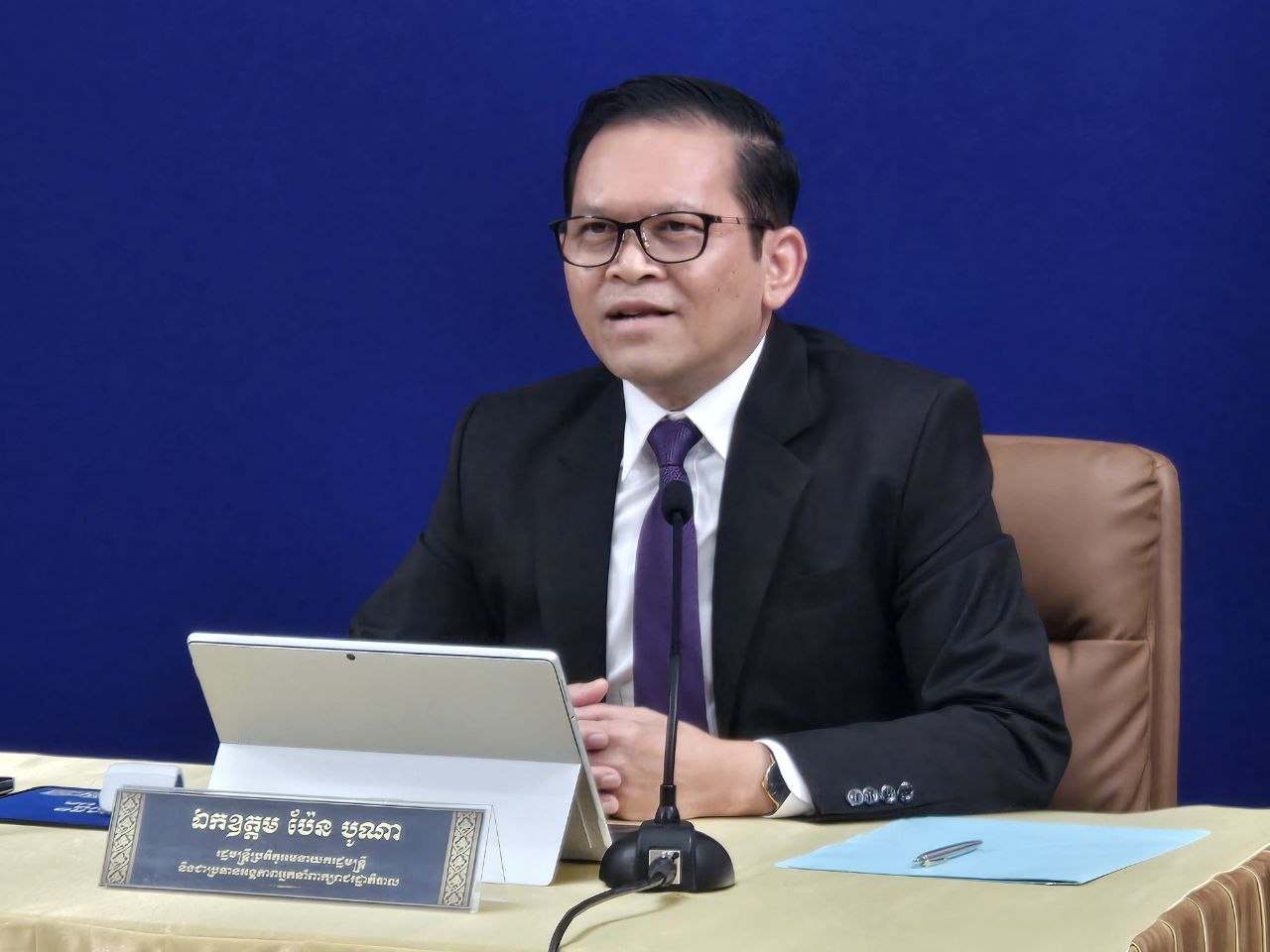
Cambodia's New Government Faces Multiple Crises, Remains 'Healthy' Says Spokesperson
Cambodian government spokesperson Pen Bona stated that the new administration is facing multiple crises including border conflicts with Thailand, rising oil prices due to the Middle East situation, and online scams. However, he emphasized that peace, macroeconomic stability, and socio-political stability are being maintained. The outlook for graduation from LDC status in 2029 also remains intact.
Pen Bona, Minister Attached to the Prime Minister and Head of the Government Spokesperson Unit, stated that the 7th mandate government has been facing immense, storm-like major challenges simultaneously since its inauguration. He described this as the most stringent examination of the leadership, management, and problem-solving capabilities of the young leaders who are the successors of the Cambodian People's Party. During the 8th press forum of the Government Spokesperson Unit on the afternoon of July 1, 2026, at the Council of Ministers office, Mr. Bona identified the major challenges that have simultaneously battered the 7th mandate government as follows: First, Cambodia has suffered from an "invasion war" from Thailand, resulting in over 640,000 refugees and a massive influx of workers returning from Thailand, causing damage to much civilian infrastructure. Second, the war in the Middle East has caused oil and gas prices to soar. Oil is an essential commodity for citizens, and its price hike significantly impacts the public. Third, "online scams" (online scanning) pose a serious and complex problem that is difficult to resolve, as it involves cross-border crime and the use of sophisticated technology. Cambodia has become one of many victimized countries in the region. Mr. Pen Bona affirmed that despite being buffeted by these large-scale, simultaneous problems, Cambodia has managed to maintain: First, "peace," which is the fundamental basis for the development and well-being of the people. He acknowledged that the "invasion war," which was not anticipated and is undesirable, occurred twice along the Thai border (July 24-28 and December 7-27, 2025), necessitating the government's exercise of self-defense rights. However, he stated that the leadership, prioritizing peace, swiftly transformed the armed conflict into a diplomatic and legal resolution with the support of friendly nations that also cherish peace, particularly the United States, the People's Republic of China, and ASEAN. Ceasefires were achieved twice and have continued to the present, demonstrating the government's commitment to peace and human life. Second, "macroeconomic stability" has remained good. Cambodia's economy in 2026 is projected to achieve 4.2% growth. Food security is robust, international trade, especially exports, has seen significant growth, and tax revenue has also increased. While many are speaking of an economic downturn globally, Cambodia has maintained a stable macroeconomy, serving as a strong pillar for the livelihoods of its citizens. Third, "socio-political stability" has also been well-preserved, with no social unrest, disturbances, or political turmoil occurring within the country. Furthermore, in April 2026, a UN official responsible for Least Developed Countries (LDCs) visited Cambodia and confirmed to the Prime Minister that, after two evaluations, Cambodia still retains the qualifications to graduate from LDC status in 2029. Therefore, based on all these indicators, it can be concluded that the 7th mandate government is in good health and is consistently moving forward with vigor, despite facing significant obstacles at every step, Mr. Bona concluded.
多角的分析
カンボジア経済は、世界的なインフレ圧力、特に中東情勢に起因する原油価格の高騰という外部要因に直面している。これは、インフラや物流コストに直接的な影響を与え、国内物価の上昇を通じて国民生活を圧迫する可能性がある。しかし、政府は2026年の経済成長率を4.2%と予測し、食料安全保障の強固さや輸出の伸びを強調している。これは、国内の農業基盤や、中国との貿易関係が安定していることを示唆している。一方で、ボナ報道官が触れた「経済の低迷」という言及は、輸出依存度の高さや、観光業など一部セクターの回復の遅れといった構造的な課題も示唆していると考えられる。
新政権は就任早々、タイとの国境紛争、原油高、オンライン詐欺という複合的な危機に直面している。投資家にとって、これらのリスクは事業運営の不確実性を高める要因となる。特にタイとの国境紛争は、地域的な不安定要因となり、サプライチェーンや物流に影響を与える可能性がある。オンライン詐欺の蔓延は、デジタル経済の発展を阻害し、国内外からの投資に対する信頼性を損なうリスクがある。しかし、政府が平和とマクロ経済の安定を維持していると強調している点は、一定の安心材料となる。特に、中国や米国といった大国からの支援を背景に、外交的解決を図る姿勢は、地政学リスクを管理しようとする意思の表れと見ることができる。
カンボジア国民は、タイとの国境紛争による一時的な避難民の発生や、タイからの労働者の大量流入という直接的な影響に直面している。また、原油価格の上昇は、日々の生活費に直結し、特に低所得者層の負担を増大させる。オンライン詐欺は、多くの国民が被害に遭う可能性があり、金銭的な損失だけでなく、社会全体の不信感を生む要因となっている。政府は社会・政治的安定を強調しているが、これらの経済的・安全保障的な課題が、国民生活の質や将来への希望にどのような影響を与えるかは、長期的な視点で注視する必要がある。特に、若年層の雇用機会や、デジタル化の進展に伴う新たなリスクへの対応が問われる。
タイとの国境紛争は、国境付近の住民に直接的な不安と生活の混乱をもたらした。64万人もの難民が発生し、タイから多くの労働者が帰国したことは、社会インフラへの負担増大と、帰国労働者の再就職問題を引き起こす可能性がある。原油価格の高騰は、ガソリン代や公共交通機関の運賃上昇に繋がり、日々の食料品や生活必需品の価格にも波及し、家計を圧迫している。オンライン詐欺は、年齢を問わず多くの人々が被害に遭っており、金銭的な損失だけでなく、家族間の信頼関係にも影響を及ぼしかねない。政府は安定を強調するが、これらの問題が市民の日常生活に与える実質的な影響は大きい。
背景・歴史的文脈
カンボジアは、長年の内戦とポル・ポト政権の悲劇を経て、平和と安定の回復を最優先課題としてきた。1993年の国連PKOによる民政移管以降、クメール人民党が政権を担い、経済発展とインフラ整備を進めてきた。しかし、タイとの国境問題は、両国関係の歴史的経緯から常に潜在的な火種であり、過去にも武力衝突が発生している。また、カンボジアは経済発展のために外国からの投資を積極的に誘致しており、特に中国からの投資は近年著しく増加している。一方で、国際社会からは人権問題や民主主義の定着に関して懸念が示されることもある。新政権は、これらの複雑な国内・国際情勢の中で、国民の生活向上と国家の安定維持という二重の課題に直面している。
原文ソース
AKP Khmer