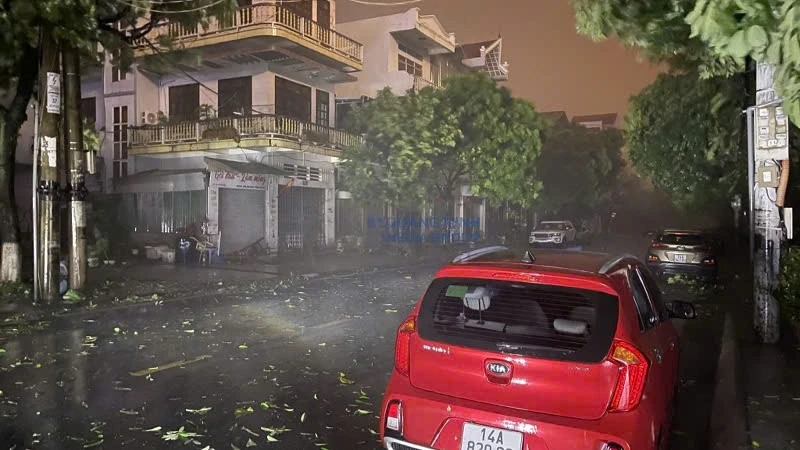
Tropical Storm 'Bao So 1' Directly Hits Northern Vietnam Coastal Areas, Causing Damage in Mong Cai City
Mong Cai City on Vietnam's northern coast was directly hit by Tropical Storm 'Bao So 1', causing fallen trees and localized power outages due to strong winds and heavy rain. Authorities are urging residents to stay indoors and are assessing damage while working on recovery.
This article requires PRO
This article is outside the free access window or is a special report. PRO unlocks it and the full archive.
Related articles
- Hanoi's National Highway 1A Expansion: Resident Relocation Underway Amidst Urban Development and Heritage Preservation Efforts
In Hanoi, resident relocation and land handover have begun for the National Highway 1A expansion project. This large-scale initiative aims to balance urban development with the preservation of historical heritage, bringing significant changes to the local community alongside infrastructure improvements.
- Huong Tra Area in Southern Da Nang Poised to Become Prominent Tourist Hub
Da Nang City has unveiled a plan to develop the Huong Tra area in its southern region into a key tourist destination, emphasizing sustainable, community-centered growth and the valorization of local resources and culture.
- Vinh Long Border Guards and Women's Union Collaborate to Support Border Women
The Vinh Long Border Guards and Women's Union implemented the 'Accompanying Border Women' program, supporting impoverished women and students in border areas with scholarships, aid, and livelihood improvement funds.
- Vietnam Builds 'Learning Society' Through Lifelong Learning Promotion, Emphasizing Individual Capabilities
Vietnam has achieved success in promoting lifelong learning and the 'learning citizen' model. For the 2026-2030 period, the focus will shift to improving the quality of learning, enhancing individual learning opportunities, capabilities, and motivation, alongside developing digital learning records.