General articles are free for 24 hours after publish.
China Opens Major River-Sea Canal, Boosting Southeast Asia Trade
China has inaugurated the Pinglu Canal, a $10.8 billion waterway linking Guangxi to the Gulf of Tonkin. This new route significantly shortens transport to Southeast Asia, promising reduced logistics costs and economic growth, with particular attention on its impact on Vietnam's economy.
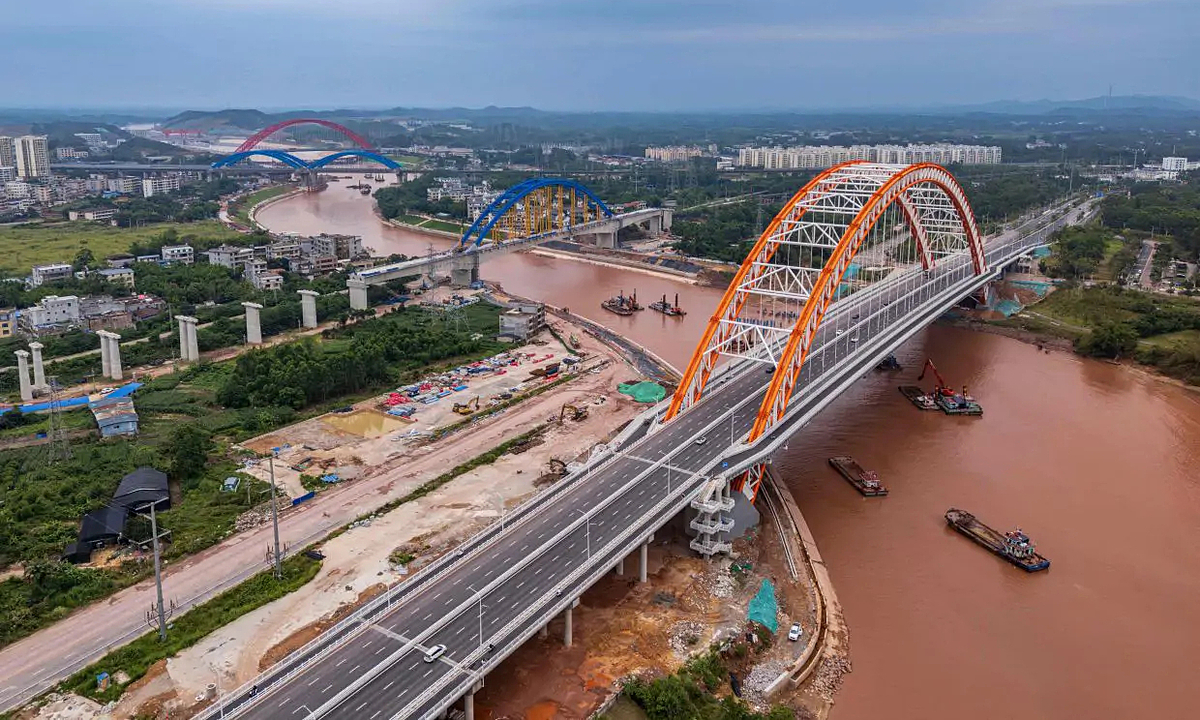
China has officially opened the Pinglu Canal, a significant 134-km (83-mile) waterway designed to enhance trade with Southeast Asia. This ambitious project, costing $10.8 billion, connects Nanning in the Guangxi Zhuang Autonomous Region, a key manufacturing hub in southern China bordering Vietnam, directly to the Gulf of Tonkin. The canal represents a monumental engineering feat and is described by Chinese state media as "the project of our century." It is the first major river-to-sea canal project planned and coordinated at a national level since the People's Republic of China was founded in 1949. It is also integrated into the Belt and Road Initiative's New International Land-Sea Trade Corridor. Previously, goods originating from landlocked southwestern Chinese provinces like Sichuan, Chongqing, and Yunnan had to be transported overland to major coastal cities such as Guangzhou before being shipped overseas. The Pinglu Canal drastically reduces this transit time and distance, cutting the journey by more than 560 km. Xinhua, the state news agency, reported that this will lead to a reduction in transport costs by 18 to 30%, generating annual savings of over five billion yuan ($745 million) in the logistics sector. The waterway is particularly important for boosting economic development in less developed inland regions, facilitating the easier transport of bulk goods like coal, ore, cereals, chemicals, and agricultural produce to international markets. The construction, which commenced in August 2022, involved widening and deepening existing waterways, along with some new excavation, over a total cost of 72.7 billion yuan. From a regional perspective, the canal's opening is poised to significantly alter trade dynamics. For Vietnam, a nation with close economic ties and a shared border with China, this new infrastructure presents both opportunities and potential challenges. The reduction in logistics costs could enhance the competitiveness of Vietnamese goods if they can leverage this new route. However, it also strengthens China's position as a central logistics hub in the region, which may necessitate adjustments for Vietnamese ports and logistics companies to maintain their roles in regional and global supply chains. The Vietnamese government will need to strategically adapt to maximize the benefits of this new trade corridor, particularly within the context of China's state-driven economic initiatives under its one-party system.
Original source
VnExpress International