Cambodia Senate President: International Law is Foundation for Resolving Cambodia-Thailand Border Issue
Politics
2026年7月10日
5
AKP Cambodia
Relations
🇰🇭Cambodia🇹🇭Thailand

Cambodia Senate President: International Law is Foundation for Resolving Cambodia-Thailand Border Issue

AI サマリー

Cambodian Senate President Hun Sen stressed that respect for international law, existing treaties, and International Court of Justice (ICJ) rulings is crucial for resolving the long-standing border issue with Thailand. He shared an article by a Thai scholar, reaffirming the significance of the 1962 ICJ ruling on the Preah Vihear Temple dispute.

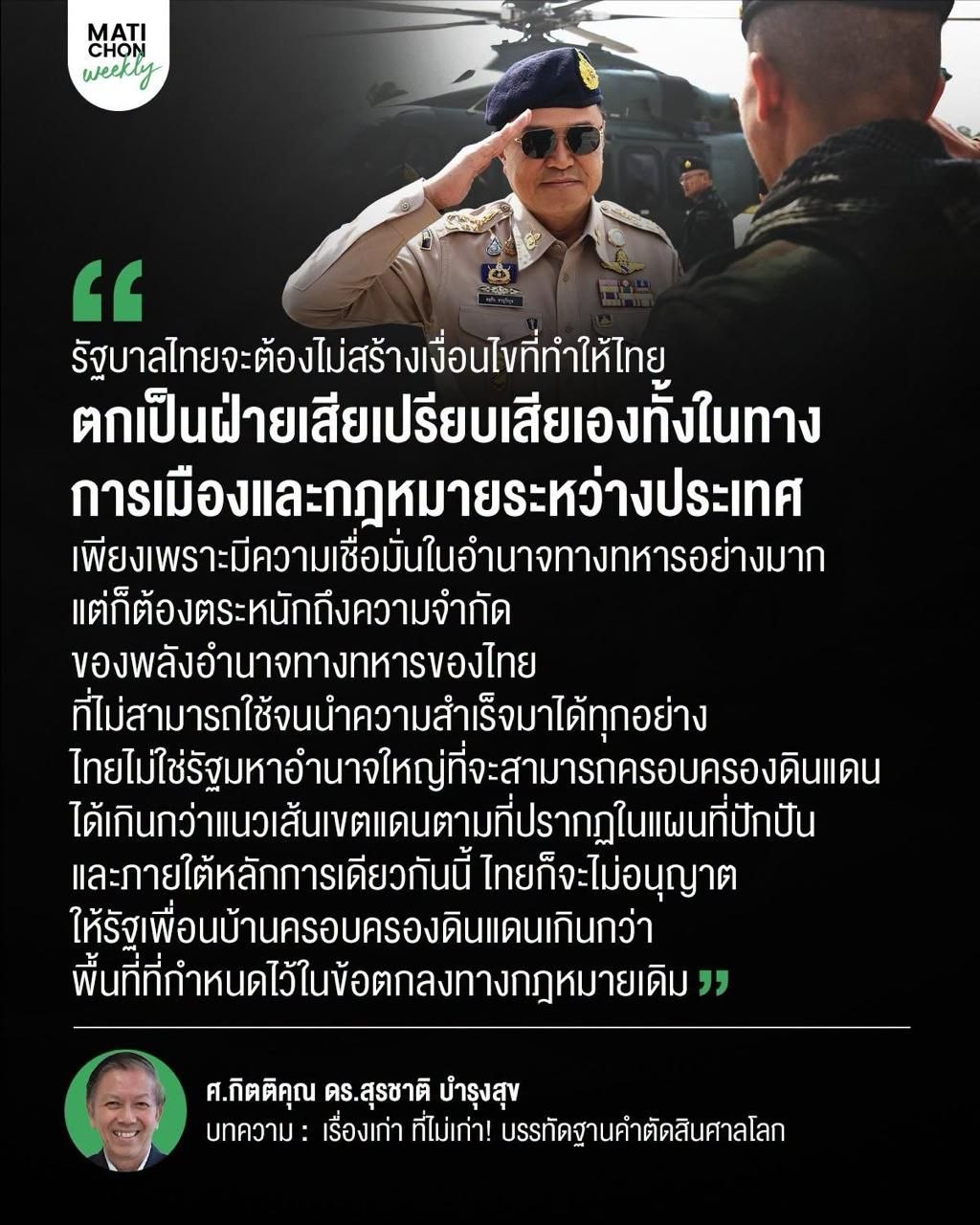
Senate President Samdech Akka Moha Sena Padei Techo Hun Sen has underscored that respect for international law, existing treaties, and the rulings of the International Court of Justice (ICJ) remains the only sustainable path toward resolving the long-standing Cambodia–Thailand border issue. In a message shared on Thursday, Samdech Techo Hun Sen introduced an unofficial Khmer translation of an article written by Thai international relations and security scholar Surachart Bamrungsuk, titled "An Old Story That Is Still Relevant: The Judgment Established by the International Court of Justice." The article revisits the significance of the ICJ's 1962 ruling on the Preah Vihear Temple dispute in light of current border tensions between Cambodia and Thailand. Samdech Techo Hun Sen stressed that he was merely sharing the translated article for the benefit of the Cambodian and Thai public, without adding his own commentary, while encouraging people in both countries to carefully consider its contents. The article argues that one of the fundamental purposes of border delimitation is to ensure certainty, stability, and lasting peace between neighbouring states. It cites the ICJ's 1962 judgment, which stated that established borders should not be subject to endless challenges or revisions whenever one party later identifies alleged flaws in earlier agreements. According to the article, reopening settled border arrangements would create perpetual uncertainty, increase the risk of territorial disputes, and potentially lead to armed conflict. Instead, it emphasises that treaties, officially recognised maps, and legal agreements ratified by both sides must serve as the primary basis for resolving any disagreements. The article also warns against relying on military force to settle border disputes, noting that international law does not recognise territorial changes achieved through force. Even where temporary military control may occur, any final settlement must ultimately return to internationally recognised legal principles and agreed boundary arrangements. Another key point highlighted is that technical issues arising from geographical changes or unclear sections of the border should be addressed through bilateral mechanisms, particularly the Cambodia–Thailand Joint Boundary Commission (JBC), rather than through confrontation. The Thai scholar further cautions that Thailand should avoid creating circumstances that could lead to a third ICJ case over the Cambodia–Thailand border, recalling that both the 1962 judgment and the ICJ's 2013 interpretation of the Preah Vihear ruling have already established important legal precedents accepted by Thailand. By sharing the article, Samdech Techo Hun Sen sought to reaffirm that peaceful dialogue, adherence to international law, and respect for previously agreed legal instruments remain essential for safeguarding regional stability and preventing border disputes from escalating into wider conflict. By Heng Panha

多角的分析

経済的影響

カンボジアとタイ間の国境問題は、直接的な経済活動への影響は限定的であるものの、両国間の貿易や投資の安定性に間接的な影響を与える可能性がある。国境の不確実性は、物流の遅延や追加的なコストを生じさせ、特に国境地域に依存する産業に影響を及ぼすことが考えられる。フン・セン議長が国際法遵守を強調することは、長期的な経済関係の安定化を目指す姿勢を示唆している。

投資家心理

投資家にとって、国境紛争の潜在的なエスカレーションはリスク要因となり得る。しかし、今回のフン・セン議長の発言は、国際法に基づいた平和的解決へのコミットメントを示しており、これは投資環境の安定性に対するポジティブなシグナルと捉えられる。特に、カンボジアとタイ双方の投資家は、法的な枠組みに基づいた紛争解決メカニズムの存在を歓迎するだろう。

社会的影響

国境問題は、国境地域に居住する住民の生活に直接的な影響を与える可能性がある。土地の所有権、移動の自由、そして伝統的な生計手段への影響などが懸念される。フン・セン議長が国際法とICJ判決の尊重を強調することは、住民の権利と安全を保障するための法的な枠組みの重要性を示唆している。これは、地域社会における将来的な紛争の予防と安定化に寄与すると考えられる。

市民の声

カンボジア国民にとって、タイとの国境問題は長年の懸念事項であり、その解決に向けた政府の取り組みは注目される。フン・セン議長が共有した記事は、国際法に基づいた解決策の重要性を国民に理解させるための試みである。これにより、国民は感情論に流されることなく、冷静かつ法的な視点から問題を見るよう促されるだろう。特に、国境地域に住む人々は、平和的かつ安定した解決を最も強く望んでいる。

背景・歴史的文脈

カンボジアとタイの国境問題は、特にプレア・ビヒア寺院周辺地域において、長年にわたり両国間の緊張の原因となってきた。1962年の国際司法裁判所(ICJ)によるプレア・ビヒア寺院の領有権に関する判決は、カンボジアに有利なものだったが、その後の国境線の確定作業は難航した。2013年には、ICJが1962年の判決の解釈について、カンボジア側の主張を支持する判断を示した。しかし、一部の国境地域では、地図の解釈の違いや、未確定の区間が存在し、両国間の小規模な衝突や外交的な駆け引きが繰り返されてきた。フン・セン議長による今回の国際法遵守の強調は、過去のICJ判決とその解釈を再確認し、紛争の平和的かつ法的な解決を改めて目指す姿勢を示している。

原文ソース

AKP Cambodia

原文を読む