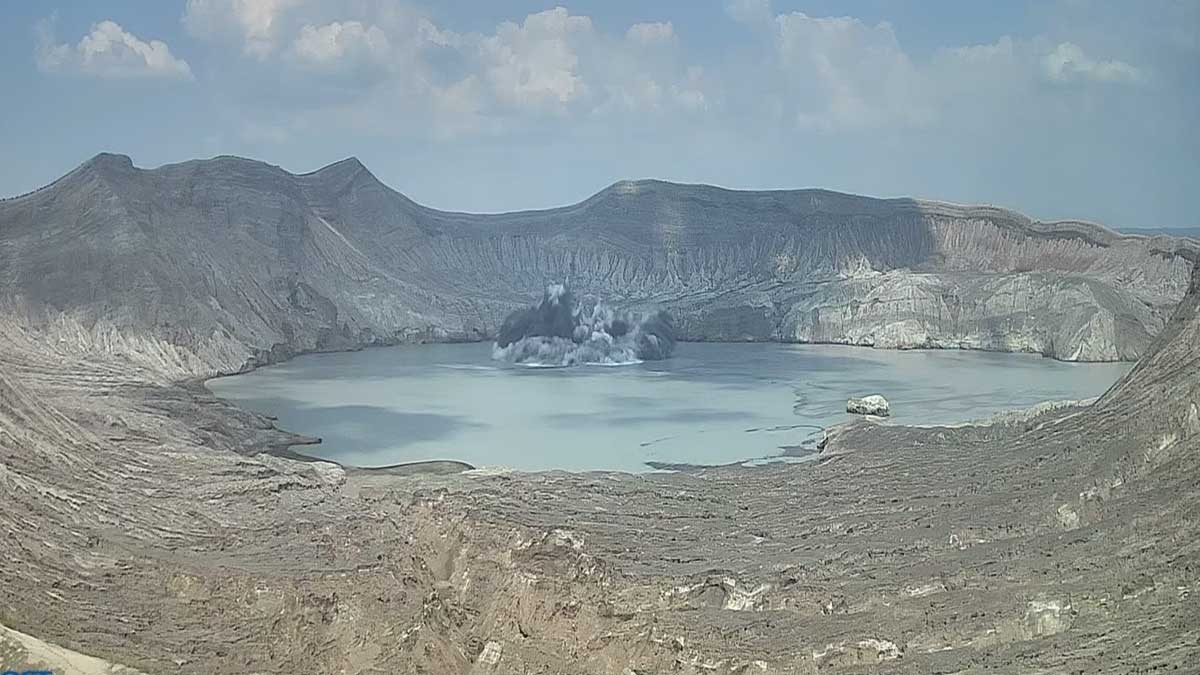
Taal Volcano Activity Calms Down with Reduced Seismic Events, Remains on Alert Level 1
Seismic activity at the Philippines' Taal Volcano has significantly decreased, with fewer volcanic earthquakes and tremors recorded, prompting the Philippine Institute of Volcanology and Seismology (Phivolcs) to maintain Alert Level 1. However, the public is cautioned that volcanic unrest has not ended.
Taal Volcano displayed a marked decline in seismic activity after days of heightened volcanic unrest, the Philippine Institute of Volcanology and Seismology (Phivolcs) reported on Wednesday. In a bulletin released on Wednesday morning, Phivolcs recorded only eight volcanic earthquakes during its 24-hour monitoring period, with no volcanic tremors being detected, which was a sharp drop from the elevated seismic activity recorded in previous days. On July 4, the agency logged 61 volcanic quakes and 60 episodes of volcanic tremor, followed by 75 volcanic tremors the next day. Seismic activity peaked on July 6 with 120 volcanic earthquakes and 113 volcanic tremors before easing to 27 earthquakes and 22 tremors on July 7. Before the recent increase in activity, Taal had remained relatively quiet. Phivolcs recorded four volcanic earthquakes on July 3, two on July 2, and 19 volcanic earthquakes along with five volcanic tremors on July 1. According to Phivolcs, volcanic earthquakes are generated by magma-related processes beneath or near an active volcano, while volcanic tremors are continuous, low-frequency seismic vibrations that may indicate the movement of volcanic fluids. Phivolcs also reported no upwelling of hot volcanic fluids in the main crater on Taal Volcano Island, which sits at the center of Taal Lake. No volcanic smog, or “vog,” was observed. Taal Volcano remains under alert level 1, indicating low-level volcanic unrest. Phivolcs reminded the public that the volcano remains in an abnormal condition and that alert level 1 should not be interpreted as an indication that volcanic unrest has ended or that the possibility of an eruption has been eliminated. —DELFIN T. MALLARI JR.
多角的分析
タール火山の活動低下は、直接的な経済的影響は限定的であるものの、周辺地域の観光業にとっては朗報と言える。過去の噴火では、観光客の激減や交通網の寸断が経済活動に打撃を与えてきた。今回の活動低下は、観光シーズンの回復を後押しする可能性がある。しかし、警戒レベル1が維持されているため、観光客の心理的な不安は依然として残る可能性があり、観光業の完全な回復には更なる安全確認が必要となる。
タール火山の活動低下は、短期的には投資環境の安定化に寄与する。特に、火山周辺地域の不動産や観光関連事業への投資リスクが一時的に軽減されたと見なされるだろう。しかし、Phivolcsが警戒レベル1を維持し、噴火の可能性を排除していないことから、長期的な投資判断においては依然として注意が必要である。投資家は、火山活動の再燃リスクを考慮し、分散投資やリスクヘッジ策を講じることが賢明である。
タール火山の活動低下は、火山島周辺の住民にとって一時的な安堵をもたらす。しかし、警戒レベル1の維持は、住民が常に避難の準備をしておく必要があることを意味する。過去の噴火では、住民の避難生活や生活基盤の喪失が深刻な問題となった。今回の活動低下は、住民の日常生活への影響を一時的に緩和するが、根本的なリスクは依然として存在しており、防災対策の継続と強化が求められる。
タール火山の活動が落ち着いたことは、地元住民にとって一時的な安心材料となる。特に、火山灰による大気汚染や、噴火による避難生活への不安が軽減される。しかし、警戒レベル1は、いつ活動が再燃するかわからないという状況を示唆しているため、住民は依然として警戒を怠らず、避難計画を確認しておく必要がある。過去の噴火で被災した経験を持つ人々にとっては、この「一時的な静けさ」が、いつ終わるとも知れない緊張感の始まりに過ぎないと感じるかもしれない。
背景・歴史的文脈
タール火山は、フィリピンのルソン島バタンガス州にある活火山であり、マニラ首都圏から南に約90キロメートルのタール湖の中央に位置する。その景観の美しさから観光地としても知られる一方、歴史上、多数の噴火を繰り返してきた。特に1965年の噴火では約1,000人、1977年の噴火では約100人の死者を出した。2020年1月には大規模な噴火が発生し、広範囲に火山灰を降らせ、数万人の住民が避難を余儀なくされた。この噴火は、フィリピンにおける火山災害の深刻さと、インフラへの影響の大きさを改めて浮き彫りにした。Phivolcsは、タール火山の活動を常時監視し、警戒レベルシステムを用いて住民や関係機関に情報を提供している。
原文ソース
Inquirer NewsInfo