General articles are free for 24 hours after publish.
ADB Forecasts Vietnam to Remain Fastest-Growing in Southeast Asia in 2026
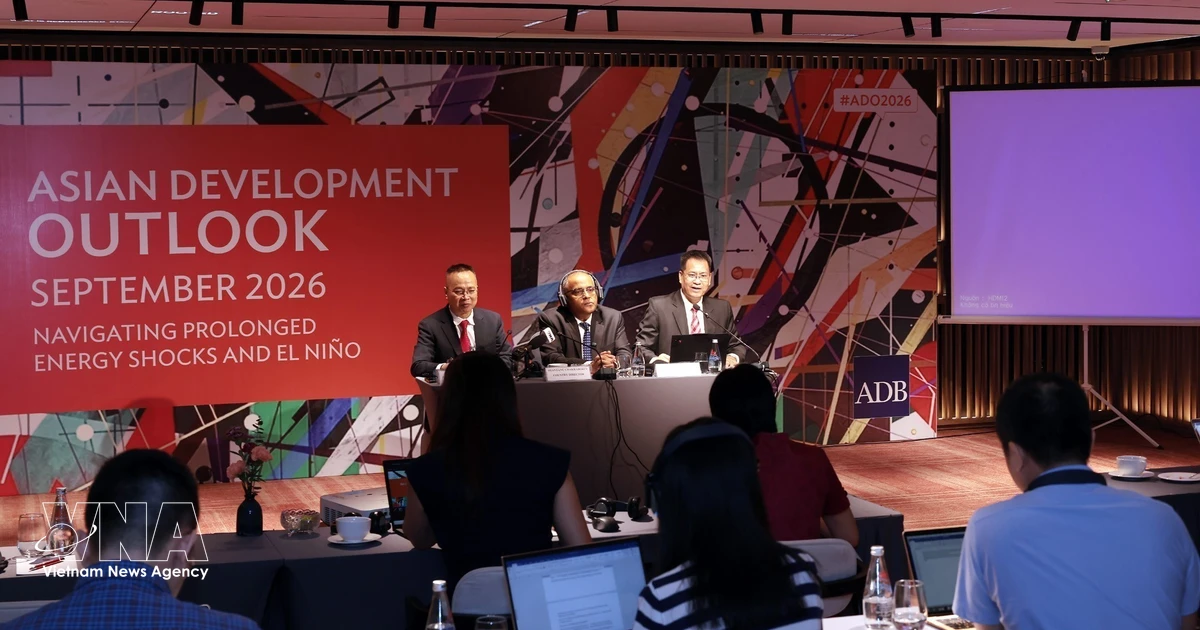
The Asian Development Bank (ADB) maintained its growth forecast for Vietnam at 7.2% for 2026, projecting it to remain the fastest-growing economy in Southeast Asia. Sustained pace and quality of growth are crucial for Vietnam's goal of becoming a high-income country by 2045.
The Asian Development Bank (ADB) has maintained its growth forecasts for Vietnam at 7.2% for 2026 and 7.0% for 2027, projecting the country to remain the fastest-growing economy in Southeast Asia. Shantanu Chakraborty, ADB Country Director for Vietnam, noted that while achieving strong growth in a single year is encouraging, maintaining both the pace and quality of growth over many years will be essential if Vietnam is to achieve its goal of becoming a high-income country by 2045. ADB has identified a pipeline of 27 projects for Vietnam through 2029, with total planned financing of approximately $4.6 billion USD. These projects focus on sectors that are among Vietnam’s priorities, including infrastructure, energy, urban development, agriculture, and public sector management. In the aviation sector, Vietjet has signed a strategic partnership agreement with Starlink, operated by SpaceX, to provide high-speed Wi-Fi on its flights. In Hanoi, the Vietnam-Laos Product Week aims to facilitate information exchange and cooperation opportunities between businesses from both countries. Infrastructure development continues to be a focus, particularly in logistics, which requires not only more warehouses, ports, and logistics centers but also more efficient connections among existing facilities, lower costs, and faster cargo flows from production to export. Cooperation with U.S. corporations is also advancing, with U.S. business leaders expressing continued interest and confidence in Vietnam across sectors like science and technology, advanced manufacturing, energy, infrastructure, and finance. In terms of international trade, Vietnam's trade surplus with Tanzania has increased, making Vietnam a key market for Tanzanian agricultural products, especially cashew nuts. In the financial markets, the trading band for commercial banks is set at +/- 5%, with the ceiling rate for USD/VND at 26,917 VND and the floor rate at 24,353 VND. In the real estate sector, particularly commercial property, Vietnam is seen as having considerable room for growth compared to some regional markets. Investment from Russia is also considered favorable due to strong bilateral ties and opportunities for establishing foreign-invested enterprises. In the energy sector, Petrovietnam Gas Joint Stock Corporation (PV GAS) and ENEOS Xplora Inc. are exploring broader cooperation in the gas and liquefied natural gas (LNG) value chain and energy projects. Tourism remains robust, with Hanoi welcoming 18.01 million visitors in the first half of the year, and total tourism revenue rising by 19.1%. For aviation infrastructure, the Civil Aviation Authority of Vietnam has proposed bringing forward investment in a parallel taxiway system to connect with a planned aircraft maintenance facility at Phu Quoc International Airport. Sun Group is also investing approximately 500 billion VND to upgrade Terminal 1 at Phu Quoc Airport, increasing its capacity to around 9 million passengers per year. For the high-speed railway project, technology transfer is considered important, with cooperation with foreign enterprises being explored. In the financial markets, as of the end of June, Vietnam had 43 fund management companies and 141 securities investment funds, with total assets under management by fund management companies reaching approximately 846 trillion VND (over $32.5 billion USD). The 31st Asia Securities Forum Annual General Meeting (ASF AGM 31) will feature a dedicated session on Vietnam under the theme “Investing in Vietnam – Rising in a New Era”. Economists suggest that tax policy should be used as a lever to channel investment toward technology, research and development, supporting industries, and supply capacity. Source: VietnamPlus English
Original source
VietnamPlus English