General articles are free for 24 hours after publish.
Vietnam Pitches Investors on Reforms in Bondless US Roadshow
Vietnamese President To Lam met with leaders of major US corporations during a roadshow in the United States, emphasizing economic reforms and investment opportunities. This bondless roadshow highlights Vietnam's growth potential and its drive to build international partnerships.
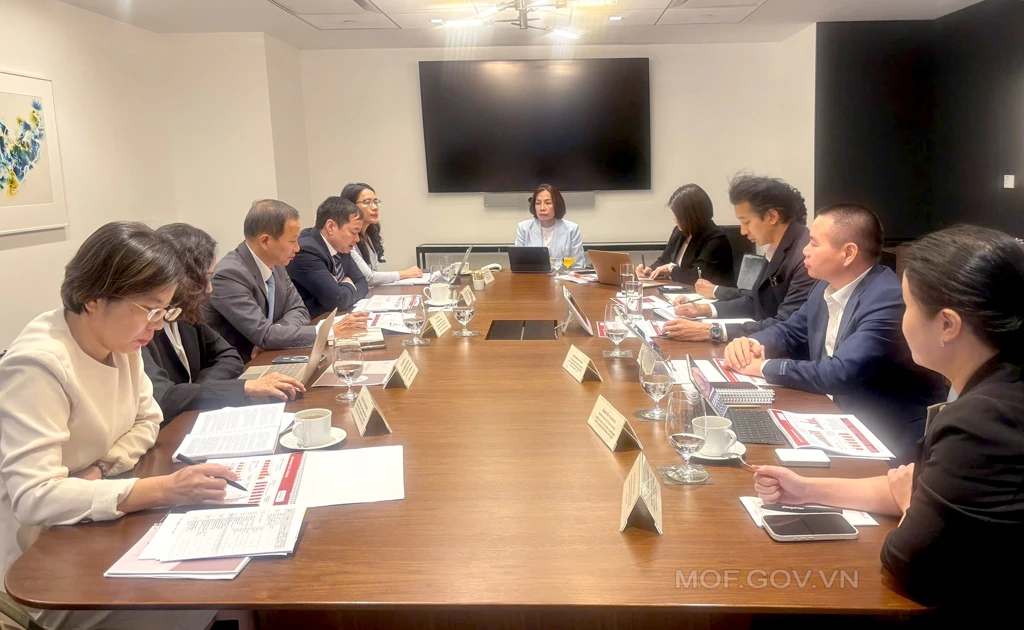
General Secretary of the Communist Party of Vietnam (CPV) Central Committee and President To Lam met with leaders of three major US groups – Warburg Pincus, Boeing and Apple – in New York on the afternoon of September 21 (local time). This meeting was part of a bondless roadshow aimed at showcasing Vietnam's commitment to reforms and investment opportunities in the US market. General Secretary and President To Lam expressed his belief that combining Vietnam’s strengths, dynamic economy, development ambitions and innovation opportunities with Stanford’s global knowledge, talent and networks will help establish an effective cooperation model between academia and practice, universities and businesses, and technology and people, generating new value and practical benefits for both sides and the region. This roadshow is seen as a strategic move to attract international investment, especially given Vietnam's long-standing challenge of not having a bond issuance market until 2026. Vietnam has undergone remarkable changes over the past four decades since the Doi Moi policy in 1986, recovering from prolonged wars and economic difficulties. In this context, sustaining economic growth and accessing international financial markets are crucial issues. Furthermore, Vietnam is focusing on energy transition, with companies like B.Grimm Power making strides in renewable energy and LNG-fired power. Notably, Bac Ninh province is accelerating its transition to clean energy, with a particular focus on rooftop solar power systems, indicating Vietnam's attempt to balance its state-led development strategy under a one-party system with international sustainability demands. Additionally, achieving Vietnam's export target of an ambitious 74 billion USD requires additional investment in the final months of the year. A Ho Chi Minh City official pointed out that the utilization of Free Trade Agreements (FTAs) should extend beyond tariff preferences to meeting stricter requirements on product quality, technical standards, environmental protection, and sustainability, which is a key challenge for Vietnamese manufacturing to enhance its international competitiveness. While Vietnam's relationship with China is a significant factor in its economic growth and also involves geopolitical considerations, its engagement in the US highlights Vietnam's foreign policy emphasis on economic growth and diversification of international partnerships. Source: VietnamPlus English
Original source
VietnamPlus English