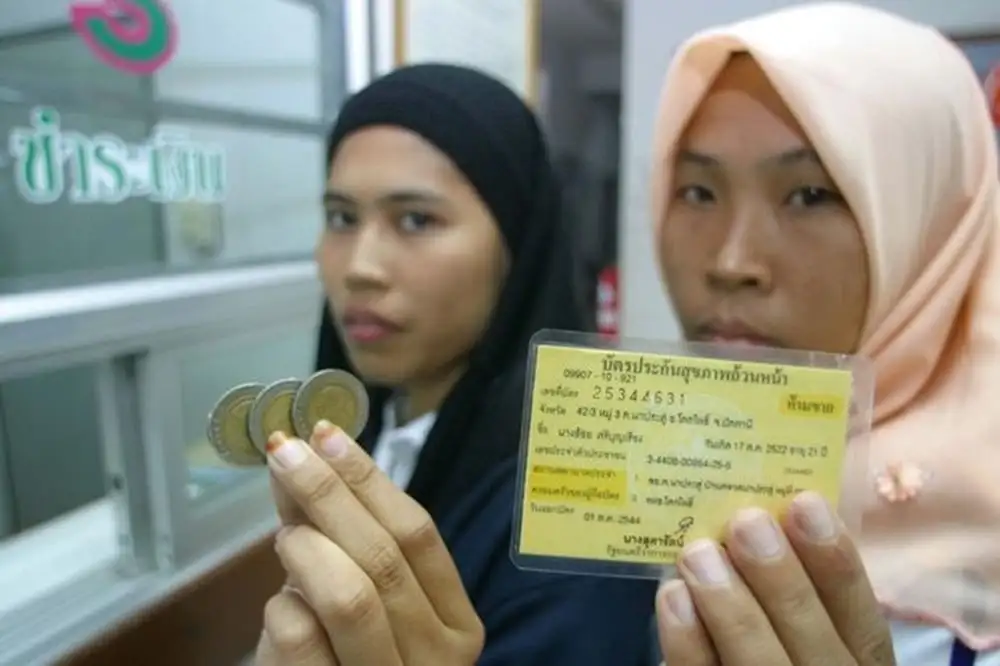
Thailand's 30-Baht Healthcare Scheme Ranks 8th Globally
Thailand's Universal Coverage Scheme, commonly known as the 30-Baht healthcare scheme, has been ranked as the 8th best healthcare system globally in 2026, reflecting efficient management and broad public access.
This article requires PRO
This article is outside the free access window or is a special report. PRO unlocks it and the full archive.
Related articles
- Thai Deputy Education Minister Visits Flood-Affected Educators
Thai Deputy Minister of Education, Akaranan Kannittinan, visited the Rin Thong Village in Lam Luk Ka District, Pathum Thani Province. He met with educators and students from the Department of Learning Promotion (SKR) affected by recent floods, assessing relief efforts and coordinating inter-agency support.
- Sri Racha Municipality Conducts Firefighting Drill for Scouts
Sri Racha Municipality in Chonburi, Thailand, conducted a basic firefighting drill for Boy Scouts and Girl Guides from Darasamut Sri Racha School as part of the 2026 academic year's basic-level Scout and Guide assembly.
- Trat, Thailand: Ship Painter Threatens Employer with Gun Near School Over Unpaid Wages; Police Arrest Suspect with BB Gun
A ship painter in Trat province, Thailand, allegedly threatened his employer with a gun-like object near a school, demanding unpaid wages. Police quickly apprehended the suspect, discovering the weapon was a BB gun. The incident occurred in a sensitive location close to a school.
- Walailak University Ranks First in Southern Thailand in THE World University Rankings 2027
Walailak University, located in Southern Thailand, has achieved the top position in Southern Thailand in the Times Higher Education (THE) World University Rankings 2027, highlighting its significant achievements in education and research.