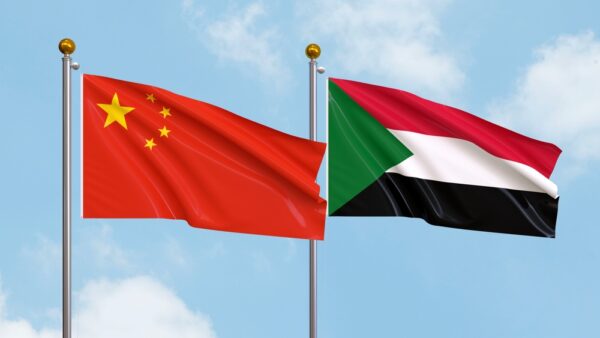
China's Growing Economic Influence in Sudan Amidst Collapse
Amidst Sudan's ongoing civil war, China is steadily expanding its influence over the country's resources and infrastructure in exchange for economic support. As Western nations withdraw, China is strengthening ties with the Sudanese government through debt forgiveness and new investment deals, aiming to secure long-term benefits.
In the midst of a three-year-long civil war, Sudan finds itself largely abandoned by the international community, with many Western nations having closed their embassies. The World Food Programme and the International Red Cross conduct limited humanitarian operations, but even these face delivery challenges. The United States closed its embassy in April 2023 and ceased all aid in January 2025. The European Union has committed over €200 million for aid, but deliveries are often inadequate. Meanwhile, the de facto government of Sudan, General Burhan’s Sudanese Armed Forces (SAF), which controls the eastern half of the country, is over $56 billion in debt. Aid does little to mitigate this debt spiral, and few creditors are willing to fund the campaign against the Rapid Support Forces (RSF) in the west. China remains one of the few nations actively negotiating with the Sudanese Army on an economic level. Chinese diplomats recently announced the forgiveness of four no-interest loans totaling $50 million, signaling an apparent olive branch to the faltering regime and a willingness to foster diplomatic ties when others have withdrawn. Dr. Gebreil Ibrahim, the Sudanese finance minister, praised the deal, seeing it as opportune for Chinese entry into Africa and for Sudanese skills development. He noted that the deal comes at a time when no Western country has invested into Sudan. In fact, China is actively seeking investments in Sudan, including a $300 million copper deal that would leave Sudan with 30 percent of the profits over a 30-year timeframe. This would be paid out only after debts to China were paid off. Notably, Sudan currently owes China over $5 billion in outstanding debt. The terms are quite striking and hint at a different picture than economic cooperation. China formally entered into diplomatic and economic relations with Sudan in 1996, when state-owned CNPC opened Block 6, an oil venture in partnership with Sudan’s Ministry of Energy. The Petrodar pipeline, a 1,500-kilometer consortium led by CNPC, Sinopec, and Malaysia’s Petronas, carried South Sudanese crude from the Melut Basin north through Sudan to Port Sudan on the Red Sea. China helped to build all-weather roads for oil transportation, while also providing military equipment to Sudan for increased security for production. This inadvertently led to the Sudanese bombing of southern militias, clearing the area for more oil extraction. China continued to invest roughly $3 billion into oil extraction, yet Amnesty International found that almost no revenue helped to fund further economic, social, or cultural development. By 2023, the civil war completely broke the oil supply chain to China. The CNPC relocated from Khartoum to Port Sudan and then eventually back to Beijing. Sabotage and blockades repeatedly struck the oil blocks, causing production to effectively cease. In March 2024, Sudan declared force majeure on the pipeline, directly halting South Sudan’s crude exports as well, leading to the termination of the Production Sharing Agreement between north and south. This meant that South Sudan no longer had any port access, severely restricting exports. On December 7, 2025, the CNPC issued a formal ultimatum that it was terminating its Block 6 partnership. The following day, Sudan’s largest oilfield at Heglig was seized by opposition forces. The decision to withdraw could not have been timed better. China is playing a bigger game than aid and economic development in Sudan. Instead, the recent loan forgiveness to Burhan’s regime, which is illegitimate and undemocratic, was paired with Chargé d’Affaires Xu Jian’s statements that China would continue $30 million of grant-funded projects in Sudan and aim to resume CNPC operations within the country. China’s trust shown to the SAF comes with its public calls for peace. The deals, however, expose that it is benefiting from the weak regime; it can control assets more easily and establish long-term deals with incredibly one-sided terms. China has made substantial claims for peace, voting for an immediate cessation of hostilities with the November 2024 UN Security Council resolution. Beijing has sent envoys, joined multilateral formats, and stayed clear of the direct military involvement that has drawn Western sanctions onto Russia and Iran. But while this rhetoric calls for peace, the position effectively stays real intervention and allows for more time to finalize deals with the current junta. China needs Burhan to maintain power, since the legitimacy of their contracts rely on personal relationships with him and his leadership. A civilian government would likely renegotiate Chinese arrangements. In fact, the Eastern Sudan Advisory Council and the Beja Congress called for a freeze on any deal-making with China. Eastern Sudan is mineral-rich and chronically poor, and its residents rarely receive any of the resource wealth that flows outward. They face water shortages, failing infrastructure, and international isolation while suffering from the effects of the civil war. The Eastern Sudan Advisory Council further warned that contracts signed under current conditions could face legal challenges from any future government. The junta has no legislative authority to bind the state even while a government delegation was, as of June 2026, preparing to travel to Beijing to finalize the contracts. There is no functioning national legislature, no record of community consultation, and no published environmental or social impact assessments. The Burhan government holds Port Sudan, which is enough to legitimize the contracts with China. Beijing’s formal neutrality gives it political cover to do all of this without attracting the scrutiny that military involvement would invite. Yet, this essentially sets up a violation of Sudan’s long-term sovereignty and causes a dependency trap for Sudan. Western policymakers are entirely missing what China is actually doing in Sudan. China is sequencing its debt, offering small tokens of grace through debt forgiveness and then locking in longer-term and fully extractivist deals. The Eastern Sudan Advisory Council’s warning should be taken seriously beyond Sudan as well. Agreements concluded under these conditions carry real legal exposure once the war ends, and the communities whose resources are being contracted away extend into South Sudan and beyond.
多角的分析
中国はスーダンの経済的混乱と債務問題を巧みに利用し、自国の経済的利益を最大化しようとしている。債務免除という「恩恵」と引き換えに、長期的な資源開発契約を締結することで、スーダンの経済的自立を阻害し、中国への依存度を高める構造を作り出している。これは、資源国が先進国の開発支援に依存することで、かえって経済発展が停滞する「資源の呪い」の現代版とも言える。
現在のスーダンの政治的不安定性と内戦は、直接的な投資リスクを極めて高くしている。しかし、中国のような一部の国家は、こうしたリスクを承知の上で、長期的な視点に持ち、将来的な資源アクセス権やインフラへの影響力確保を狙った戦略的投資を行っている。これは、短期的な利益を求める西側投資家とは対照的なアプローチであり、地政学的なリスクプレミアムを考慮した投資判断と言える。
内戦と経済的混乱により、スーダンの一般市民は水不足、インフラの崩壊、国際的孤立といった深刻な生活問題に直面している。特に東部スーダンでは、豊富な鉱物資源から得られる富が地域住民に還元されず、貧困とインフラの老朽化が進行している。中国との契約が、これらの地域住民の生活改善に繋がる可能性は低く、むしろ資源収奪の対象となることで、将来的な権利侵害のリスクも懸念される。
スーダンの市民、特に東部スーダンの住民は、自国の資源が外国の利益のために利用され、自分たちの生活が改善されない状況に不満を募らせている。内戦の混乱に乗じた外国勢力による資源開発は、彼らの生活基盤をさらに脅かす可能性がある。政府が国民の意思や影響を考慮せず、外国との契約を推進することへの不信感は高まるだろう。
背景・歴史的文脈
中国とスーダンの関係は1996年の国交樹立以来、特に石油資源を巡って深まってきた。2000年代初頭には、中国石油天然気集団公司(CNPC)がスーダンで大規模な石油開発プロジェクトを開始し、南スーダンからの原油輸送パイプライン建設にも関与した。この協力関係は、スーダン政府への軍事装備供与にも繋がり、地域紛争を助長したとの批判もある。2011年の南スーダン独立後も、中国は両国との関係を維持し、石油利権を確保してきた。しかし、2023年からの内戦により、スーダンの石油産業は壊滅的な打撃を受け、中国の事業も大きな影響を受けた。この状況下で、中国は債務免除や新たな投資機会を通じて、スーダン政府との関係を再構築し、経済的影響力をさらに強めようとしている。
原文ソース
The Diplomat Indonesia