General articles are free for 24 hours after publish.
Russian Arrivals to Vietnam Forecast to Reach Record High, Boosting Tourism Sector
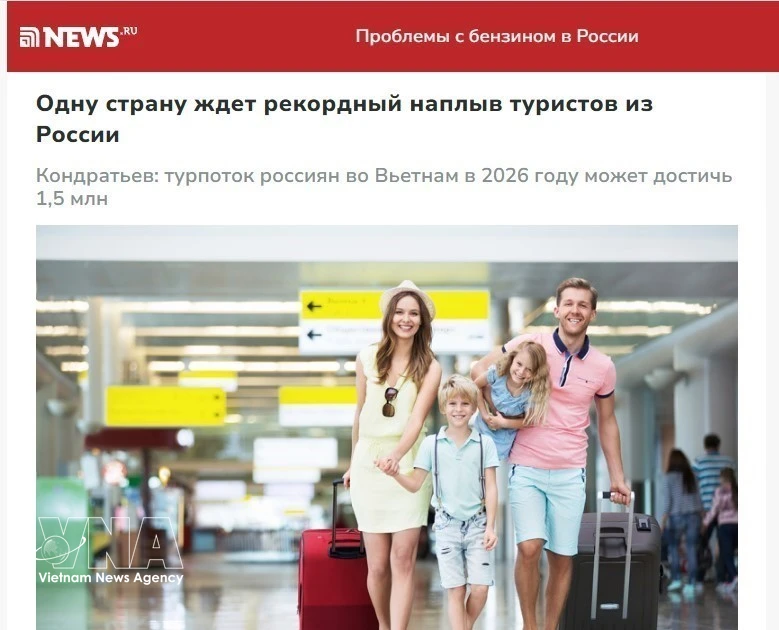
Vietnam is anticipating a record surge in Russian tourist arrivals, injecting new vitality into its tourism sector. Bilateral trade is also on an upward trend, with expectations for deeper tourism cooperation. The Vietnamese government is focusing on enhancing tourism quality and developing diverse experiential content.
Vietnam is anticipating a record surge in Russian tourist arrivals, injecting new vitality into its tourism sector. The Association of Tour Operators of Russia (ATOR) reported that Vietnam ranked fourth among the best-selling package tour destinations in the Russian market in July, capturing a 7.8% market share, up 3.2 percentage points year-on-year. This performance saw Vietnam overtake Thailand (4.7%) and China (4.3%). Bilateral trade between Vietnam and Russia reached approximately US$2.16 billion in January-May, marking a 6.6% increase. Both governments are targeting US$10 billion in two-way trade, bolstered by the Vietnam-Eurasian Economic Union Free Trade Agreement. Reflecting a strategic shift, Vietnam's government, through Resolution No. 26-NQ/TW issued on August 22, has outlined a new vision for tourism development. This vision emphasizes a fundamental renewal of mindsets, methods, and approaches to tourism governance, prioritizing a transition from quantity to quality and aiming to significantly increase the sector's contribution to the national economy. This resolution is considered a crucial milestone, opening new orientations and development opportunities for Vietnam's tourism. In line with evolving traveler preferences, there is a growing demand for authentic local experiences, deeper connections with destinations, and interactions with local communities, culture, and nature. Small-group and personalized trips with minimal environmental impact and clear community benefits are increasingly sought after. In response, cities like Da Nang are enhancing efforts to integrate cuisine into tourism itineraries, linking culinary promotion with destination branding and cultural preservation. Hanoi is also designing tourism events to inspire exploration beyond individual festivals, offering experiences such as virtual reality tours and discovery of new tourism stimulus programs. Vietnam's tourism industry has historically faced seasonality challenges, with visitor numbers peaking in summer and declining during rainy months. Efforts are underway to restructure tourism ecosystems and develop year-round products to mitigate this issue. Vietnam consistently identifies tourism as a spearhead economic sector. Deputy Prime Minister Pham Thi Thanh Tra highlighted the importance of positioning MICE (Meetings, Incentives, Conventions, and Exhibitions) as a strategic tourism product in the new development era. This aims to attract high-quality visitors, generate momentum for trade and investment, and boost national competitiveness. Cooperation among CLMV (Cambodia, Laos, Myanmar, Vietnam) countries is also advancing. A joint action plan for ACMECS tourism cooperation for 2026–2028 focuses on key pillars such as improving connectivity, facilitating travel, promoting digital transformation, developing ecotourism and community-based tourism, enhancing safety, and building human resources.
Original source
VietnamPlus English