General articles are free for 24 hours after publish.
EV Fire Scare Prompts Ferry Bans, Safety Review
Following a ferry fire in the Philippines where an electric vehicle (EV) may have been involved, several shipping companies have banned EVs and hybrids. The government is also reviewing safety guidelines for sea transport of these vehicles.
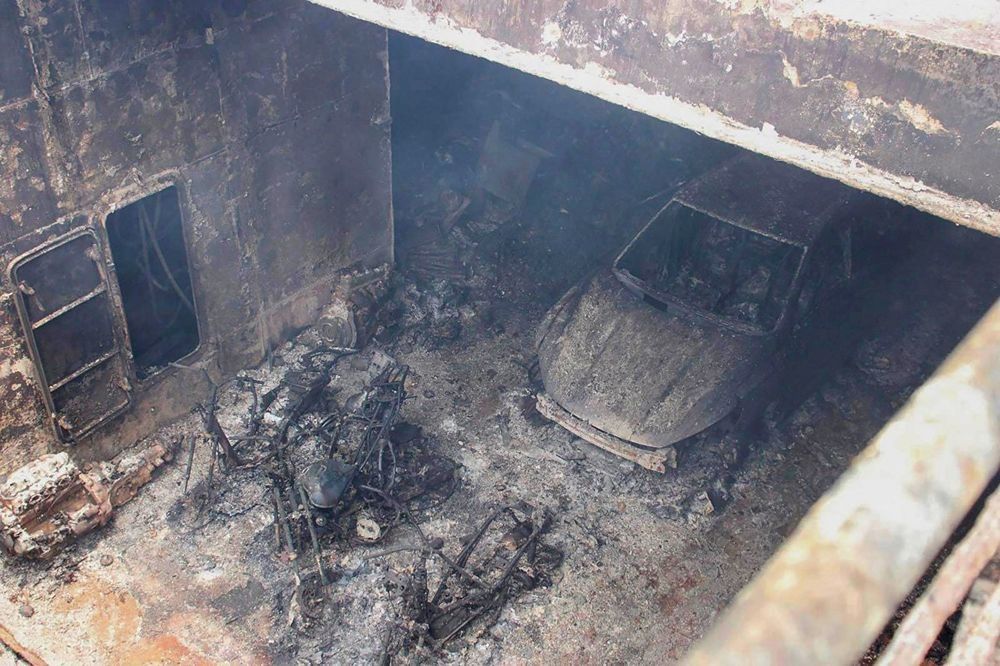
MANILA, Philippines — The possibility that an electric vehicle (EV) was involved in the explosion aboard the fire-hit MV June Aster has prompted shipping companies and government agencies to evaluate safety protocols for transporting EVs and hybrid vehicles by sea. Philippine Coast Guard investigators have been trying to determine the cause of the incident, which occurred on September 9, following survivors' accounts that they heard a loud explosion from the ship's cargo deck before the fire broke out. The Coast Guard is looking into several possibilities, including a terrorist attack or an explosion involving the EV aboard the vessel. The MV June Aster was carrying one EV, five motorcycles, a forklift, a pickup truck, and other cargo when it was engulfed in flames. Authorities stressed that they have not determined the cause of the fire, as the investigation remains ongoing. In response, at least two major shipping companies announced restrictions on EVs and hybrid vehicles aboard their vessels. Montenegro Shipping Lines Inc., in a memorandum dated September 16, announced that hybrid and electric vehicles would no longer be allowed aboard its passenger and cargo vessels across all routes. The company stated that the measure is being implemented as a preventive safety precaution to minimize the risk of fire, explosion, thermal runaway, and other potential hazards associated with electric and hybrid batteries during vessel operation. Another shipping company, Island Water, also released a memorandum on September 17 restricting EVs and hybrid vehicles aboard its passenger vessels, citing marine safety standards and risk management regarding alternative powertrain technologies and high-capacity battery systems. The Department of Energy (DOE) said Thursday, September 17, that it recognizes the safety concerns raised over the transport of EVs by sea. The agency is coordinating with the Maritime Industry Authority (MARINA) and other concerned agencies to develop broader safety guidelines for transporting EVs aboard vessels. This development highlights the growing adoption of EVs in the Philippines and the need for corresponding infrastructure and safety regulations. For an archipelagic nation like the Philippines, maritime transport is crucial for mobility and logistics, making safety paramount.
Original source
Philstar Business