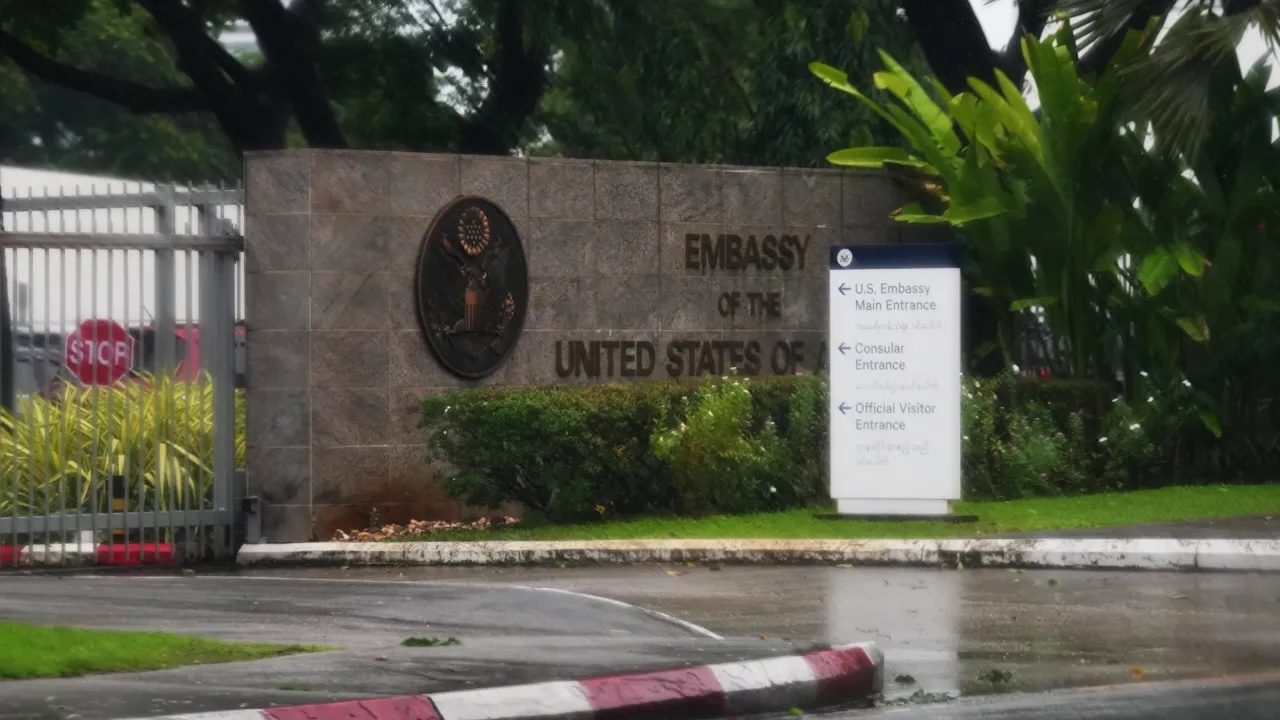
Debunking the rumours of a shift in US policy toward Myanmar
Diplomacy
2026年7月3日
2
DVB
Relations
🇲🇲Myanmar🇺🇸United States

Debunking the rumours of a shift in US policy toward Myanmar

AI サマリー

The junta’s propaganda machine is currently exploiting U.S. bureaucratic transitions to spread a false narrative that Washington is shifting its policy to support the military regime. In reality, the U.S. is not abandoni

The junta’s propaganda machine is currently exploiting U.S. bureaucratic transitions to spread a false narrative that Washington is shifting its policy to support the military regime. In reality, the U.S. is not abandoning the democratic movement, and these rumors are nothing more than calculated psychological warfare designed to demoralize the public. Congressional testimonies and misinterpretations Propagandists are making the best of ambiguous, hedging answers provided by Assistant Secretary Michael DeSombre during a June 25 House Foreign Affairs Committee hearing. However, this does not represent a policy shift, as Secretary of State Marco Rubio firmly reaffirmed U.S. support for a democratic civilian government over a Chinese-backed military regime during a June 3 Senate Appropriations hearing with Senator Mitch McConnell. Secretary Rubio explicitly stated the U.S. is actively seeking to identify democratic partners to shape Myanmar’s future, directly contradicting claims of a pivot toward the junta. The structural funding freeze The current pause in the dispersal of funds authorized by the Burma Act is not a political decision to abandon the resistance, but rather a global, structural freeze. The current administration’s ongoing integration of USAID into the State Department has temporarily suspended $19 billion USD in global aid closeout funds. Recognizing this bureaucratic hurdle, a bipartisan group of 17 senators, led by Brian Schatz and Jeanne Shaheen, sent a formal letter to Secretary Rubio in April demanding the immediate release of these crucial funds. Geopolitical priorities and the CCP A fundamental pillar of U.S. foreign policy remains countering the influence of the Chinese Communist Party (CCP). During his May 2025 confirmation hearing, DeSombre testified to Senator James Risch that helping the Myanmar people build resilience against CCP influence is a primary American objective. Because the military junta is heavily reliant on China and Russia, a U.S. pivot to support a proxy of its greatest geopolitical rival is strategically illogical and practically impossible. The SCAM Act and transnational crime Recent reports of U.S. officials meeting with junta representatives in Tokyo regarding scam centers sparked a July 1 protest letter from 25 civil society organizations. As Myra Dahgaypaw noted, the junta and the scam centers share a symbiotic relationship, making cooperation with the military akin to “asking an arsonist to help put out a fire.” Instead of genuine cooperation, this meeting was likely a pressure tactic tied to the SCAM Act—introduced by Senators John Cornyn and Jeanne Shaheen—which threatens to sanction the junta as an “enabler country” for transnational crime. Surviving and winning the asymmetric war The Myanmar people must avoid harboring false expectations of foreign intervention, but they must equally reject the undue discouragement manufactured by junta propaganda. To achieve victory, the junta must demonstrate good governance and win back public consent—an impossible task for a regime reliant entirely on terror. Conversely, the resistance merely needs to survive, sustain its momentum, and continue degrading the junta’s capacity to control the country. James Shwe is a Myanmar democracy advocate and writer based in California. His previous DVB analysis of Min Aung Hlaing’s visit to India appeared on June 3. DVB publishes a diversity of opinions that do not reflect DVB’s editorial policy. We’d like to hear what you think about this or any of our stories: [email protected]

多角的分析

経済的影響

実務協力は短期の投資案件に直結しなくても、人材育成、技術移転、行政能力の底上げにつながる可能性があります。ただし制度透明性が低いままでは、協力の実効性は限定されます。

投資家心理

投資家にとっては、どの国との実務協力が残っているかがリスク評価の材料になります。外交接点の継続はプラス材料ですが、政治的正統性や制裁環境を切り離して見ることはできません。

社会的影響

社会面の焦点は、軍同士の関係改善が、都市部だけでなく地方のサービスや機会に届くかです。軍事政権のプロパガンダ機関は現在、米国官僚の移行期を利用して、ワシントンが軍事政権を支援する方針に転換しているという偽りの物語を広めている。…を一回の式典で終わらせない制度設計が見られます。

市民の声

市民にとっては、会談そのものよりも、雇用、教育機会、公共サービスの改善として実感できるかが焦点です。成果が見えなければ公式報道への信頼は高まりません。

背景・歴史的文脈

このニュースは、ミャンマー政府が対外関係を通じて行政分野の協力を維持しようとする動きです。国際的な孤立や制裁圧力が続く中でも、科学技術、教育、金融など実務分野の会談は、政府間チャネルを保つ意味を持ちます。

原文ソース

DVB

原文を読む