General articles are free for 24 hours after publish.
Philippine Peso Hits New Record Low Against US Dollar Amid Inflation Data and Fed Rate Hike Fears
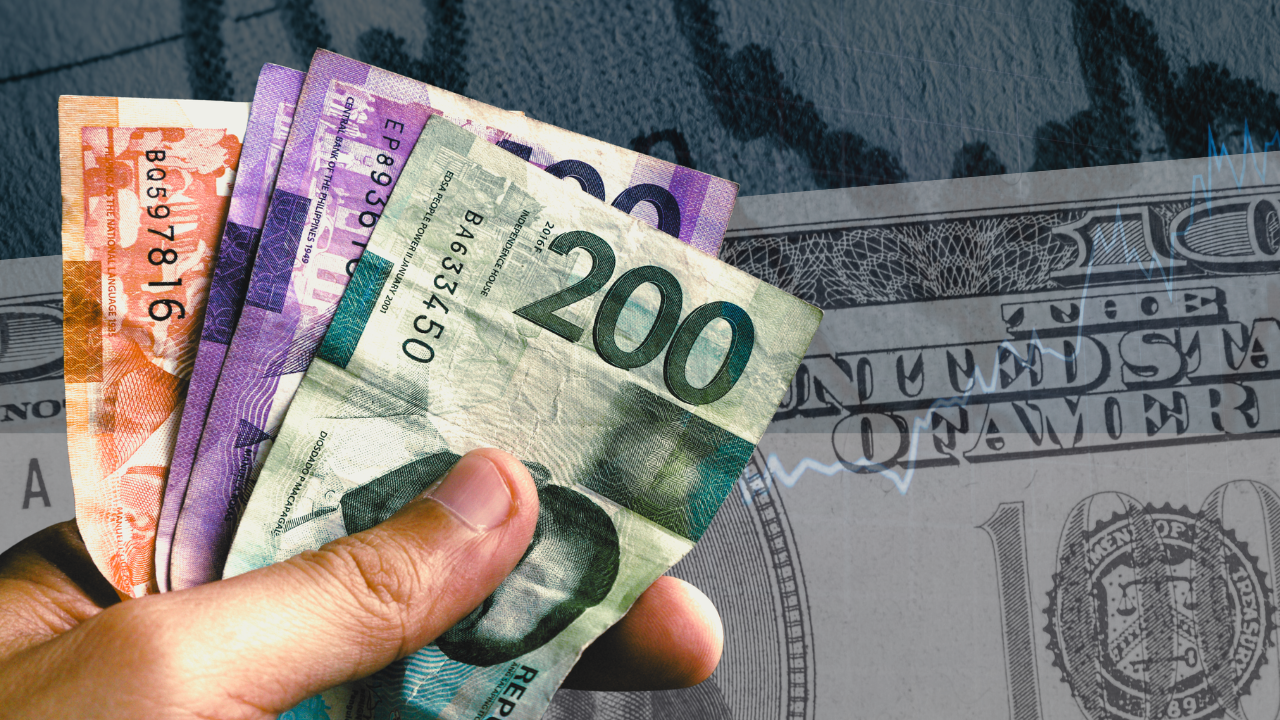
The Philippine peso hit a new record low against the US dollar as investor caution builds ahead of US inflation data and increasing bets on a Federal Reserve rate hike. Despite the Bangko Sentral ng Pilipinas' own rate increases, structural pressures, including high energy prices, are weighing on the currency.
MANILA, Philippines — The Philippine peso extended its losses on Tuesday, closing at a new record low against the US dollar as investors positioned themselves ahead of US inflation data due later this week and increasingly bet that the Federal Reserve (Fed) could raise interest rates. The local unit shed 3.9 centavos to close at 62.625 versus the dollar, data from the Bankers Association of the Philippines showed. This surpassed the prior record-low finish of 62.59 set on Sept. 4. READ: Peso tagged as Asia’s ‘weakest link’ The peso weakened to an intraday low of 62.675 before trimming its losses. Total trading volume rose to $1.4 billion from $1.2 billion in the previous session. The decline came even as the dollar index, which measures the greenback against a basket of major currencies, was subdued on Tuesday, with the Japanese yen gaining, Reuters reported. Investors are now turning their attention to US inflation readings due this week, with traders pricing in roughly a 60-percent chance of a Fed rate hike this month. Higher US interest rates could make dollar-denominated assets more attractive, putting further pressure on the peso. The Bangko Sentral ng Pilipinas (BSP) last month raised its benchmark rate by a quarter percentage point to 5 percent, its third increase since the current tightening cycle began. The BSP called the move a preemptive response to emerging inflation risks. Even so, the peso is now trading well beyond the 60-to-62-per-dollar range assumed by the Marcos administration for this year, underscoring the currency’s persistent weakness despite the BSP’s rate increases. Ruben Carlo Asuncion, chief economist at UnionBank of the Philippines, said the local currency was also facing structural pressures. “As a major oil importer, the Philippines remains sensitive to higher energy prices because of their implications for inflation and the country’s import bill,” Asuncion said. Still, he said the peso’s relatively narrow trading range and stronger intraday weighted average suggested that selling pressure remained contained, partly because the broader dollar was steady. ‘“Near-term direction will likely remain sensitive to oil prices, Middle East developments, and Friday’s US inflation report,” Asuncion added. Jonathan Ravelas, senior adviser at Reyes Tacandong & Co., said the peso may remain under pressure and could test new lows in the near term if the dollar stays strong and energy prices remain elevated. “However, I do not expect a disorderly depreciation because the BSP has adequate policy tools and reserves to manage excessive volatility,” he added. INQ
Original source
Inquirer Business