General articles are free for 24 hours after publish.
Hue Real Estate Market: From Heritage City to New Investment Hub
Hue City, Vietnam, is entering a new phase of development for its real estate market following its elevation to a centrally-governed city. Strategies to convert its advantages in heritage, urban planning, and infrastructure into tangible growth and long-term investment are being explored. Experts emphasize sustainable value creation over rapid expansion.
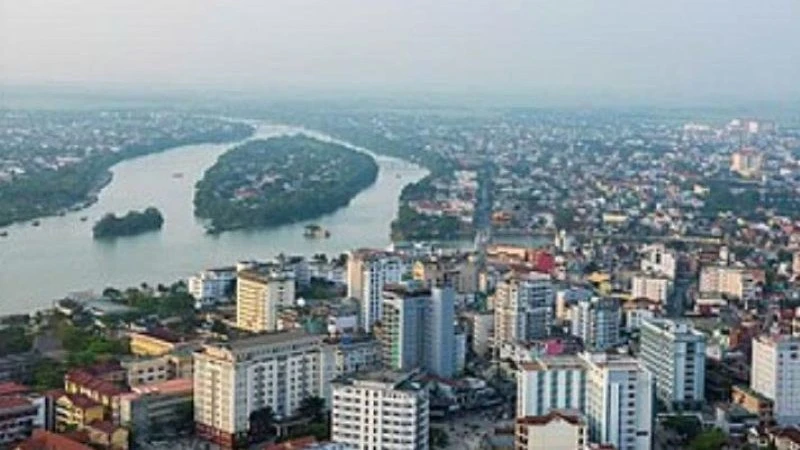
Hue City in central Vietnam is entering a new stage of development as a centrally-governed city, making the revitalization of its real estate market a pressing issue. Strategies to convert Hue's unique strengths in heritage, urban planning, infrastructure, and urban space into tangible economic growth and long-term investment are being proposed by relevant agencies and experts. A symposium titled "Hue - From Heritage City to New Engine of Investment," organized by the Vietnam Association of Real Estate Brokers (VARS), brought together representatives from government bodies, economic experts, businesses, and investors to discuss how Hue's real estate market can attract long-term capital. Dr. Nguyen Van Dinh, Vice Chairman of VARS, stated, "Hue has many opportunities from its new status, but the key is not rapid growth, but developing in line with its advantages, according to planning, selectively, sustainably, and creating real value." He emphasized that the long-term appeal of the real estate market must be based not only on price appreciation but also on real demand, infrastructure, urban development capacity, and actual utility value. Professor Tran Dinh Thien, former member of the Prime Minister's Economic Policy Advisory Council and former Director of the Vietnam Institute of Economics, pointed out that Hue's strength lies not in individual relics but in the seamless historical-cultural-ecological complex, from the Imperial City and royal tombs to the Huong River, traditional houses, and ancient villages. This allows Hue to position itself with a development model distinct from other cities. He advocated for a shift from heritage preservation to a "heritage economy," suggesting that cultural industries, specialized healthcare, university towns, and high-quality tourism could become important pillars of this new growth. From a market perspective, Dr. Nguyen Minh Phong, a member of the Economic Advisory Council of the Vietnam Fatherland Front Central Committee, analyzed that Hue's real estate market is in the initial phase of restructuring. While supply is expected to recover in 2025, it is increasing at a pace faster than absorption capacity, with approximately 65% of transactions driven by genuine demand. Dr. Phong noted that the gap between prices and supply may create potential, but it does not automatically mean price increases. He stated that real estate value should be supported by economic growth, population, infrastructure, purchasing power, and enhanced utility. Experts agreed that Hue's real estate market should aim for sustainable development based on real demand, planning, infrastructure, transparent legal regulations, and project quality, rather than rapid overheating. It is crucial for Hue to become a "valuable" market, not a "hot" one, which stems from being a livable city, having well-planned and developed projects, and the ability to meet the needs of residents, tourism, resorts, commerce, services, and business. In Hue's new development cycle, capital is expected to flow in not just for short-term gains but for the long-term value of the locality. With the transformation of heritage advantages into economic capacity, the implementation of effective planning and infrastructure, and a real estate market based on genuine demand, Hue has the potential to establish itself as a new development pole in central Vietnam. Source: Nhan Dan
Original source
Nhan Dan