Mekong-Japan Foreign Ministers Affirm Strengthening Partnership
Diplomacy
2026年7月23日
5
Nhan Dan
Relations
🇻🇳Vietnam🇨🇳China🇯🇵Japan🌐United Nations / ASEAN

General articles are free for 24 hours after publish.

Mekong-Japan Foreign Ministers Affirm Strengthening Partnership

Share
AI Summary

The Mekong-Japan Foreign Ministers' Meeting affirmed that Mekong-Japan Cooperation is a crucial mechanism fostering regional connectivity and sustainable development. Vietnam's Foreign Minister proposed practical cooperation in infrastructure, supply chains, digitalization, water resource management, and cybersecurity.

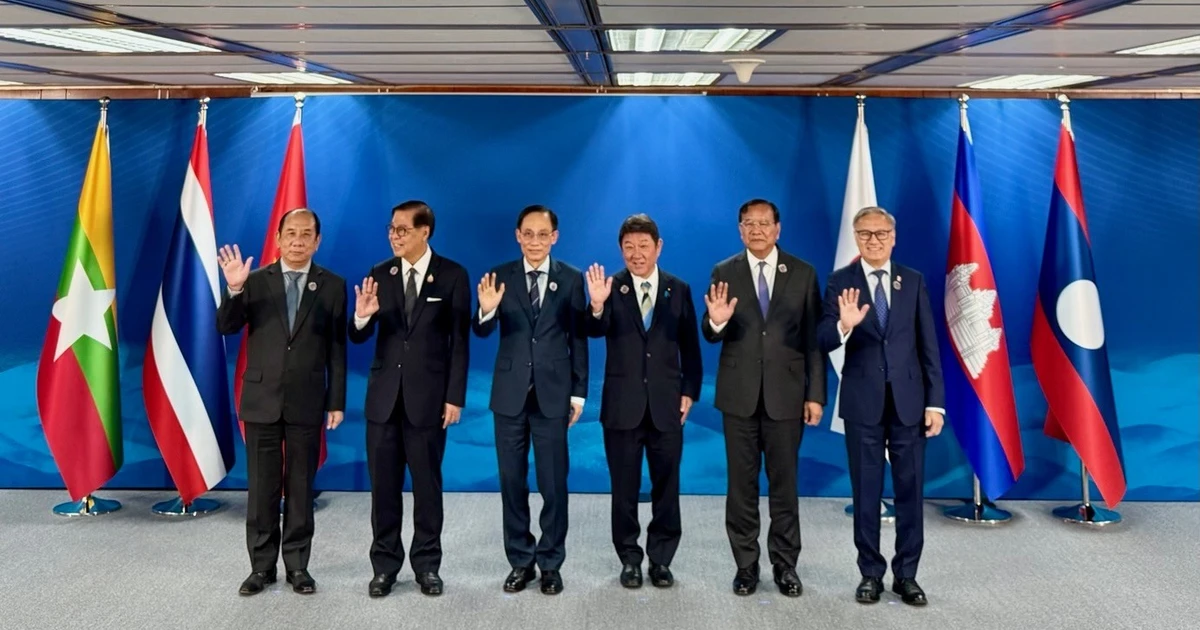
On the afternoon of July 22, in Manila, Philippines, Politburo member and Foreign Minister Le Hoai Trung, along with Japanese Foreign Minister Motegi Toshimitsu, co-chaired the 17th Mekong-Japan Foreign Ministers' Meeting. This event took place within the framework of the 59th ASEAN Foreign Ministers' Meeting and related meetings in Manila, Philippines. It is an annual conference attended by Foreign Ministers and senior officials from Mekong countries and Japan. In their opening remarks, the Foreign Ministers of Vietnam and Japan affirmed that Mekong-Japan Cooperation has, after nearly two decades, become an important mechanism promoting connectivity, sustainable development, and response to transboundary challenges in the sub-region. They also stated that Mekong-Japan Cooperation, along with ASEAN-led mechanisms, contributes to building a peaceful, stable, resilient, and developed Asia-Pacific and Indian Ocean region. The two ministers emphasized that in a context where the region faces many fluctuations, new cooperation opportunities intertwined with challenges, Mekong-Japan cooperation needs to continue to innovate to adapt to the situation and better meet the needs for expanding the development space of Mekong countries and Japan. Speaking at the meeting, Minister Le Hoai Trung emphasized that Mekong-Japan Cooperation needs to continue to adapt, innovate, and bring more practical benefits to the people and businesses. The Minister proposed that to further enhance the effectiveness of Mekong-Japan cooperation, the spirit of "co-creation" should be the guiding principle, whereby Mekong countries and Japan together identify priorities, develop initiatives, and implement cooperation projects based on common needs and interests. Minister Le Hoai Trung proposed that Mekong-Japan cooperation in the coming time should focus on five priority areas: strengthening high-quality infrastructure connectivity; promoting resilient supply chains; accelerating digital transformation linked with digital human resource development; enhancing water resource management capacity and climate change response capabilities; and close cooperation on cybersecurity and cybercrime prevention. The Minister also affirmed the essential role of the private sector in mobilizing resources to foster innovation and contribute to rapid and sustainable development. Member countries supported Vietnam's proposal to establish a platform for Japanese and Mekong businesses to connect, strengthen dialogue, and promote public-private partnerships, fostering trade and investment opportunities. Japanese Foreign Minister Motegi Toshimitsu affirmed that Japan continues to value its partnership with the Mekong sub-region, co-creating a sustainable, resilient, and prosperous future with Mekong countries, and implementing practical cooperation projects, especially in water resource management, environmental protection, combating transnational organized crime, digital transformation, cybersecurity, infrastructure connectivity, and trade facilitation. Minister Toshimitsu also emphasized the importance of strengthening coordination between diplomatic and law enforcement agencies to effectively respond to transnational organized crime, particularly cybercrime. At the meeting, the ministers agreed to continue effectively implementing the Mekong-Japan Cooperation Strategy 2024, enhancing the complementarity between Mekong-Japan Cooperation and ASEAN and other Mekong sub-regional cooperation frameworks, thereby leveraging resources effectively and improving the adaptability and resilience of the sub-region. The ministers agreed to closely coordinate in preparing for the 13th Mekong-Japan Summit to set the direction for Mekong-Japan cooperation in the new development phase. The meeting issued a Co-Chair Statement, affirming the commitment to create new momentum for the partnership between Japan and Mekong countries, bringing about practical results. In 2026, Vietnam will continue to voluntarily assume the role of co-chairing Mekong-Japan Cooperation for the second consecutive year.

0

Original source

Nhan Dan

原文を読む