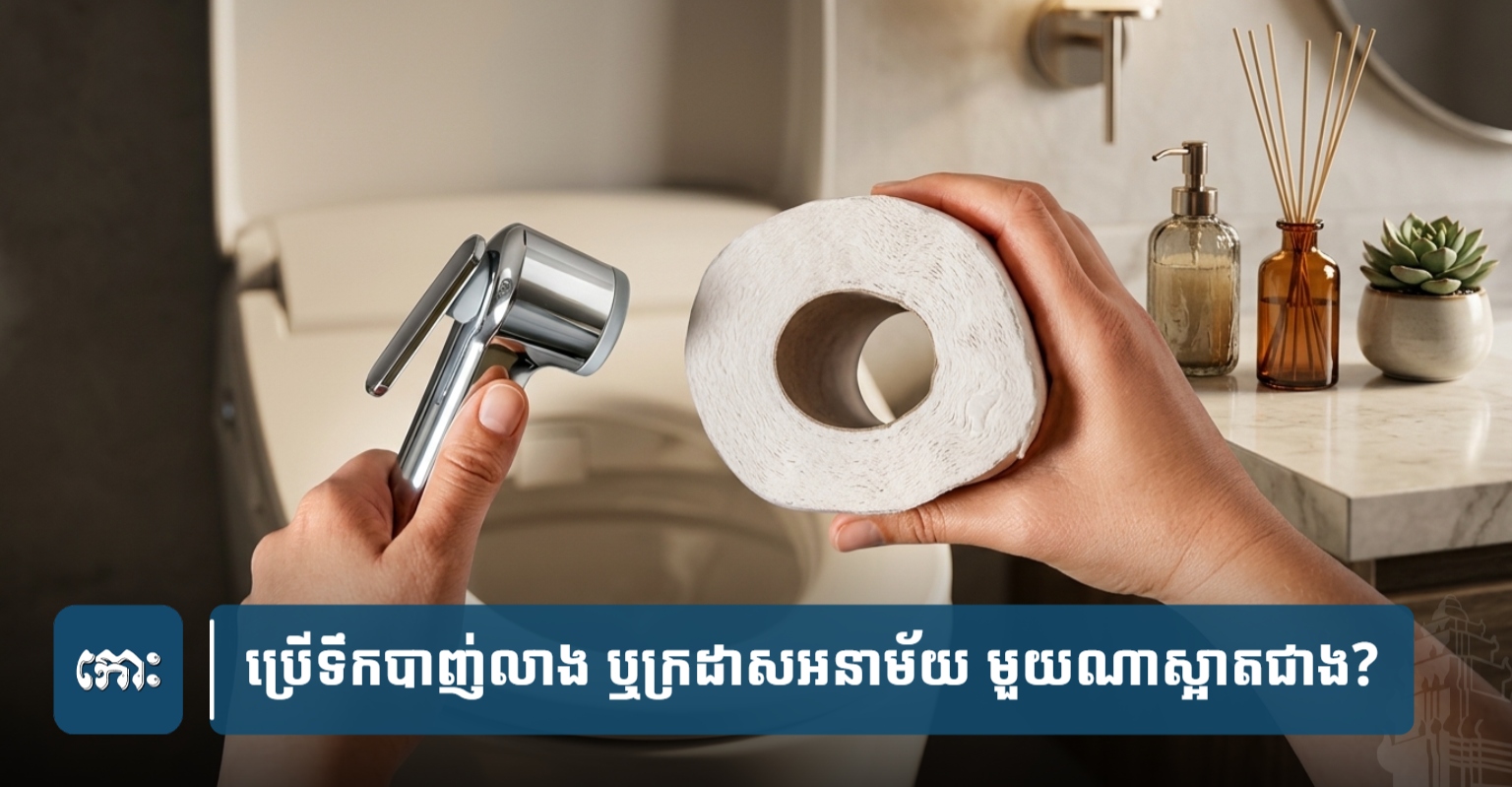
Cambodia: A Hygiene Turning Point? Expectations for Bidet Toilet Adoption
A Japanese study suggests that using water for cleaning after defecation is more hygienic than toilet paper, with significantly fewer bacteria on hands. In Cambodia, the adoption of bidet toilets is anticipated to improve health and protect the environment, especially benefiting those with hemorrhoids or postpartum women.
This article requires PRO
This article is outside the free access window or is a special report. PRO unlocks it and the full archive.
Related articles
- UNICEF Backs Cambodia for Clean, Green and Sustainable Development
UNICEF reaffirmed its support for Cambodia's clean, green, and sustainable development efforts through the Ministry of Environment's Circular Strategy on Environment (2023-2028), focusing on plastic reduction and environmental education.
- Cambodia Drafts Management Plan for Sankrorkhvan Wildlife Sanctuary
Cambodia's Ministry of Environment held its second consultative meeting for the draft management plan of the Sankrorkhvan Wildlife Sanctuary in Udor Mean Chey province. The plan aims to enhance the effective management and conservation of the sanctuary.
- Cambodia Forecast: Widespread Rain, Thunderstorms, and Gusty Winds Expected
Cambodia's Ministry of Water Resources has forecast widespread rain, thunderstorms, and gusty winds across 60% of the country from October 6th to 8th, influenced by Tropical Depression Choi-wan. The highlands and plains are expected to experience the most significant impact.
- Wealthy Individual Allegedly Developing Mountainous Area in Ratanakiri, Raising Environmental Concerns
Residents in Cambodia's Ratanakiri province have accused a wealthy individual from Phnom Penh of using heavy machinery to clear and develop mountainous land within an environmental protection zone for agricultural purposes. Local authorities and relevant ministries have not intervened or responded to inquiries.