Philippine VP Sara Duterte Denies Impeachment Allegations, Cites Political Persecution
Politics
2026年7月7日
4
The Diplomat Indonesia

Philippine VP Sara Duterte Denies Impeachment Allegations, Cites Political Persecution

AI サマリー

Philippine Vice President Sara Duterte has responded to impeachment charges of corruption and assassination plots, calling them constitutionally flawed and politically motivated. She argues the articles of impeachment are invalid and the evidence speculative. Meanwhile, anti-corruption advocates are demanding a fair trial.

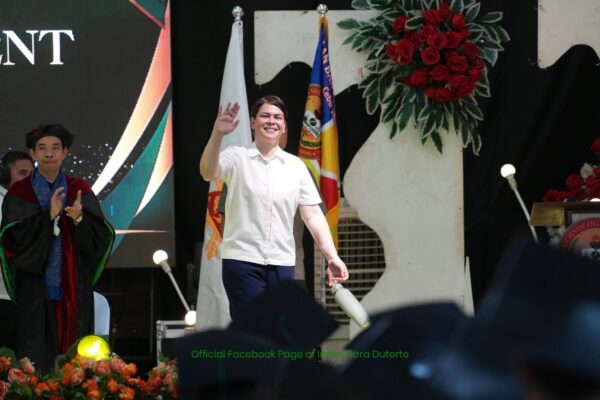
Read The Diplomat, Know The Asia-Pacific The 48-year-old faces charges of corruption, bribery, and an alleged plot to assassinate her rival, President Ferdinand Marcos Jr. Philippine Vice President Sara Duterte attends a graduation ceremony at a university in Tabogon, Cebu, Philippines, Jun. 30, 2026. The impeachment trial of Philippine Vice President Sara Duterte began yesterday, after being delayed by legal challenges filed in the court and the squabble over the Senate leadership. After months of refusing to acknowledge the impeachment hearings conducted by the House of Representatives, Duterte finally answered the impeachment allegations against her ahead of the Senate trial. She insisted that the articles of impeachment submitted by the House “suffer from fatal constitutional, procedural, and substantive defects” and hence, should be dismissed. She added that the evidence against her contains “erroneous conclusions, speculation, political rhetoric and materials gathered through an unauthorized evidentiary fishing expedition.” She also criticized the House impeachment proceedings for being “tainted by pre-judgment.” Duterte is accused of betraying public trust by misusing her confidential funds, non-declaration of assets, and plotting to assassinate the First Family. Concerning the charge that she planned to kill President Ferdinand Marcos Jr., Duterte claimed that she “merely exercised constitutionally protected speech in opposition to the policies, conduct, actuations, and overreach of the current administration.” She argued that free speech “applies not only to those who are favorably received but also to those that offend, shock, or disturb.” She also denied that she was involved in an anti-government plot by asserting that the charges “are founded upon statements taken out of context, statements or interpretations unsupported by competent and admissible evidence.” About the accusation that she pocketed millions of pesos in confidential funds, Duterte pointed out that the impeachment complaint offered no proof that she appropriated the funds for her own benefit. She maintained that there is no final determination yet establishing malversation, plunder, graft, or any unlawful disbursement of public funds allotted to her office. Duterte said that the inclusion of documents allegedly showing her undeclared cash assets and transactions violates the confidentiality of bank deposits under the Bank Secrecy Law and is therefore inadmissible. She raised the same argument in rejecting the report of the Anti-Money Laundering Council about the financial activities of her spouse. The House prosecution panel commented that Duterte only discussed “purely technical issues” and failed to directly answer the allegations of offenses. They deemed it unnecessary to respond to Duterte’s “non-answer” because no counterevidence was presented. During the pre-trial meetings and amid the senate preparations for the trial, a “surprise protest” in Metro Manila demanded accountability and lambasted the “selective justice” targeting critics of the Marcos administration. This has a direct bearing on the impeachment because the protest was organized in support of a pro-Duterte senator charged with plunder. Duterte issued a statement expressing solidarity with the protesters. “The President’s failures of character and leadership have fostered an increasingly oppressive political environment,” she said, referring to the charges filed against her allies in the senate. This reiterates her earlier pronouncements describing the impeachment trial as an example of political persecution aimed at undermining her presidential candidacy. The first week of the trial will provide a glimpse of the actions to be undertaken by Duterte’s allies in the senate. They can either boycott the proceedings, delay the session, or even move to restrict the release of some evidence by raising privacy and procedural concerns. The trial will take place a few weeks before the president’s annual state of the nation address (SONA), which could become a platform for Duterte and her supporters to direct public attention to the unresolved corruption scandals hounding the Marcos administration. As the Duterte and Marcos camps trade barbs over who is more corrupt, the impeachment offers an opportunity for anti-corruption advocates to step up the clamor for truth, accountability, and justice. At a minimum, pro-impeachment groups are expected to demand a fair, transparent, and credible trial. They are also gearing up for another mobilization during the SONA to remind the public that the call for accountability applies to Marcos, Duterte, and their networks of political dynasties. Subscribe today and join thousands of diplomats, analysts, policy professionals and business readers who rely on The Diplomat for expert Asia-Pacific coverage. Get unlimited access to in-depth analysis you won't find anywhere else, from South China Sea tensions to ASEAN diplomacy to India-Pakistan relations. More than 5,000 articles a year. Already have an account? Log in. Sebastian Strangio is Southeast Asia editor at The Diplomat. Get briefed on the story of the week, and developing stories to watch across the Asia-Pacific.

多角的分析

経済的影響

副大統領の機密資金の不正使用疑惑は、公的資金の透明性と説明責任という経済的原則に直接関わる。もし疑惑が事実であれば、国民の税金が不適切に扱われたことになり、公的資金管理への信頼を損なう。これは、経済政策への信頼にも影響を与えかねない。過去にも、フィリピンでは高官の汚職疑惑が経済成長の足かせとなる事例が指摘されており、今回の件も同様の懸念を生む可能性がある。

投資家心理

ドゥテルテ副大統領の弾劾審理は、フィリピンの政治的不安定性を示す兆候として、投資家のリスク認識を高める可能性がある。特に、汚職や政治的迫害といった疑惑は、法の支配への信頼を揺るがし、海外からの直接投資(FDI)に悪影響を及ぼすことが懸念される。投資家は、政治的リスクが低い、より安定した市場を好む傾向があるため、この審理の行方は今後の投資環境に影響を与えるだろう。

社会的影響

副大統領に対する弾劾訴追は、フィリピン社会における権力分立と法の支配のあり方を問うている。特に、汚職疑惑は国民の日常生活に直接的な影響を与えるものであり、物価上昇や公共サービスの質の低下など、間接的な形で貧困層に負担を強いる可能性がある。また、SNS上での情報拡散や世論形成も、この政治的対立をさらに複雑化させている。

市民の声

今回の弾劾訴追は、フィリピン市民、特に若年層の政治への関心を高める一因となっている。SNSを通じて情報が共有され、政治的言論が活発化する中で、市民は「選択的正義」や「政治的迫害」といった言葉に敏感に反応している。彼らは、自分たちの生活に直接影響を与える汚職問題に対して、公正で透明性のある解決を求めている。

背景・歴史的文脈

フィリピンの政治は、歴史的に強力な政治的・経済的エリート層による影響力が強く、権力分立や法の支配が常に試されてきた。特に、ドゥテルテ元大統領とその娘である現副大統領サラ・ドゥテルテ氏、そして現職のマルコス大統領との間には、複雑な政治的力学が存在する。過去の汚職スキャンダルや政治的対立の歴史が、今回の弾劾審理の背景にある。2022年の大統領選挙では、マルコス氏とドゥテルテ氏の連携が勝利の要因の一つとなったが、その後、両者の関係は緊張を孕んでいる。

原文ソース

The Diplomat Indonesia

原文を読む