General articles are free for 24 hours after publish.
Davao City's Clean Image Tarnished by Waste Crisis After Landfill Collapse
A major garbage landfill collapse in Davao City has exposed the severe waste management issues hidden behind the city's long-cultivated "clean city" image. The incident has paralyzed the city's waste disposal system, causing disruption to daily life.
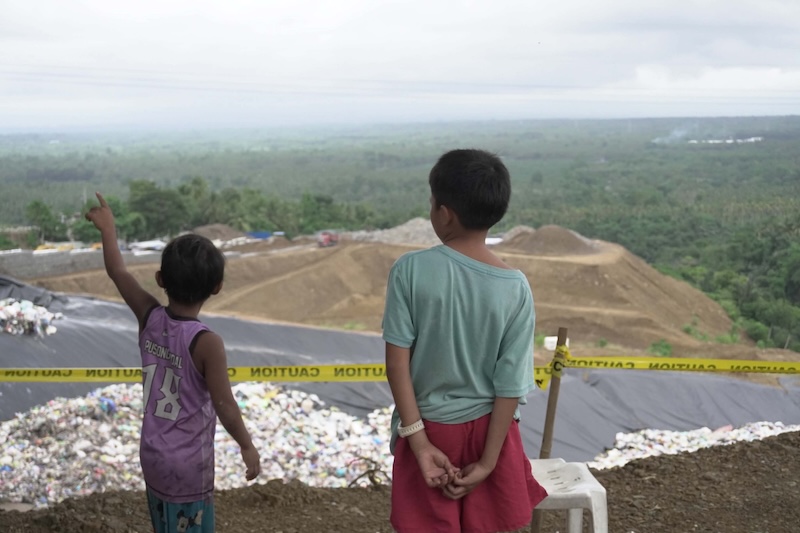
Welcome Back, The Sweep Every morning, Davao City performs a quiet ritual. Before dawn, garbage trucks wind through neighborhoods, markets, and business districts, lifting black plastic bags from curbsides while most of its 1.8 million residents are still asleep. Street sweepers follow behind, brushing away leaves, wrappers, and dust until little remains of the previous day’s waste. By sunrise, the streets are clean again, and the city awakens seemingly untouched by the garbage it produced only hours before. For decades, this routine has helped shape Davao City’s identity. Order, discipline, and cleanliness have become deeply woven into its public image, alongside its parks, wide roads, and strict local ordinances. Through the familiar tagline “Davao Life is Here,” the city projects a vision of urban life in which growth, public order, and environmental responsibility exist side by side. That image reached an international audience in 2024, when Numbeo’s Mid-Year Pollution Index ranked Davao as the second least-polluted city in Southeast Asia, behind only Singapore. The ranking relies on crowd-sourced perceptions submitted by website users rather than official environmental measurements, yet it reinforced a belief long held by many residents: Davao is one of the cleanest cities in the Philippines. Every clean street, however, leads somewhere. The plastic bags lifted from curbsides do not vanish when collection trucks pull away. The wrappers swept from sidewalks, the food discarded from markets, and the household waste left outside homes all continue their journey beyond the neighborhoods that produced them. For years, most of that journey ended at the Davao City Sanitary Landfill in Barangay New Carmen, Tugbok District. On May 20, 2026, the city was forced to confront what lay at the end of that journey. At around 1:10 p.m., a massive mound of garbage collapsed inside the landfill, burying approximately 3.72 hectares beneath an avalanche of waste. The trash slide blocked access roads, damaged nearby houses, killed two people, while retrieval teams continued searching for another missing individual in the days that followed. In a matter of moments, the collapse exposed a part of Davao City’s daily life that usually remained out of sight. The garbage collected before dawn, removed from streets, and carried away from homes had accumulated somewhere, and that place had reached a moment of disaster. The following day, the Department of Environment and Natural Resources (DENR) suspended landfill operations as search-and-retrieval teams continued their work and authorities conducted geotechnical assessments and engineering interventions. The measures aimed to stabilize the site, protect personnel and nearby communities, and prevent another collapse. The consequences quickly traveled far beyond Barangay New Carmen. According to previous reports from the Davao City Information Office, the city generates between 700 and 800 tons of solid waste daily. The volume can increase to as much as 1,000 tons during major city events such as Araw ng Dabaw and Kadayawan sa Dabaw. Once the landfill stopped accepting waste, the city’s disposal system began to strain. Collection slowed, plastic bags that normally disappeared before sunrise remained outside homes, and overflowing collection points began appearing across neighborhoods. For many Dabawenyos, the disruption offered an unfamiliar sight. Garbage that had always disappeared overnight suddenly stayed where people could see, smell, and confront it. The city’s waste had not increased overnight; its usual destination had simply become unavailable. Soon, the crisis spilled into public view. Davao City Mayor Sebastian “Baste” Duterte blamed the landfill suspension for the growing garbage backlog and designated the area outside the Department of Environment and Natural Resources Region -Davao office in Lanang as an additional collection point. Within days, piles of foul-smelling garbage accumulated outside the agency’s compound, turning an administrative dispute into a visible symbol of the city’s worsening waste crisis. The DENR maintained that landfill operations would remain suspended until authorities completed the required engineering and safety measures. Its personnel continued conducting slope-stability assessments, leachate monitoring, and site inspections while coordinating with the city government on rehabilitation work. Around 180 families remained evacuated from high-risk areas surrounding the landfill, while authorities restricted access to the site as retrieval operations continued. The confrontation dominated headlines, yet beneath the public disagreement between the city government and the environmental agency lay a deeper question that received far less attention. If Davao City’s cleanliness depends heavily on a single landfill, what happens when that landfill can no longer carry the weight of the city’s waste? The answer does not begin at the landfill. It begins about 15 kilometers away, in homes, markets, restaurants, offices, and streets, every time someone throws something away and watches a garbage truck carry it out of sight. The waste may disappear from the curb, yet its journey continues, and somewhere beyond the city’s clean streets, someone or something must carry its weight. The Weight Barangay New Carmen does not announce itself with a welcome sign. It announces itself with a smell. Long before the Davao City Sanitary Landfill comes into view, the odor reaches the roadside. It hangs over homes, settles around small stores, and travels with the dust stirred by garbage trucks moving one after another toward the city’s final disposal site. For the families who live nearby, the smell is not an occasional inconvenience. It is part of the air they breathe every day. In the afternoon of July 11, a hundred garbage trucks stood bumper to bumper along the narrow road leading to the landfill. Their engines hummed beneath the afternoon heat as drivers waited for repairs on the liner of the new sanitary landfill to be completed before dumping could resume. Even with disposal operations temporarily suspended, the smell already drifted across the area. Each truck held the ordinary remains of city life — food scraps, plastic packaging, paper, bottles, and countless other items discarded only hours earlier in homes, restaurants, offices, markets, and commercial establishments across Davao City. For most residents in the city, that waste had already disappeared. In New Carmen, it had only arrived. The trucks formed a long line toward the landfill, offering a visible reminder that garbage does not vanish when it leaves a household. The city collects it, transports it, and delivers it somewhere else. Every clean street has a destination for what has been swept away, and for years, much of Davao City’s waste has ended its journey here. The landfill has become woven into the landscape of New Carmen and in
Original source
MindaNews Philippines (GN)