General articles are free for 24 hours after publish.
Vietnam Needs Drone Testing Centers to Foster Development, Expert Says
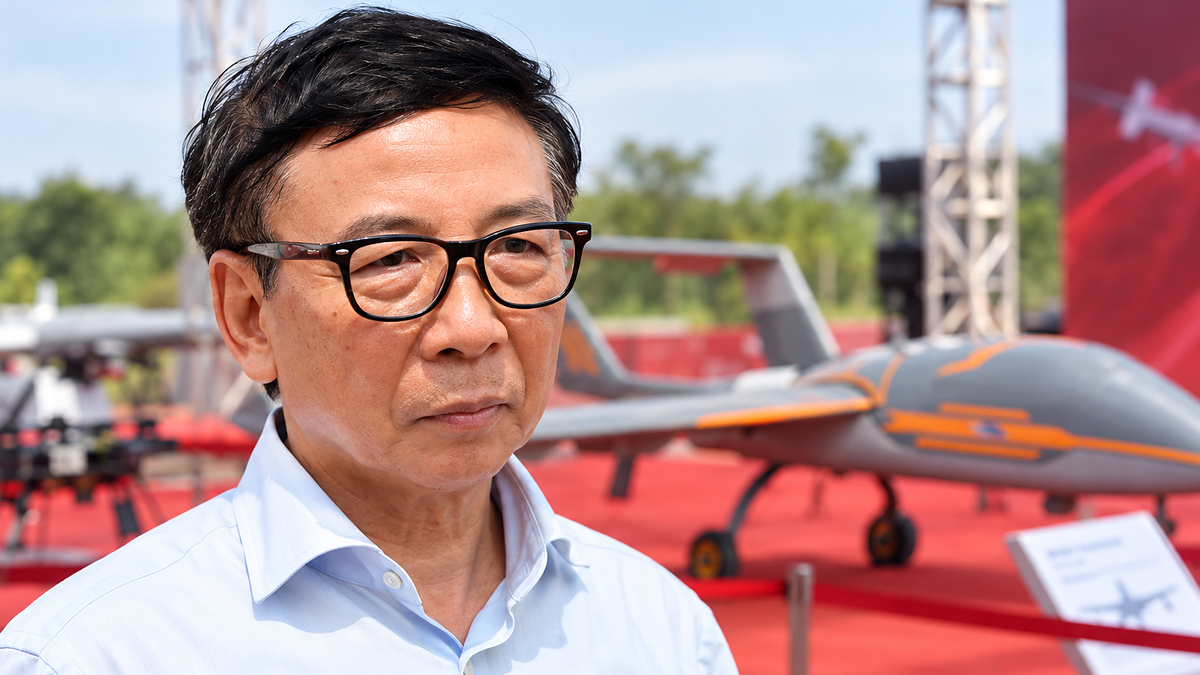
Major General Pham Ngoc Lang, Chairman of the Vietnam Association of Aeronautics and Astronautics, has proposed establishing controlled testing grounds (sandboxes) to foster domestic development of Unmanned Aerial Vehicles (UAVs). He highlighted the economic potential of UAV technology and the importance of nurturing talent and overcoming technical challenges.
Major General Pham Ngoc Lang, Chairman of the Vietnam Association of Aeronautics and Astronautics (VASA), has proposed the establishment of dedicated testing centers to foster the development and refinement of Unmanned Aerial Vehicles (UAVs) within Vietnam. Lang, an expert in aerospace, remote sensing, and UAVs, previously served as Vice President of the Vietnam Academy of Science and Technology. In an interview with VnExpress, Lang stated that Vietnam is facing significant opportunities from the development of the "low-altitude economy." However, he emphasized that to master this field, substantial investment and a suitable testing environment for UAV product development are crucial. While there isn't a unified definition for the "low-altitude economy" in Vietnam, Lang considers it as economic activities occurring below 5,000 meters, requiring appropriate management mechanisms and safety assurances. Global scientific and investment communities recognize the immense potential of the low-altitude economy, with some forecasts suggesting its market size could far exceed the projected 4.6 billion USD. Vietnam is preparing to leverage these opportunities as predictions for the low-altitude economy materialize. The government's designation of aerospace technology as a strategic field presents new avenues for Vietnam in the UAV sector. Lang highlighted that UAVs are merely a means; the data they collect and the resulting technological applications are the truly important foundations. UAVs facilitate information gathering, but processing this data into actionable insights for businesses, citizens, and the nation requires significant investment. Vietnam has achieved considerable mastery in UAV manufacturing. Approximately 17 years ago, the nation undertook its first national-level UAV scientific project. This led to the development of six UAV models, including the HS-6L, which boasts a wingspan of 22 meters and is equipped with a Rotax 914 engine, similar to that used in the US MQ-9 UAV. This enabled flights of up to 35 hours and a range of about 4,000 km. While mechanical engineering, control systems, and application-related aspects are largely mastered, components like engines and certain electronic parts still necessitate imports. Material development for UAVs is another area requiring continued investment. Lang identified a shortage of scientific personnel as a key challenge. He noted that many talented young individuals are drawn to fields like finance and banking, suggesting a need to encourage those with strong mathematical and logical thinking skills to pursue fundamental sciences, which are demanding but vital for the nation. Although the income for scientists at research institutes was historically low, conditions have significantly improved since Political Bureau Resolution 57, leading to greater recognition and a more secure environment for researchers. To facilitate the work of businesses and scientists, Lang stressed the importance of human resources, policy mechanisms, and the protection of scientists and technologists to encourage bolder initiatives. Overly bureaucratic procedures can hinder progress, as perfecting a UAV model requires approximately 1,000 test flights, a feat currently unachievable due to a lack of appropriate facilities. Therefore, he advocates for the establishment of controlled testing centers (sandboxes) where stakeholders can test and refine their products. As UAVs become more prevalent, Lang believes identification and management, similar to other transportation vehicles, will be essential for sector improvement and public safety. He recommended considering key parameters like flight altitude, range, and payload capacity for UAV identification. In the future, a mechanism for declaring identity upon takeoff could also be beneficial. Strict management, he clarified, does not equate to stagnation; it involves streamlining processes like online flight registration while ensuring proper pilot training, vehicle management, and safety checks.
Original source
VnExpress